

Introduction
Have you ever walked into a room and felt something just click — like the space was wrapping you in warmth, whispering stories through every corner? That feeling isn’t accidental. It’s the magic of emphasis interior design ideas done right. Emphasis is the art of drawing the eye, creating a focal point so beautiful that you can’t help but stop and stare. It’s what transforms a plain room into a Pinterest dream. Whether it’s a glowing fireplace wall, a dramatic ceiling treatment, or a single bold piece of furniture that commands the whole room — emphasis makes your home feel intentional, curated, and deeply personal.
Imagine waking up every morning in a room that feels like it was designed just for you. That’s exactly what these ideas will help you create. And trust us — you’ll absolutely love idea #9. Get your save button ready, because this list is about to change the way you see your home forever.
1. The Statement Fireplace Wall
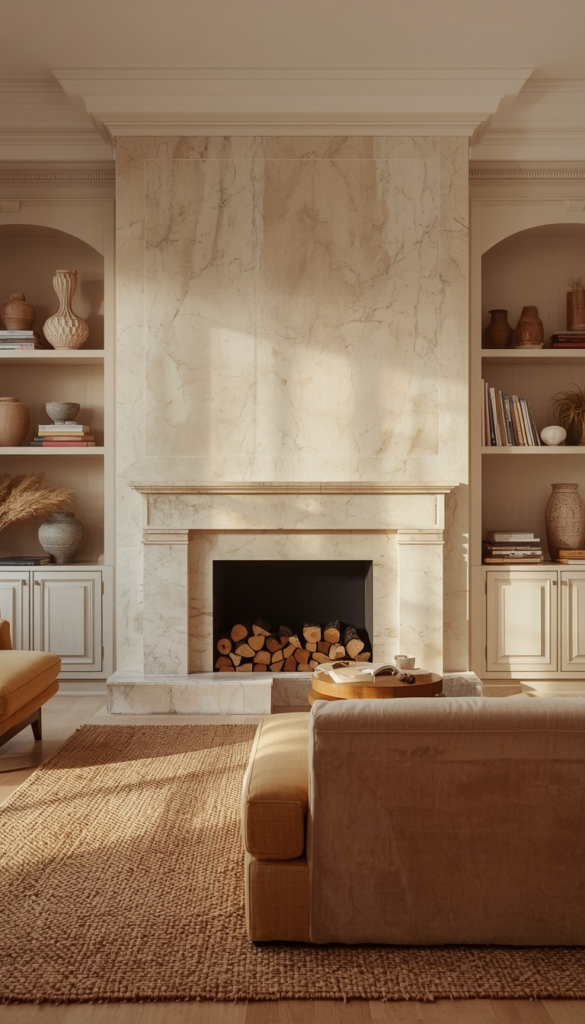
There is something deeply primal about a fireplace. It pulls people in, creates conversation, and anchors the entire room with effortless authority. When you design an emphasis wall around your fireplace, you are essentially telling every guest — and yourself — that this is the heart of the home. Using rich materials like travertine, Venetian plaster, or even dramatic black limestone instantly elevates the visual weight of the wall. Layering in built-in shelving on either side gives it structure and symmetry, making the fireplace feel grand without becoming overwhelming. It becomes the first thing you see when you walk through the door.
The color palette matters enormously here. Warm creams, soft greiges, and natural stone tones keep the fireplace wall feeling elevated but never cold. Pair the wall with plush seating in earthy linen or bouclé fabrics so the room invites you to slow down and stay. Add candlelight, a stack of your favorite books, and a single trailing plant to bring life to the shelves. The result is a room that feels like a luxury countryside retreat — the kind of space you dream about on cold winter evenings. Every time you light that fire, the whole room transforms into something magical.
2. Dramatic Arched Doorways
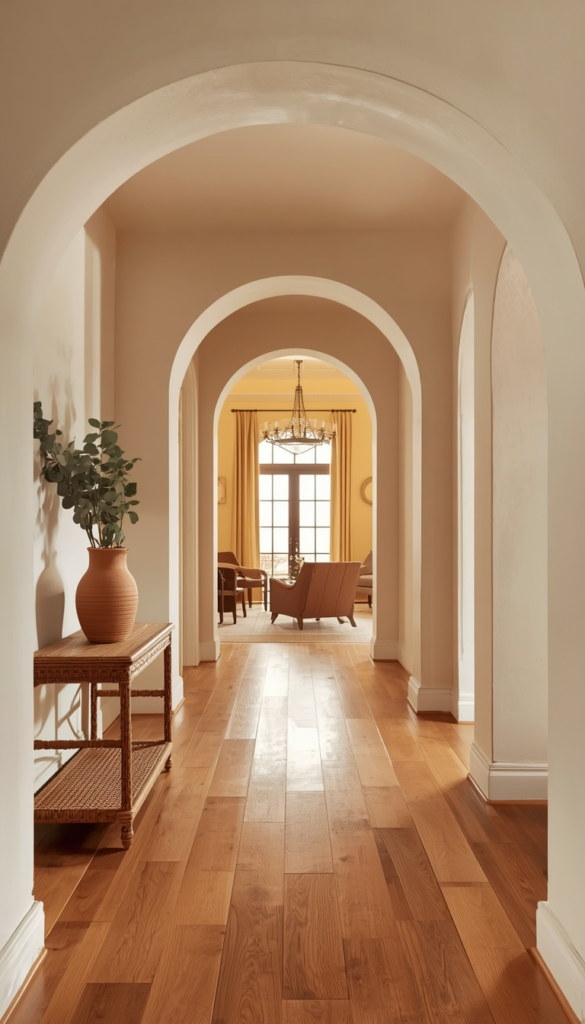
Arched doorways are one of the most timeless emphasis interior design ideas you can incorporate into a home. They do something rectangular frames simply cannot — they soften the transition between spaces, adding a sense of romance and old-world elegance that feels effortlessly luxurious. Whether you are renovating an existing doorway or adding a freestanding arch as a decorative element, the effect is immediately transformative. The curved silhouette naturally draws the eye upward, making ceilings feel higher and rooms feel more generous. It creates a beautiful frame for whatever lies beyond — a dining room, a garden view, a cozy reading nook — turning every transition into a small moment of wonder.
What makes arched doorways so beautifully versatile is how well they adapt to different design styles. In a Mediterranean-inspired home, a wide plaster arch in warm white evokes sun-drenched villas. In a more contemporary space, a sleek painted arch in deep charcoal or sage green adds sophisticated contrast. You can keep the arch plain for a minimalist feel, or dress it with climbing greenery and hanging lanterns for a more romantic mood. The floor material you choose for the threshold also plays a role — transitioning from wood to tile or marble subtly reinforces the sense of moving from one beautiful world into another.
3. Gallery Wall with a Grand Centerpiece
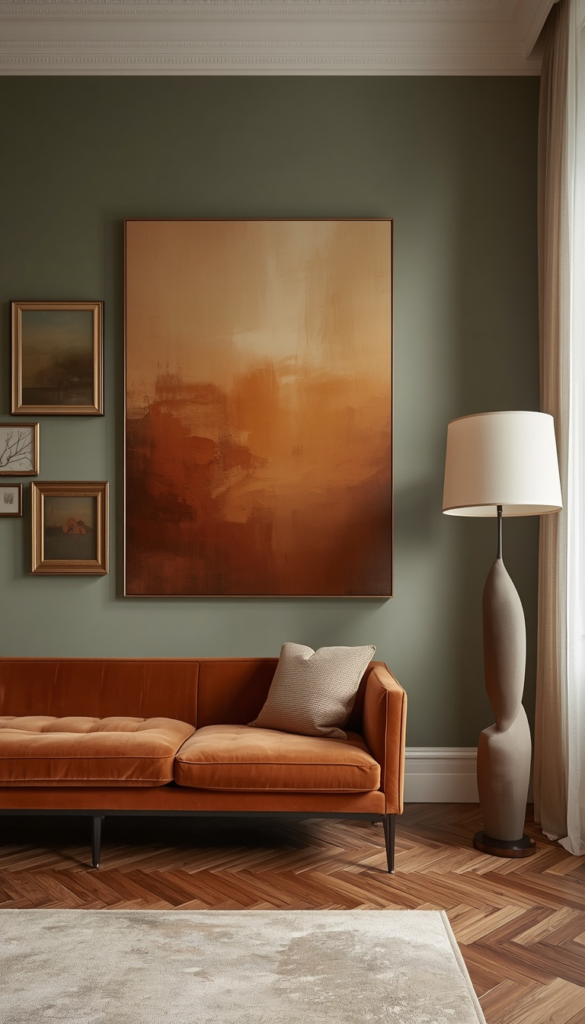
A gallery wall is so much more than a collection of pretty frames — when done well, it becomes the emotional soul of a room. The key to using this as an emphasis technique lies in anchoring the arrangement with one oversized statement piece at the center. This hero artwork does all the heavy lifting, establishing the color story, the mood, and the artistic direction of the entire wall. Everything else — smaller prints, mirrors, ceramic plates, pressed botanicals — orbits around that central piece the way planets circle the sun. The result feels collected and intentional, like a space that has been thoughtfully built over years of beautiful living.
Choosing the right color palette for your gallery wall transforms it from decorative to deeply atmospheric. Warm terracotta, dusty gold, and soft sage tones create a moody, inviting energy that photographs beautifully and feels genuinely luxurious in person. Mixing frame finishes — some in aged brass, some in matte black, some in natural wood — adds depth and keeps the arrangement from feeling too rigid or formal. Leave a little breathing room between frames so each piece has space to speak. Then step back, dim the lights slightly, and watch how the wall completely changes the personality of the entire room. It becomes a conversation starter, a memory holder, and a true work of art all at once.
4. Bold Ceiling Treatments
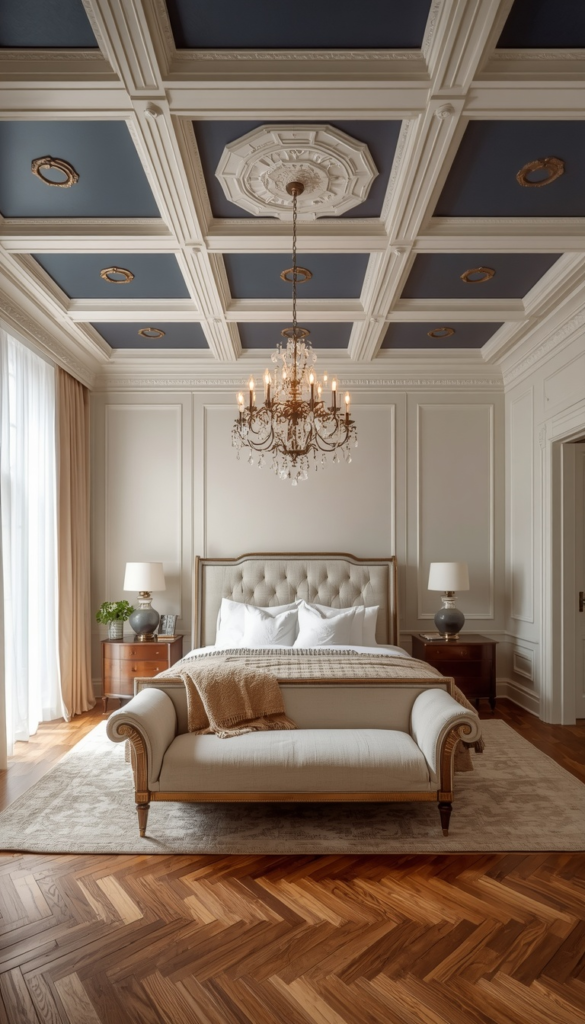
The ceiling is arguably the most underused canvas in any room, and yet it holds extraordinary potential as an emphasis element. A coffered ceiling adds incredible architectural depth — those recessed grid panels create shadow, dimension, and a sense of old-world grandeur that instantly makes any room feel more important. Paint the coffers in a contrasting color — deep navy, forest green, or warm charcoal — while keeping the walls soft and neutral, and the visual drama becomes truly stunning. Add a chandelier at the center and you have created a room that feels like it belongs in an architectural digest feature rather than an everyday home.
Beyond coffered designs, you can also explore beamed ceilings in rustic oak for a warm, farmhouse-inspired emphasis, or try a statement painted ceiling in a rich jewel tone for something more contemporary and bold. Wallpaper on the ceiling — botanical prints, subtle geometric patterns, or even hand-painted clouds — creates a surprise element that makes a room feel playful and utterly unique. The trick is always to balance a dramatic ceiling with calmer walls and grounded furniture so the eye knows exactly where to travel first. When done with intention, a bold ceiling treatment feels like discovering a hidden gem every single time you walk into the room.
5. Luxurious Textured Accent Wall
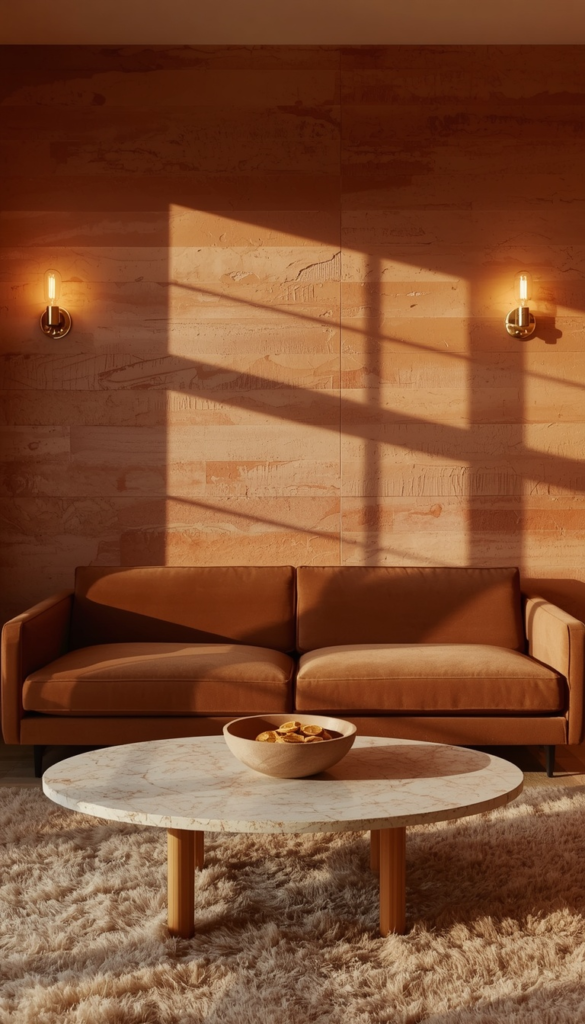
Textured accent walls are having a major moment in interior design right now, and for very good reason. Unlike paint, texture adds a physical dimension to a wall — shadows shift as light changes throughout the day, making the surface feel alive and dynamic rather than flat and static. Venetian plaster is the current gold standard, offering a silky, luminous finish that catches light beautifully and feels impossibly luxurious to the touch. Applied in warm terracotta, dusty rose, or aged ochre tones, it brings a sense of sun-baked Mediterranean warmth to any room. Paired with natural materials like travertine, linen, and raw wood, the overall effect is one of grounded, effortless sophistication.
Beyond plaster, there are other wonderful texture options to explore as emphasis walls — limewash paint creates a beautifully faded, ancient-feeling surface full of subtle depth. Microcement gives a more contemporary, industrial-leaning texture that works brilliantly in modern spaces. Rattan wall panels add an organic warmth with beautiful geometric shadow play. Even layered fabric panels or upholstered wall sections in rich boucle or velvet can create an extraordinary sensory focal point in a bedroom or sitting room. Whatever texture you choose, the key is to keep the surrounding elements quiet and restrained so that the wall remains undisputed star of the show — commanding attention without competition.
✨ Keep scrolling, the next ideas get even better!
6. Statement Lighting as a Focal Point
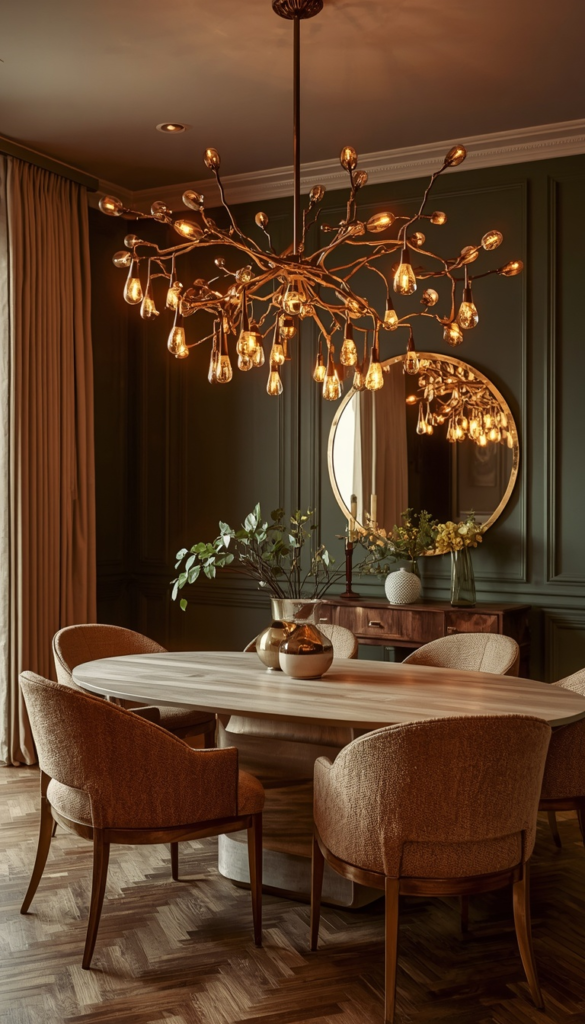
Lighting is perhaps the single most powerful emphasis tool in any interior designer’s kit, and yet it remains one of the most overlooked aspects of home styling. A dramatic chandelier above a dining table doesn’t just provide light — it defines the entire room’s personality. It sets the scale, establishes the mood, and creates an immediate visual anchor that everything else in the room responds to. Sculptural lighting in particular has surged in popularity because it functions simultaneously as functional fixture and art object. An organic branching design in aged brass, a cluster of hand-blown glass bubbles, or a single oversized rattan pendant — each makes an unforgettable statement that elevates even the simplest surrounding furniture.
The relationship between lighting and color is also crucial to understand. Warm amber tones from Edison-style bulbs create an intimate, golden atmosphere that makes people feel relaxed and beautiful — no wonder restaurant designers have used this trick for decades. Positioning your statement light source at precisely the right height matters tremendously: a chandelier hung too high loses its drama and intimacy, while one hung at the correct level (roughly 30–36 inches above a dining table) creates a beautifully enclosed, cave-like atmosphere that makes every dinner feel like a special occasion. Layer in wall sconces at a lower level and a few candles on the table, and the room becomes genuinely luminous — the kind of space where evenings stretch on long past dessert.
7. Floor-to-Ceiling Bookshelves
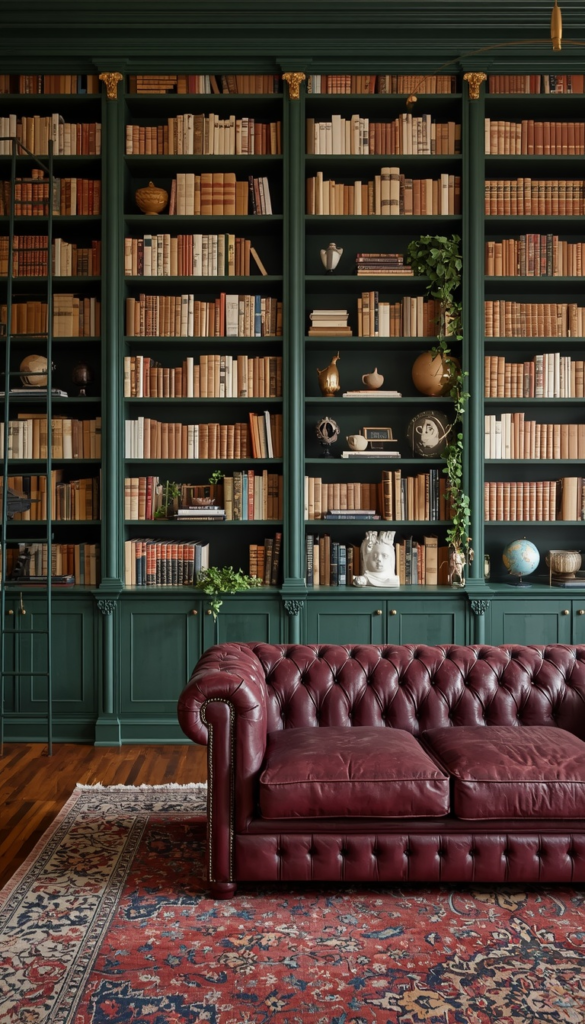
Floor-to-ceiling bookshelves are one of those emphasis interior design ideas that manage to be both functional and staggeringly beautiful at the same time. There is something about a wall of books that communicates warmth, intelligence, and a life richly lived — it tells a story about the person who inhabits the space before a single word is spoken. Built-in shelves painted in a deep, moody tone — forest green, navy, charcoal, or even deep plum — and fitted with brass hardware create an atmosphere of old-world library grandeur that feels both timeless and deeply on-trend. The visual weight of the shelves draws the eye immediately and holds it, creating a powerful focal point that anchors even the largest rooms.
The styling of the shelves is where the real artistry comes in. Rather than simply filling every shelf with books, the most beautiful shelf arrangements alternate between books, sculptural objects, trailing plants, framed photographs, and negative space. Organizing books by color creates a visual rhythm that is both pleasing and slightly obsession-inducing — those graduated cream-to-tan-to-cognac spines are endlessly satisfying to look at. Add a rolling library ladder for practical drama and the room instantly feels like the setting of a romantic novel. Sink into a deep linen or leather sofa nearby, let the afternoon light filter in, and you have created what may be the most irresistible room in the entire house.
8. The Power of a Single Bold Color Sofa
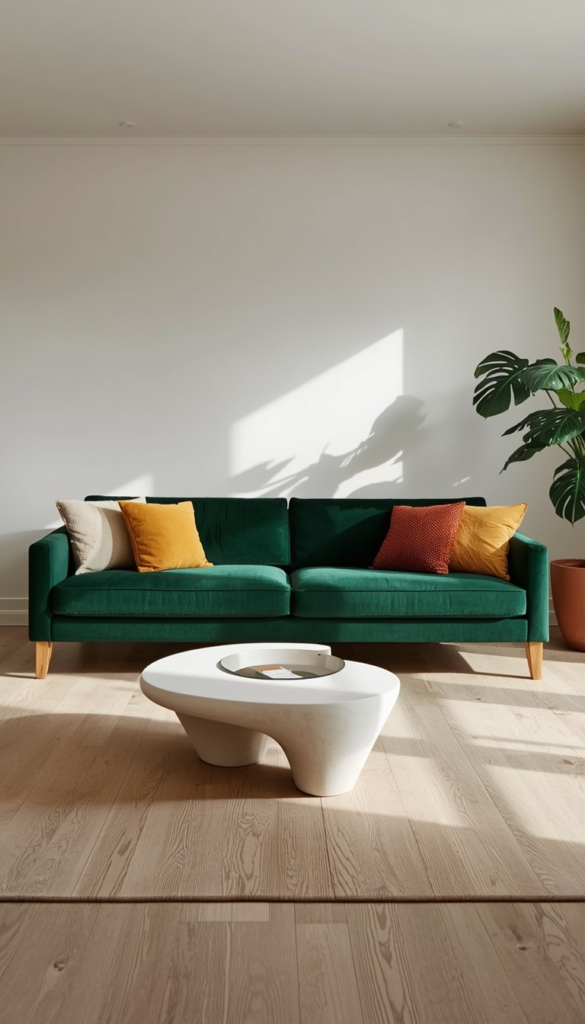
There is no faster way to create powerful emphasis in a living room than placing one dramatically colored sofa at the center of an otherwise calm, neutral space. This single bold choice transforms everything around it — the walls seem to breathe, the accessories become supporting characters, and the room suddenly has a clear, confident personality. Deep emerald green velvet is having an extraordinary moment right now, beloved for its jewel-like richness and the way it interacts with both natural daylight and warm evening light. It manages to feel simultaneously retro and contemporary — at home in a Victorian townhouse and equally stunning in a minimalist new build apartment.
The secret to making a bold sofa work as an emphasis piece rather than an overwhelming one lies entirely in the restraint of everything surrounding it. Keep walls neutral — warm white, soft greige, or pale linen tones. Let the floor breathe in natural wood or stone. Choose accessories that pick up on secondary tones within the sofa color — mustard yellows, burnt oranges, and soft terracottas work beautifully with emerald green, creating a warm, autumnal richness. Introduce texture through chunky knit throws, linen cushions, and a jute or wool rug to soften the boldness. The result is a room that feels deeply curated, confidently stylish, and completely, wonderfully personal.
9. Dramatic Canopy Bed
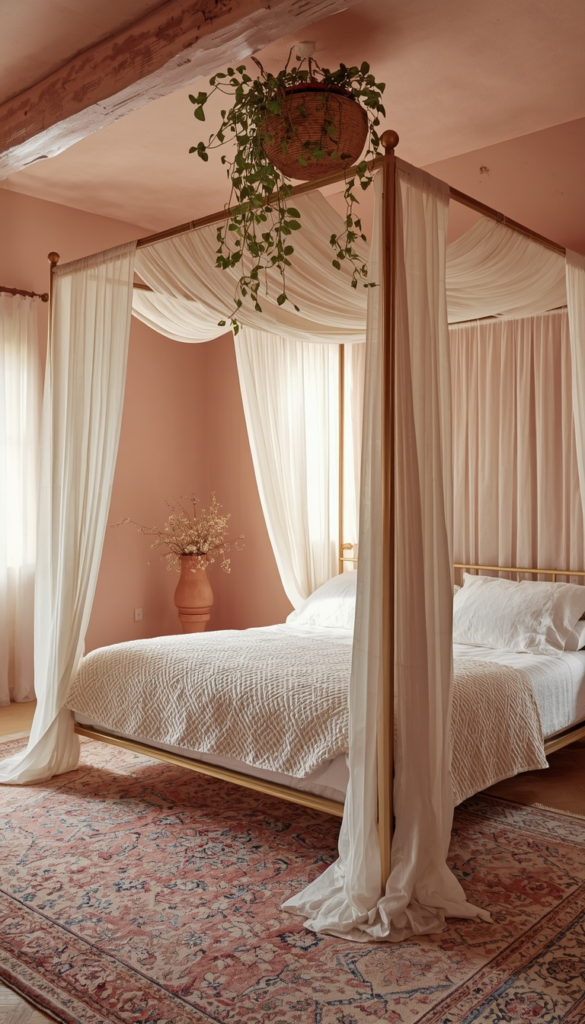
If there is one emphasis interior design idea that feels truly transformative — almost magical — it is the canopy bed. There is something ancient and romantic about sleeping beneath fabric draped from above, cocooned in softness, protected by beauty. A four-poster canopy bed instantly becomes the absolute centerpiece of any bedroom, pulling focus the moment you step through the door. When dressed in layers of sheer linen in soft ivory or blush tones, the effect is genuinely dreamy — somewhere between a romantic French château and a luxury boutique hotel. This is idea #9 and we promised you would love it. We were right, weren’t we?
The beauty of a canopy bed is how adaptable it is to different aesthetics. In a bohemian-inspired bedroom, drape macramé and fairy lights between the posts for an earthy, magical feel. In a more minimalist space, keep the canopy frame bare in black iron and let the architectural form do all the work. For maximum romance, add wall sconces at either side of the bed with warm amber candlelight bulbs, layer the floor with a vintage Persian rug in faded rose tones, and pile the bed with an abundance of pillows in varying textures — linen, silk, velvet. Every morning you wake up here will feel like the opening scene of a beautiful dream.
10. Oversized Mirrors for Depth and Drama
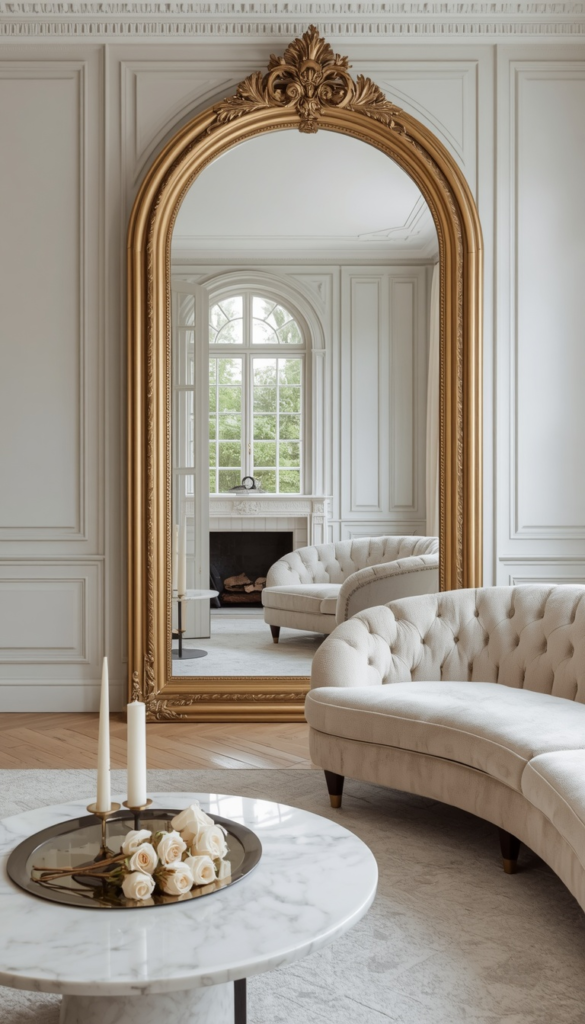
An oversized mirror is one of the most consistently powerful emphasis tools in interior design — it commands attention, expands space, brings in light, and adds an element of theatrical drama all at once. When you hang a grand arched mirror with an ornate frame on a feature wall, you are doing several things simultaneously: creating a focal point, doubling the visual depth of the room, and reflecting beautiful light back into the space. The reflection itself becomes a kind of living artwork, constantly changing as the light shifts throughout the day. In smaller rooms particularly, this trick is absolutely transformative — what felt enclosed suddenly feels expansive and airy.
Frame choice is everything with mirror emphasis. An aged gold or brass ornate frame evokes Parisian grandeur and old-world romance. A plain slim black frame feels more contemporary and architectural. A raw timber or driftwood frame brings an organic, coastal warmth. Positioning matters too — a mirror placed opposite a window doubles the natural light in the room, making even north-facing spaces feel sun-drenched and generous. Lean a very large mirror against the wall rather than hanging it for an effortlessly casual, high-fashion styling choice. Dress the space in front with a sculptural vase, a stack of art books, or a trailing plant, and you have created a vignette that looks straight from the pages of an interior design magazine.
✨ Keep scrolling, the next ideas get even better!
11. Indoor Vertical Garden Wall
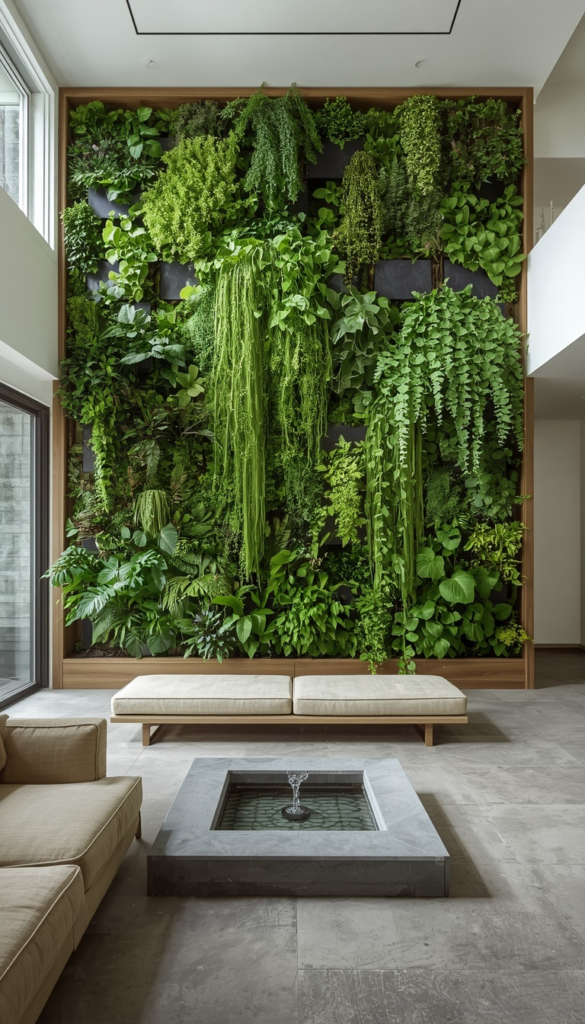
A living plant wall is one of the most visually stunning emphasis statements you can bring into a home, and it does something no paint, wallpaper, or artwork can quite replicate — it breathes. Literally. The organic, ever-changing texture of a floor-to-ceiling vertical garden creates a focal point that feels alive, calming, and deeply connected to the natural world. This biophilic approach to emphasis design has been embraced by luxury hotels, spa brands, and high-end residential designers worldwide because it taps into something deeply human — our need for nature, growth, and greenery in our daily surroundings. In a home environment, it creates an atmosphere of genuine tranquility that is impossible not to notice.
Creating a vertical garden wall at home is more accessible than many people think. Modular planting panels in aged wood or powder-coated steel allow you to build a system that suits your wall size and budget. Choose a mix of plants with different leaf textures and shades of green — the contrast between large glossy philodendron leaves and delicate trailing ferns creates visual rhythm and depth. Incorporate a simple drip irrigation system to keep maintenance manageable. For a lower-commitment version, a grid of hanging planters in terracotta or woven rattan can create a similar lush effect with less structural work. Either way, the room instantly becomes a sanctuary — a place where you exhale a little more deeply every time you walk in.
12. Sunken Conversation Pit
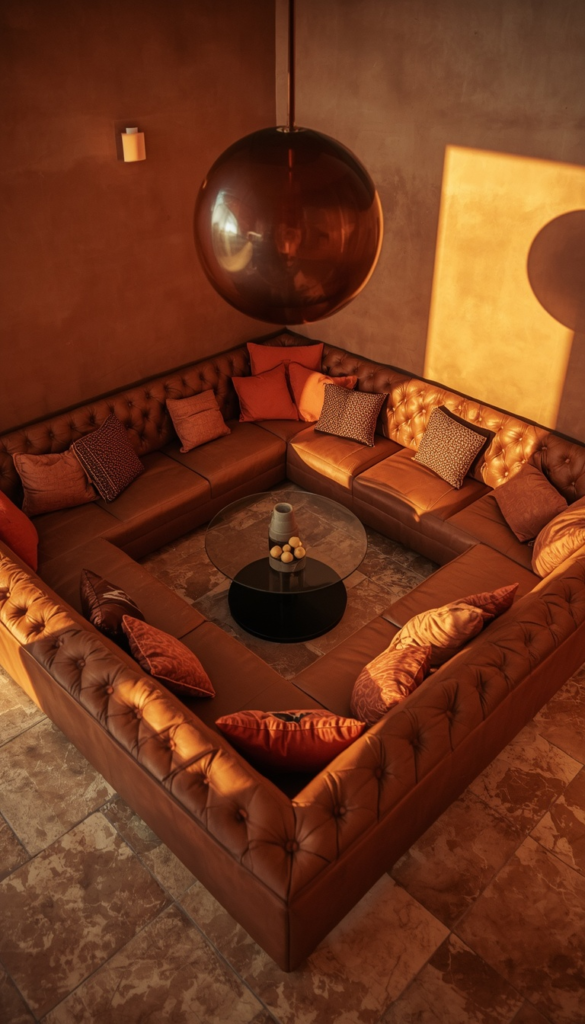
The sunken conversation pit is one of those gloriously retro design ideas that has swept back into the interior design conversation with enormous force — and it is easy to understand why. In a world of open-plan living where rooms blur endlessly into one another, the sunken pit creates an emphatic boundary, a defined space that says this is where we gather, this is where connection happens. Architecturally, the step-down creates a natural sense of enclosure and intimacy without any walls, making a large open room feel cozy and human-scaled. It is bold, unconventional, and undeniably memorable — the kind of design decision that becomes the defining feature of an entire home.
The styling of a sunken pit offers wonderful creative freedom. Mid-century inspired cognac leather or earthy bouclé upholstery in deep terracotta tones feel most authentically period-correct and are having a massive resurgence on Pinterest right now. Pile the seating with an abundance of cushions in warm jewel tones — burnt orange, deep rust, mustard gold — and add a low coffee table at the center within easy reach of every seat. Overhead lighting plays a crucial role: a statement pendant hung unusually low just above the coffee table creates an intimate, campfire-like glow that draws everyone closer and makes conversations feel like the most important ones you have ever had.
13. Exposed Brick Feature Wall
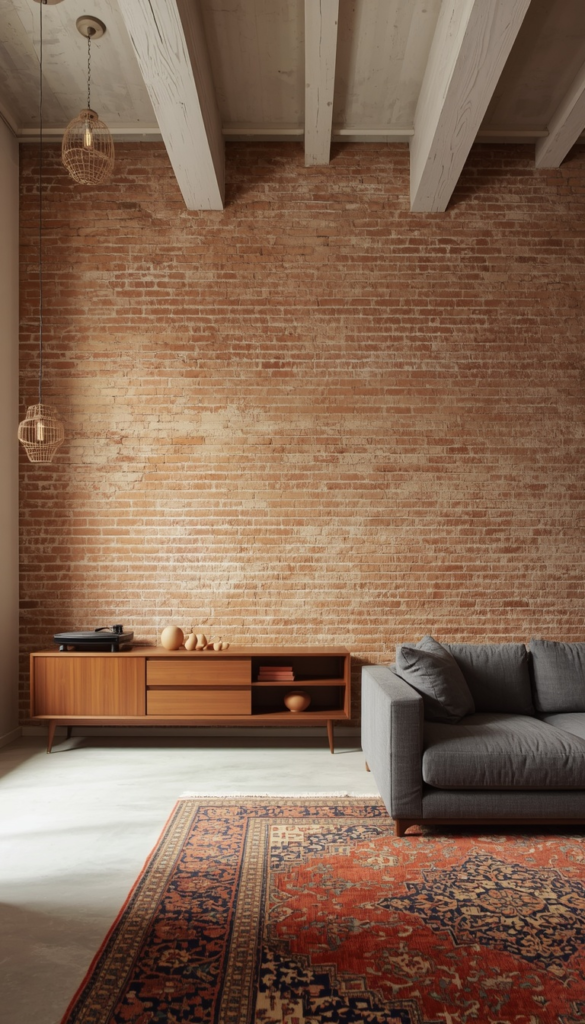
Exposed brick walls carry a depth of character and history that no manufactured material can replicate. When you strip back plaster to reveal the original brickwork beneath, you are uncovering layers of time — the physical record of a building’s life. This raw, honest texture creates an emphasis wall that is absolutely unique to your home, impossible to recreate exactly anywhere else. The warm terracotta and sandy tones of aged brick are endlessly complementary — they work beautifully alongside deep navy, warm rust, forest green, and rich cognac tones, creating interiors that feel simultaneously industrial and deeply warm. No wonder exposed brick remains one of the most searched and saved interior design ideas on Pinterest year after year.
The magic of using exposed brick as your emphasis element lies in how you respond to it with the rest of the room. Mid-century furniture in warm walnut wood tones complements brick’s earthy warmth perfectly. Industrial-inspired lighting — cage pendants, factory-style wall lights, Edison bulbs in amber glass — leans into the raw energy. But brick is also surprisingly beautiful in more romantic, luxurious settings: hang a crystal chandelier against a brick wall and the contrast between rough and refined creates something genuinely spectacular. Style the base of the wall with tall floor plants in woven baskets, a stack of coffee table books, and a few artisan ceramics, and you have created a focal point with more soul than almost anything else in interior design.
14. Dramatic Dark Moody Walls
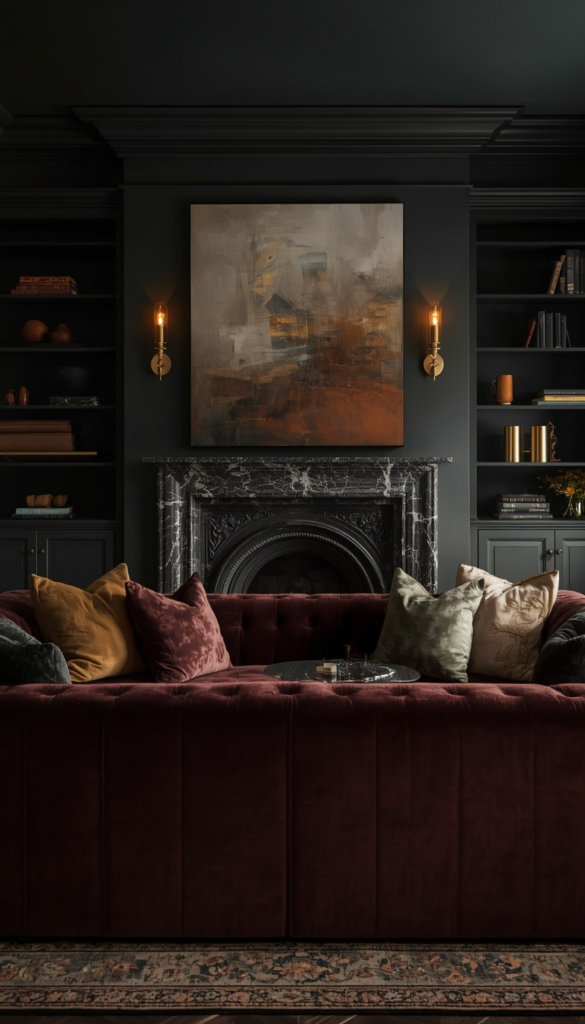
Dark moody walls have emerged as one of the most transformative emphasis interior design ideas of the past several years, moving definitively from trend into timeless design territory. There is something deeply cocooning about surrounding yourself with deep, rich tones — charcoal, forest green, midnight navy, or the almost-black depth of paint colors like Down Pipe or Railings. These colors do something remarkable in a room: they make the furniture seem to float forward, they make art appear more vivid and alive, and they transform even ordinary rooms into something that feels curated, intentional, and genuinely spectacular. When lit with warm amber lighting — candles, dimmed pendants, brass sconces — a dark room becomes the most inviting space imaginable.
The key to using dark walls as emphasis without making a room feel oppressive lies in the layering of warm materials and reflective surfaces throughout the space. Brass and gold metallic accents catch the light and prevent the darkness from feeling flat. Rich velvet upholstery in jewel tones — deep burgundy, forest green, sapphire — adds luxurious depth while harmonizing beautifully with the wall color. Introduce natural materials: aged wood, woven textures, stone, plants — to keep the room breathing and organic. Paint the ceiling and woodwork in the same dark tone as the walls for a fully immersive, cocoon-like effect that feels like stepping into the most sophisticated room you have ever seen.
15. Sculptural Coffee Table as Centerpiece
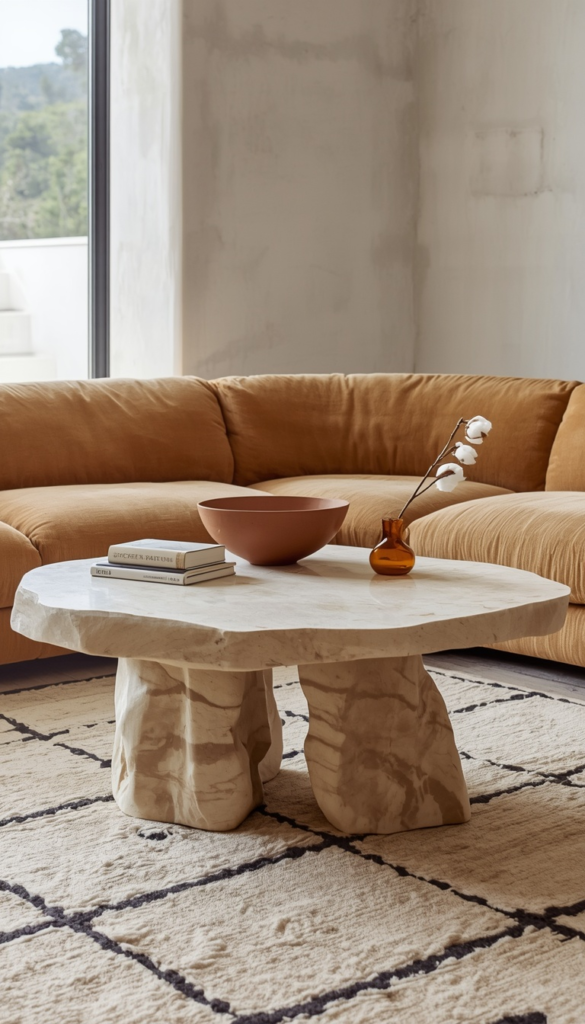
In a well-designed living room, the coffee table is not just a surface — it is a sculpture, a conversation piece, and often the element that ties the entire room together. Choosing an extraordinary coffee table as your emphasis focus is a brilliantly accessible design strategy because it requires no renovation, no structural work, and no major investment in furniture — just one thoughtful, beautiful object at the center of the room. A carved travertine table in organic, asymmetric forms brings an earthy, artistic quality that instantly elevates the entire space around it. Resin tables with embedded dried botanicals, irregular live-edge wood slabs, or cast concrete with raw aggregate surfaces — each choice creates a completely different personality.
The styling of what sits on your statement coffee table is equally important as the table itself. The most beautifully styled coffee tables follow a simple rule: odd numbers, varying heights, and a mix of organic and crafted objects. A large low ceramic bowl as the anchor, a small stack of books for height, a single sculptural candleholder, and a tiny bud vase with one perfect dried stem. Negative space matters — resist the urge to fill every inch of the surface. Let the table breathe. This restraint is what separates an Instagram-worthy coffee table vignette from a cluttered surface. Change the styling seasonally and the table — and the whole room — feels perpetually fresh and considered.
✨ Keep scrolling, the next ideas get even better!
16. Ceiling Medallion and Statement Chandelier
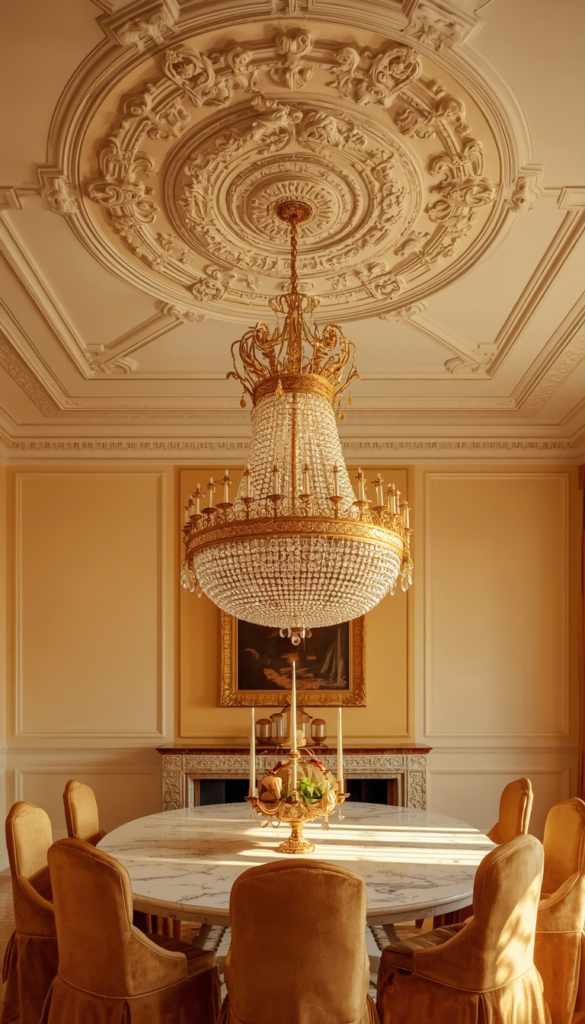
Ceiling medallions have a long and distinguished history in classical architecture, and their resurgence in modern interiors reflects a growing appreciation for craftsmanship, detail, and the kind of beauty that doesn’t shout — it simply is. A well-chosen plaster ceiling medallion, even in a relatively simple design, transforms the ceiling into a work of architectural art and creates a natural anchor point for a chandelier beneath it. Together, the medallion and chandelier work as a unified emphasis statement — the medallion provides the frame, the chandelier provides the jewel. In a dining room particularly, this combination creates an atmosphere of genuine ceremony that makes every meal feel like a special occasion.
The scale relationship between ceiling medallion and chandelier is crucial to get right. The medallion should be approximately one-third the diameter of the room or the width of the dining table, and the chandelier should hang so that its lowest point sits 30–34 inches above the tabletop. Modern interpretations of this classical formula include mixing an ornate antique-style medallion with a sleek contemporary chandelier for an intriguing contrast, or using a simple geometric medallion with a maximalist crystal fixture for dramatic visual tension. Either approach communicates the same thing: that this is a room where beauty matters, where the details have been considered, and where dinner guests will always arrive and feel immediately, profoundly impressed.
17. Bay Window Seating Nook
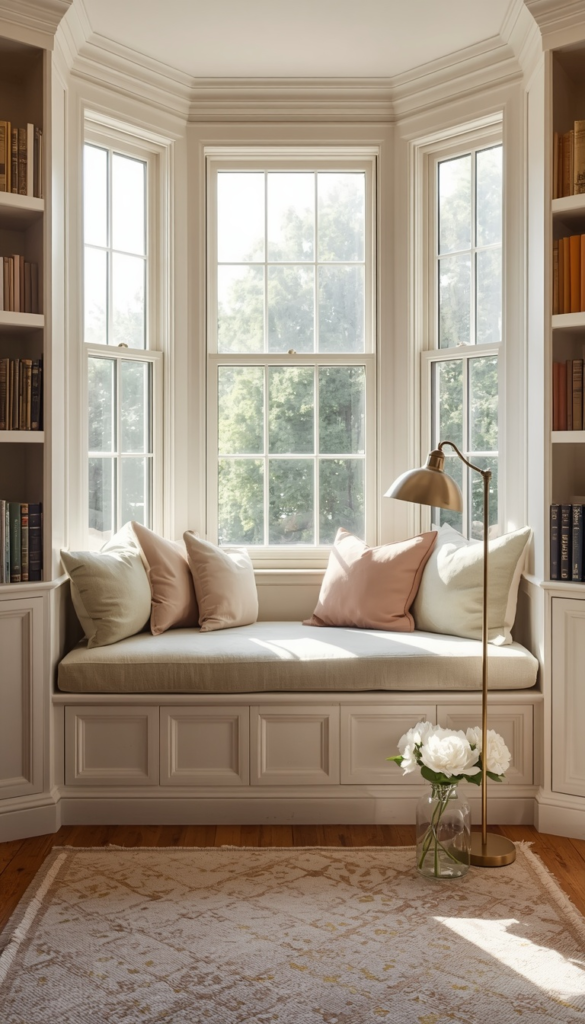
A bay window seating nook is one of those emphasis interior design ideas that people become genuinely emotional about — because it speaks to something deeply personal. Everyone has imagined their perfect reading spot: sunlight, softness, a view of the world outside, the feeling of being slightly apart from the main activity of the house. A bay window nook with a deep, cushioned seat delivers exactly that fantasy in physical form. It transforms an architectural feature — often underused or simply curtained — into the most-loved spot in the entire house. Architecturally, the bay projects forward from the main wall, which naturally creates a sense of intimate enclosure without walls or boundaries.
The styling of a bay window nook should prioritize softness and layering above all else. A seat cushion in thick linen or cotton velvet — deep enough to curl up sideways — is the foundation. Layer over this an abundance of scatter cushions in varying sizes, textures, and complementary tones. Install built-in bookshelves into the recesses either side of the bay to make the space feel fully formed and intentional rather than incidental. Keep window treatments sheer so the light flows in freely — heavy curtains will defeat the purpose entirely. Add a small side table or a tray for your tea, a lamp for evening reading, and a soft throw draped casually over one arm, and you have created the most irresistible corner in the house.
18. Statement Staircase
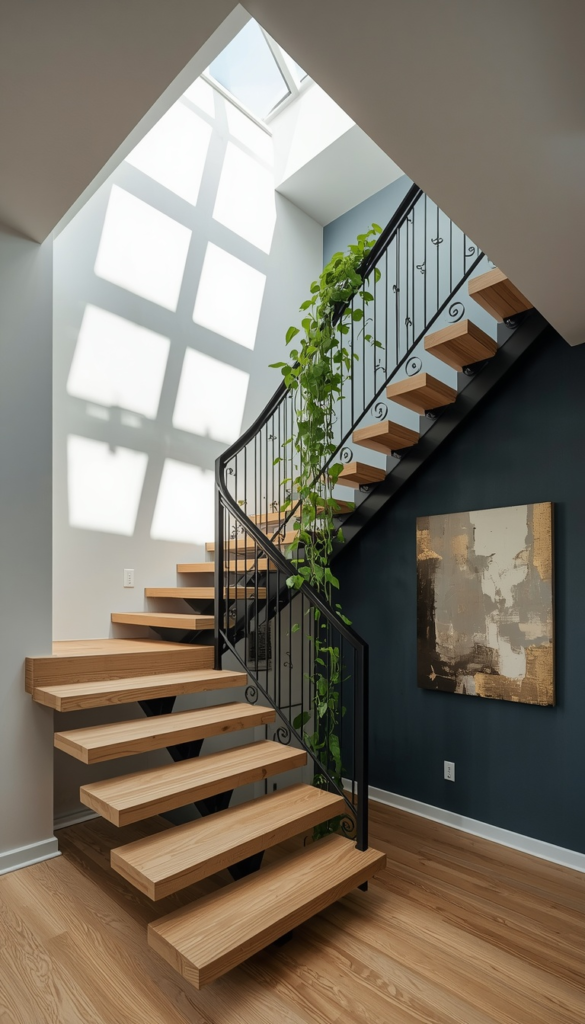
The staircase is one of the most dramatically underutilized spaces in any multi-level home, and yet it holds extraordinary potential as an emphasis element because it is, by definition, the first thing you encounter when entering the house. A beautifully designed staircase communicates the design ambitions of the entire home in a single glance. Floating open-tread stairs in solid timber — white oak, walnut, or bleached ash — create an extraordinary sense of lightness and contemporary elegance. A dramatic curved staircase in polished plaster with a simple rope handrail speaks of organic, sculptural beauty. A painted metal staircase with terrazzo treads announces bold, cosmopolitan confidence.
The wall alongside a staircase offers one of the most spectacular gallery opportunities in the entire house because the vertical height and diagonal line of the stair create a natural flow that guides the eye upward. Use this space for a dramatic floor-to-ceiling gallery arrangement, a single enormous artwork that spans multiple floors, or an architectural botanical arrangement of framed pressed plants in varying sizes. Paint the staircase wall in a contrasting tone — deep navy, forest green, or warm terracotta — while keeping the rest of the entrance hall lighter, and the staircase becomes a journey through color that makes every arrival and departure feel like a small, beautiful event.
19. Organic Curved Furniture
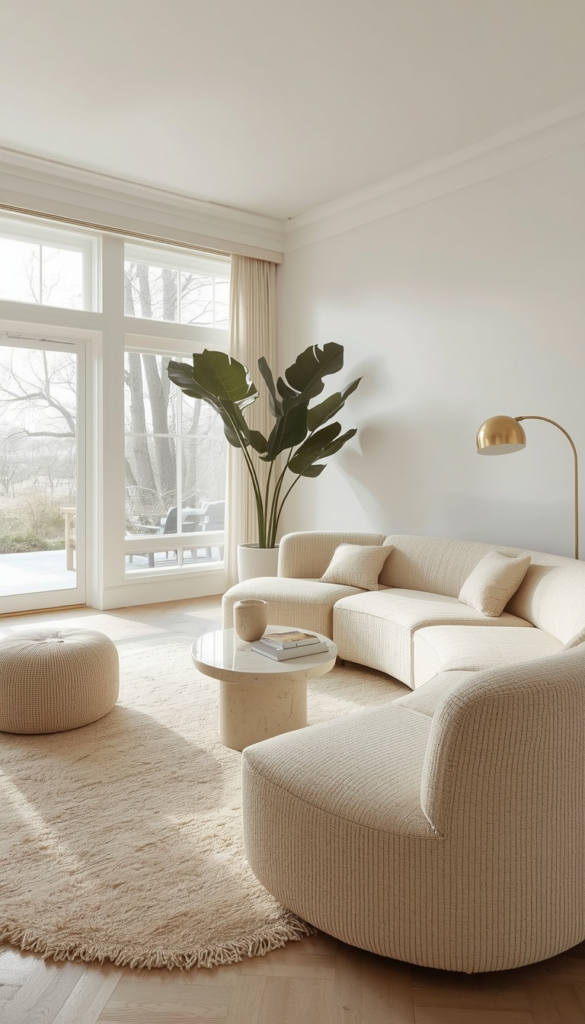
The shift away from hard angles and rigid rectangular forms toward soft, curved, organic silhouettes has been one of the most profound and lasting movements in contemporary interior design. Curved furniture works as an emphasis tool not through drama or contrast but through harmony and sensory appeal — rounded forms are inherently calming, inviting, and psychologically comforting. A sweeping curved sectional sofa, in particular, creates a sense of enclosure and warmth within an open-plan space, defining a seating area without any sharp boundaries. It draws people in and holds them there in the most gentle, effortless way possible. When upholstered in cloud-white or warm cream bouclé, it becomes almost irresistibly touchable.
The beauty of an all-curves room is in the commitment to the philosophy — when every element, from the sofa to the coffee table to the lamp to the rug shape, shares that same rounded language, the room achieves a visual coherence that feels genuinely intentional and deeply sophisticated. Layer different scales of curve: the grand sweep of the sofa, the gentle oval of the coffee table, the perfect circle of the rug. Introduce vertical curves through arch doorways, rounded mirrors, and curved-back dining chairs. Keep the color palette restrained — warm whites, soft oatmeal, gentle sand tones — so the shapes remain the heroes. The resulting room feels like something you want to wrap around yourself like a favourite sweater.
20. Dramatic Wallpaper Feature Wall
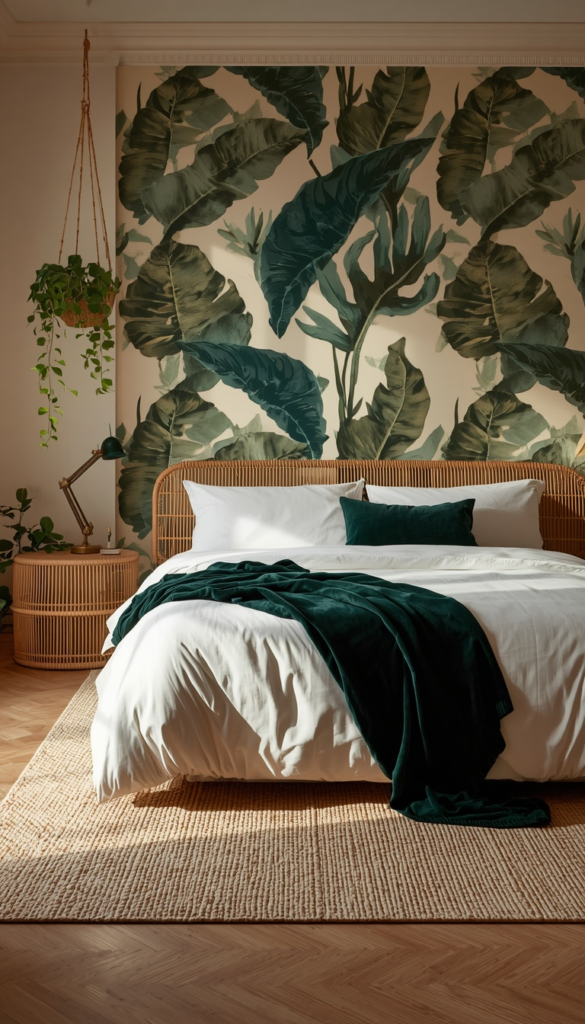
Wallpaper as emphasis is one of the oldest and most consistently reliable design tools in existence, and the current generation of wallpaper design has brought it to new heights of artistic ambition. A single feature wall in an extraordinary botanical, geometric, or abstract print transforms an ordinary room into one with genuine personality and depth. Unlike paint, wallpaper adds pattern, texture, and narrative to a wall — it creates a backdrop that tells a story. Oversized tropical botanicals in deep emerald tones are among the most Pinterest-saved wallpaper styles right now, bringing a lush, maximalist confidence that pairs beautifully with natural materials and clean, simple furniture.
The placement of your wallpaper feature wall matters significantly. In a bedroom, the wall directly behind the bed is the natural choice — it frames the headboard like a work of art and creates the first impression when you enter the room. In a living room, the fireplace wall or the main facing wall creates the strongest impact. In a hallway, wrapping the wallpaper around all four walls of a narrow space creates a fully immersive, jewel-box effect that is utterly dramatic and completely unforgettable. Whatever location you choose, keep the remaining walls in a neutral tone pulled from within the wallpaper’s own color palette to create seamless, sophisticated cohesion rather than visual competition.
✨ Keep scrolling, the next ideas get even better!
21. Breakfast Nook with Banquette Seating
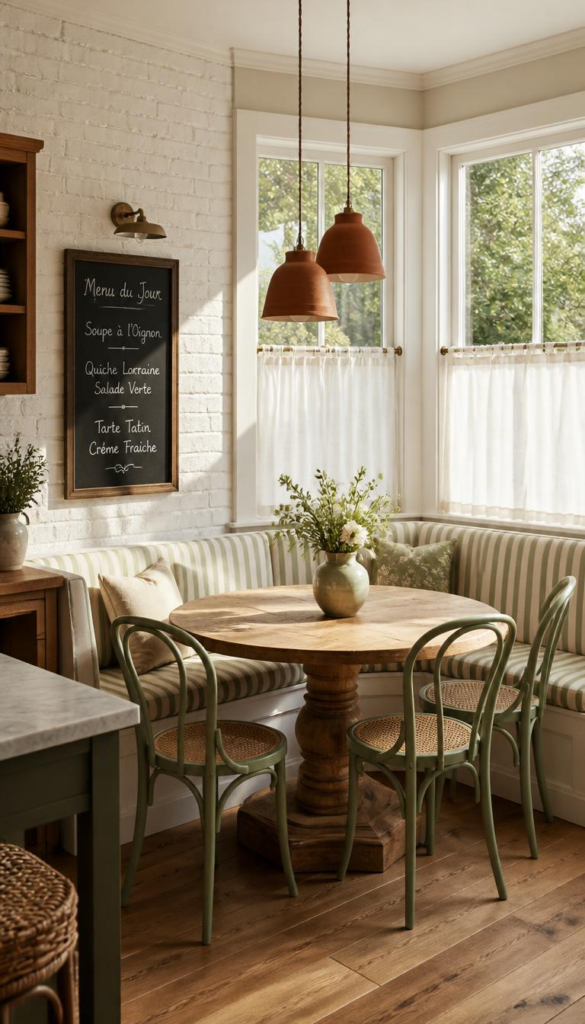
A banquette breakfast nook is the kind of emphasis design feature that makes people fall a little bit in love with their own kitchen. It creates a defined, intimate dining space within what is otherwise a purely functional room — a place that feels intentional and welcoming rather than merely convenient. Built-in banquette seating in upholstered linen or velvet instantly elevates the perceived value of a kitchen, adding a layer of comfort and considered design that free-standing chairs simply cannot achieve. The corner configuration — a U-shape or L-shape tucked into a kitchen corner — maximizes space efficiency while creating that wonderful feeling of being nestled, held, enclosed in warmth.
The styling of a banquette nook is where charm really flourishes. A pair of windows above the seating lets in morning light and creates that breakfast-in-a-French-café atmosphere that is universally adored. Hang simple café curtains in crisp white or soft linen for privacy without blocking light. Choose a round table rather than rectangular — it encourages conversation by eliminating the hierarchy of heads and sides. Add a small ceramic vase with fresh herbs or simple flowers from the garden, a shallow bowl of seasonal fruit, and a few cookbooks propped along the back of the bench. Every morning coffee in this corner will feel like the beginning of a particularly beautiful day.
22. Floating Shelves as Curated Display
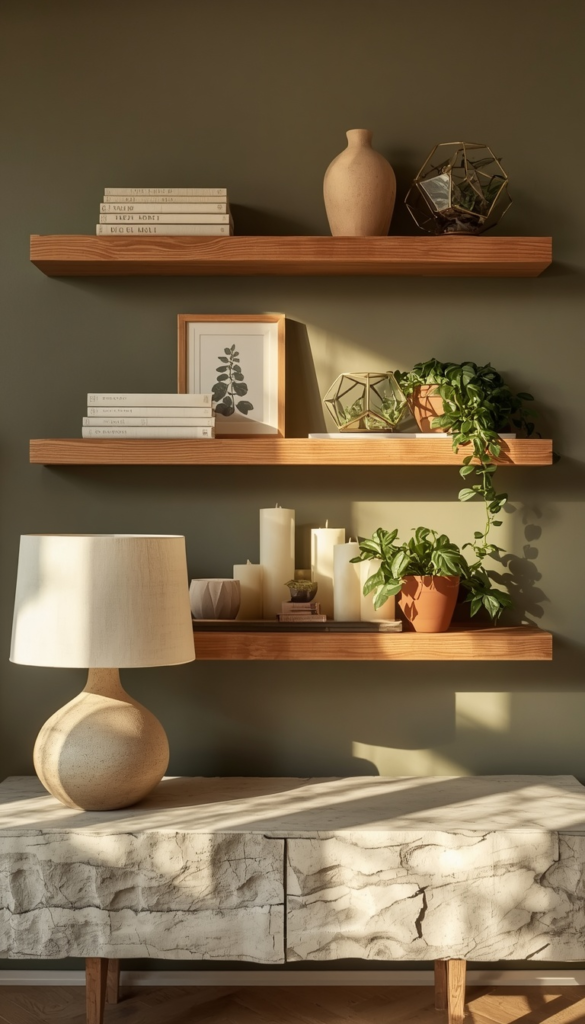
Floating shelves, when treated as a curated display rather than a storage solution, become one of the most powerful and flexible emphasis tools in interior design. Unlike built-in shelves, floating shelves have a lightness and graphic quality that allows the objects upon them to seem suspended in space — each piece given equal importance, each relationship between objects deliberate and considered. The key distinction between beautiful floating shelf styling and ordinary shelf-as-storage lies entirely in the ratio of objects to negative space. The most stunning shelf arrangements use roughly 60% objects and 40% empty space — that breathing room is what allows each beautiful piece to truly be seen and appreciated.
The art of shelf styling follows a few timeless principles. Vary the height of objects — a tall vase next to a low stack of books next to a medium sculptural form creates visual rhythm. Mix categories — something organic (plant, dried botanical), something crafted (ceramic, glass vessel), something reflective (brass object, small mirror), something narrative (book, framed print). Choose a limited color palette across all shelf objects so the overall arrangement reads as cohesive rather than chaotic. Edit ruthlessly — if removing an object makes the shelf look more beautiful, remove it. Return to your shelves every few months, clear them entirely, and re-style from scratch. The discipline of starting fresh prevents gradual drift into the kind of cluttered accumulation that defeats the purpose entirely.
23. Herringbone or Chevron Statement Floor
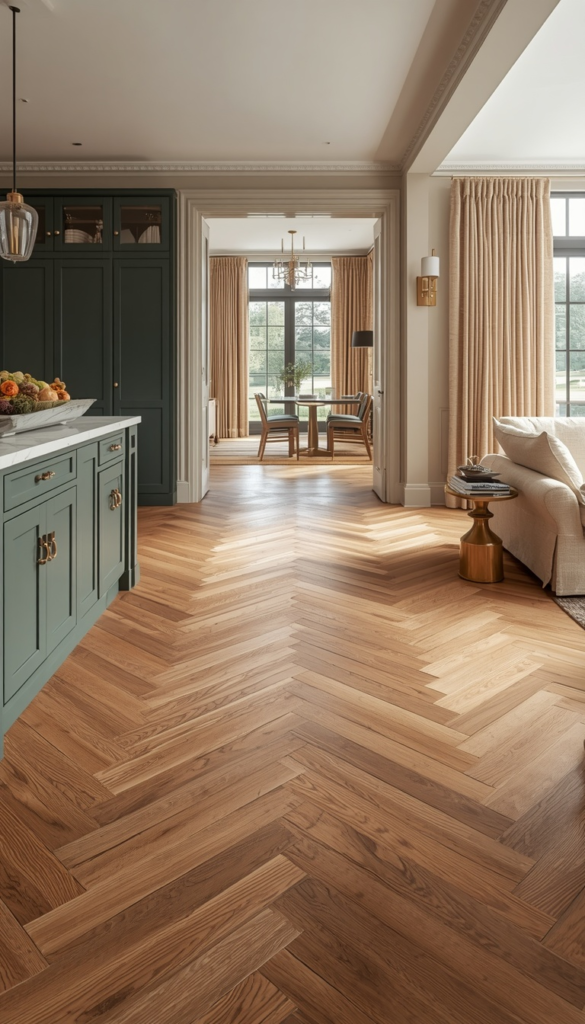
The floor is the largest single surface in any room and yet it is often treated as an afterthought — a neutral backdrop that simply gets walked on. Choosing a herringbone or chevron pattern for your flooring transforms this massive surface into a genuine emphasis statement that gives the entire room a visual structure and energy that a straight-lay floor simply cannot provide. The angled pattern creates a sense of movement — the eye follows the zigzag rhythm across the floor and the room feels simultaneously dynamic and beautifully ordered. In warm oak tones, herringbone flooring has a timeless, French-apartment elegance. In dark walnut, it feels sophisticated and dramatic. In pale bleached ash or whitewashed tones, it is coastal, breezy, and effortlessly chic.
The beauty of investing in a statement floor is its longevity and universality. Unlike paint colors or wallpaper that you may tire of, a beautiful herringbone floor works with virtually every furniture style, color palette, and design direction — it is the constant around which your room can evolve over years. For maximum impact, run the herringbone pattern through an open-plan space without interruption, so the eye travels the full length of the room in one unbroken visual journey. Add underfloor heating beneath the boards and the floor becomes not just beautiful but sensory — warm underfoot on winter mornings in a way that is genuinely, almost embarrassingly pleasurable. It becomes one of those details that you notice every single day and never stop appreciating.
24. Dramatic Window Treatments
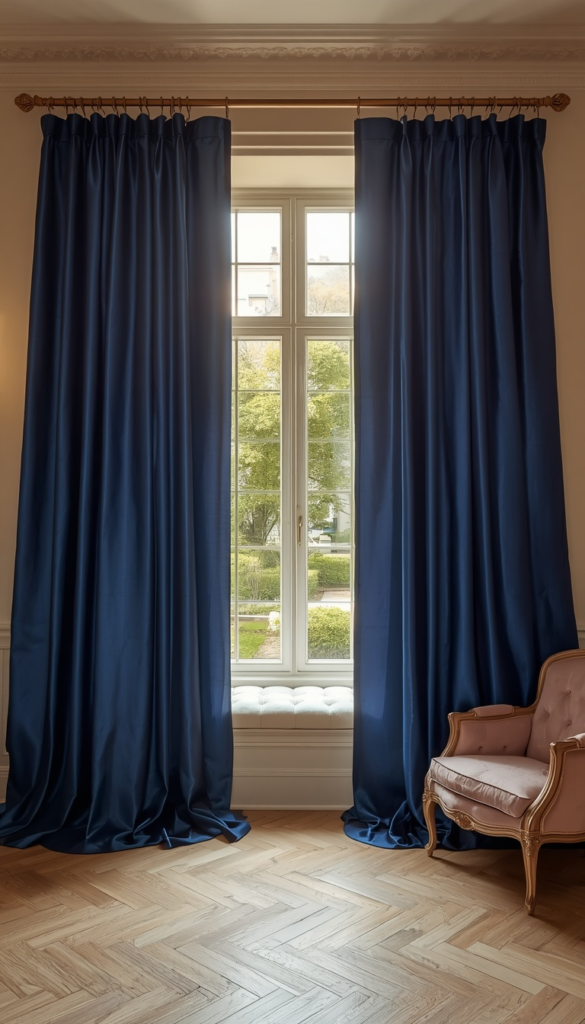
There is an extraordinary transformative power in window curtains hung from ceiling height rather than from the window frame — it is one of the most effective design tricks in existence, and it costs relatively little to execute. When you install curtain rods at ceiling level and allow full-length curtains to fall in generous folds to the floor, the room’s perceived height increases dramatically and the windows appear far larger than they actually are. In a rich fabric — heavy silk, velvet, or dense linen — these ceiling-height curtains become architectural emphasis elements in their own right, framing the window and the view beyond like a painting within a painting, adding theater and grandeur to even the most ordinary windows.
The color of your statement curtains matters enormously to the overall room atmosphere. Deep jewel tones — sapphire blue, forest green, rich bordeaux — used against lighter walls create a dramatically beautiful contrast that anchors the room and makes it feel complete and considered. Neutral linen or ivory curtains in enormous volume create an opposite but equally beautiful effect: light, airy, and romantic, like living inside a cloud. For maximum emphasis impact, choose a fabric with some natural sheen — silk, linen-cotton blend, or a subtle jacquard — so that as the light changes through the day, the curtains shift from deep and moody to luminous and golden. Layer with simple white sheer curtains beneath for privacy and daytime softness.
25. Antique and Vintage Statement Pieces
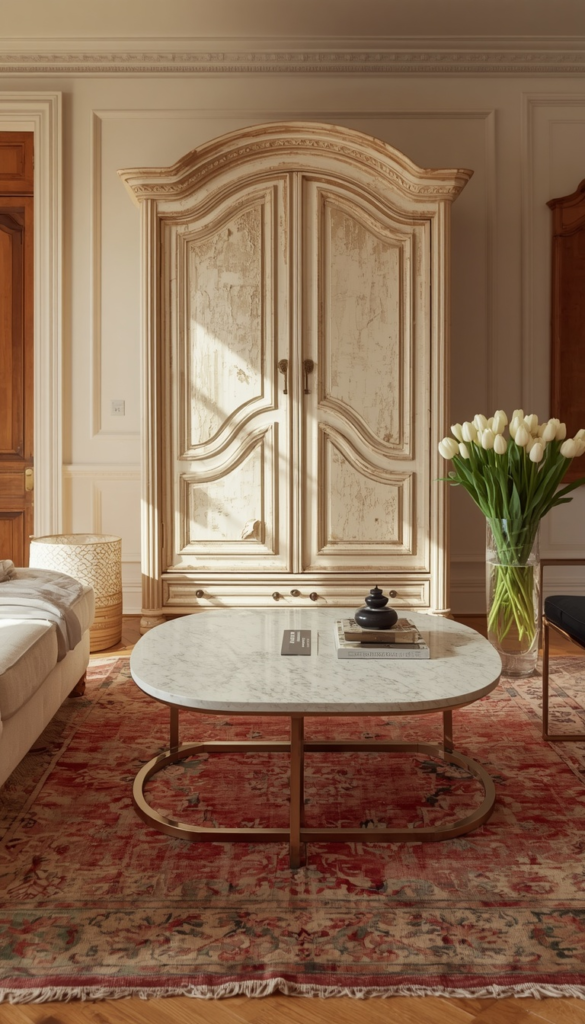
There is an argument to be made that the most characterful and interesting rooms in the world are not the ones designed entirely from scratch by a single designer — they are the rooms that contain at least one magnificent, irreplaceable old thing. An antique piece carries within it a weight of history, craftsmanship, and patina that no new furniture can replicate, and when placed within a contemporary setting, it creates a creative tension that is endlessly fascinating to the eye. A grand French armoire with original paint, a Victorian secretary desk in dark mahogany, a mid-century Italian sideboard in burled walnut — each becomes an emphasis centerpiece through sheer accumulated beauty and the sense of time it carries.
The contemporary-antique contrast is a design technique beloved by the world’s most respected interior designers precisely because it avoids the sterility of a perfectly matched, everything-bought-at-once interior. Placing one significant antique piece in an otherwise modern room creates the sense of a life lived — of taste developed over time, of stories accumulated. The juxtaposition itself becomes beautiful: the smooth new linen sofa reading as even more clean-lined and contemporary against the ornate, time-worn carving of an antique armoire. Invest in one truly extraordinary antique piece — a piece with beautiful bones, original hardware, and honest patina — and build the contemporary room quietly and simply around it. The antique will do all the work.
✨ Keep scrolling, the next ideas get even better!
26. Color Drenching — One Room, One Color
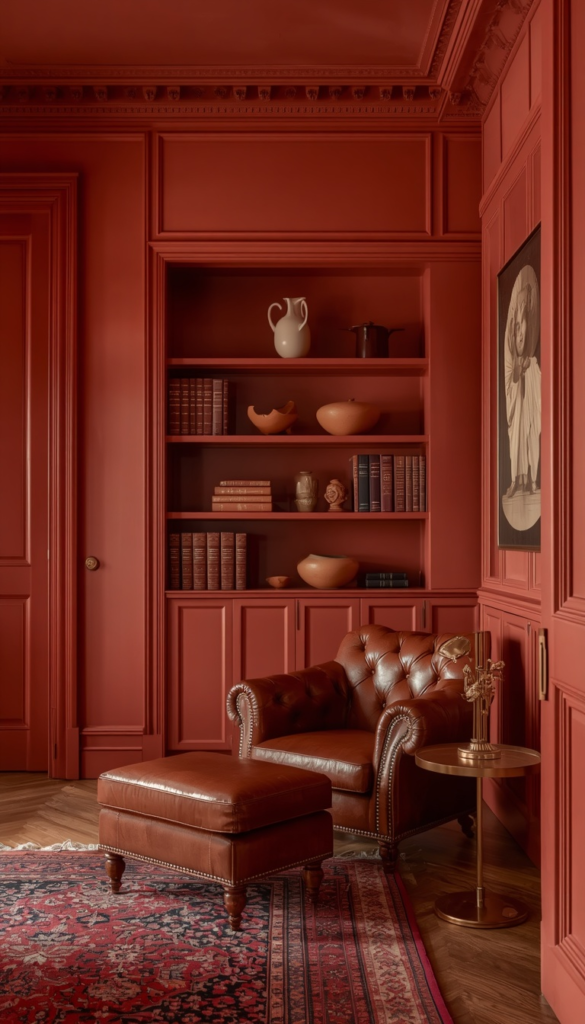
Color drenching — the practice of painting every surface in a single room (walls, ceiling, woodwork, shelves, and all) in one continuous color — is one of the boldest and most dramatically effective emphasis interior design ideas currently trending. Unlike traditional paint application where ceilings are kept white and woodwork lighter or darker, color drenching creates a fully immersive color environment where the eye has nowhere to escape and the room feels like a world unto itself. The psychological effect is powerful: deep terracotta feels earthy and grounding, sage green feels calming and restorative, deep navy feels mysterious and intellectual. Whichever tone you choose, it transforms a room into a genuine mood experience.
The counterintuitive truth about color drenching is that a deeply saturated color actually makes a room feel larger rather than smaller when applied consistently to all surfaces — because the eye can no longer read the boundaries between wall and ceiling, the room loses its edges and seems to expand. Choose a warm-toned color for rooms you use in the evening and a cooler, greener tone for bright, daytime spaces. Keep furniture simple and tactile — leather, linen, natural wood, stone — in tones that sit naturally within or complement the room color without fighting it. Add brass or aged gold metallic accents to catch the light and prevent the room from feeling flat. The result is one of the most talked-about rooms any guest will ever visit.
27. Wabi-Sabi Inspired Imperfect Beauty
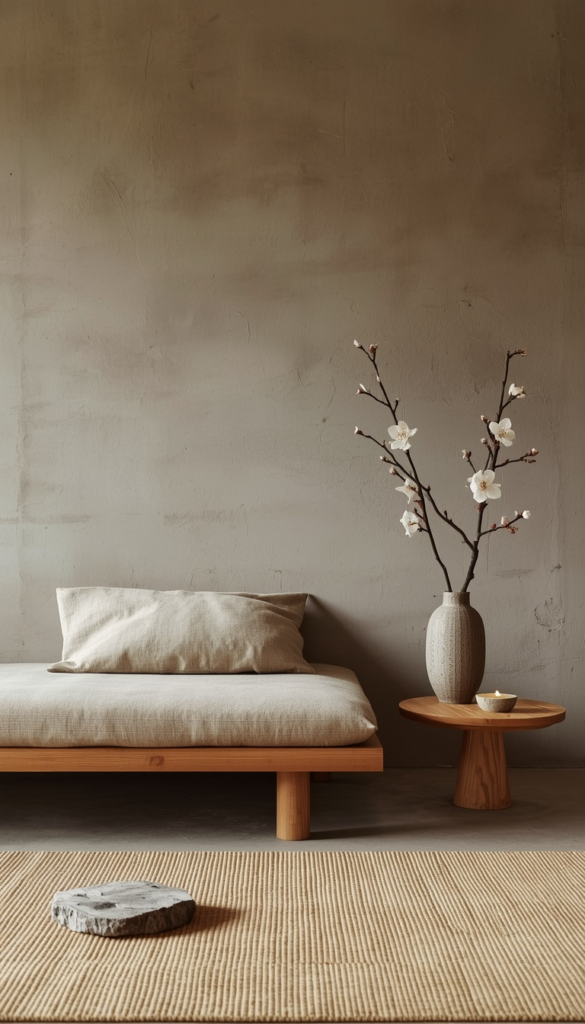
Wabi-sabi is the Japanese aesthetic philosophy of finding beauty in imperfection, transience, and the natural cycle of growth and decay — and as a design approach, it creates emphasis through the extraordinary power of understatement. Rather than highlighting a wall through pattern or color, wabi-sabi uses texture and hand-made irregularity to create a focal point that rewards the person who looks closely rather than demanding attention from across the room. A hand-troweled plaster wall with visible tool marks, a rough-hewn timber shelf with natural edge intact, a hand-thrown ceramic vessel with an uneven rim — these imperfections speak of the human hand and the passage of time in ways that machine-perfect surfaces simply cannot.
Designing a wabi-sabi inspired room requires discipline — the discipline of removing rather than adding. Every object placed in the room must be there for a reason, must earn its presence through authentic beauty or function. Choose materials that age gracefully: unfinished linen, raw clay, natural wood, aged brass, stone with visible grain. Allow negative space to breathe — the empty wall, the bare floor, the single branch rather than the overflowing vase. Eliminate synthetic materials entirely in favor of things grown or made by hand. The room that results is one of the quietest and most deeply beautiful you will ever sit in — a room that invites you to slow down, to breathe deeply, and to notice beauty in the smallest, most honest details.
28. Terrarium and Plant Corner as Green Focal Point
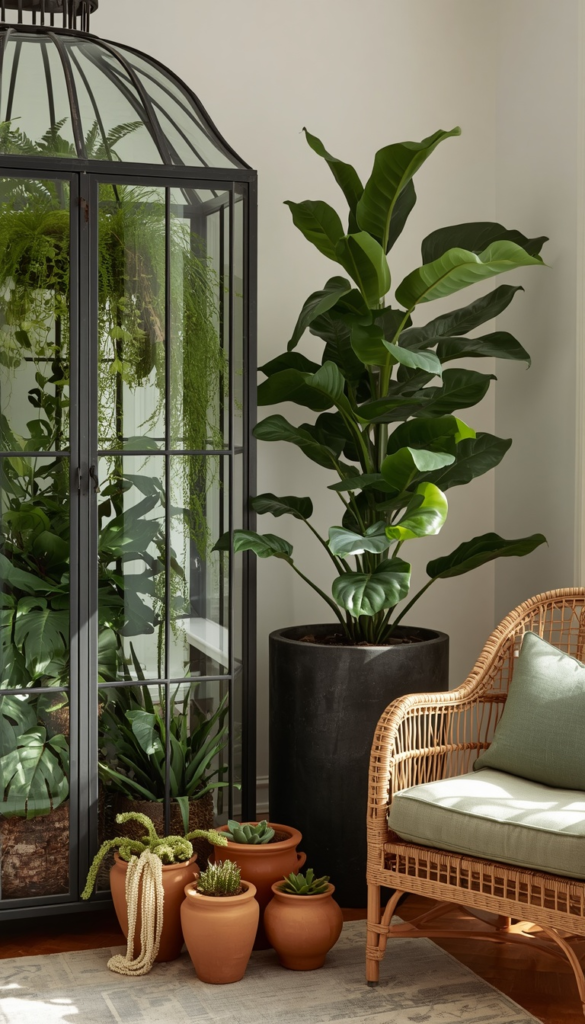
Dedicating one corner of a room to a dramatic plant display creates a green emphasis focal point that is completely unique to your space, always evolving, and deeply beautiful in the most organic, natural way. A Victorian-style glass terrarium cabinet filled with rare tropical plants has an almost theatrical quality — the delicate metal framing and lush greenery within creating a miniature world-within-a-world effect that is endlessly fascinating to look at and genuinely mesmerizing for guests. Surrounding the terrarium with additional floor plants of varying heights builds the composition into something that feels like a genuine indoor garden sanctuary, pulling the outside world into the warmth and light of your home.
The selection of plants for a statement corner is a beautifully personal process. Choose plants with significantly different leaf shapes, textures, and shades of green for maximum visual interest — the enormous glossy leaves of a fiddle leaf fig against the delicate lace-like fronds of a maidenhair fern creates a dialogue between different botanical worlds. Vary the containers: tall stone planters, chunky terracotta pots, elevated plant stands in aged brass or teak wood, hanging macramé with trailing vines. Group plants in odd numbers — three, five, seven — and at different heights for the most natural, effortlessly composed look. This green corner will become the most loved and most photographed spot in your entire home.
29. Architectural Paneling and Dado Rails
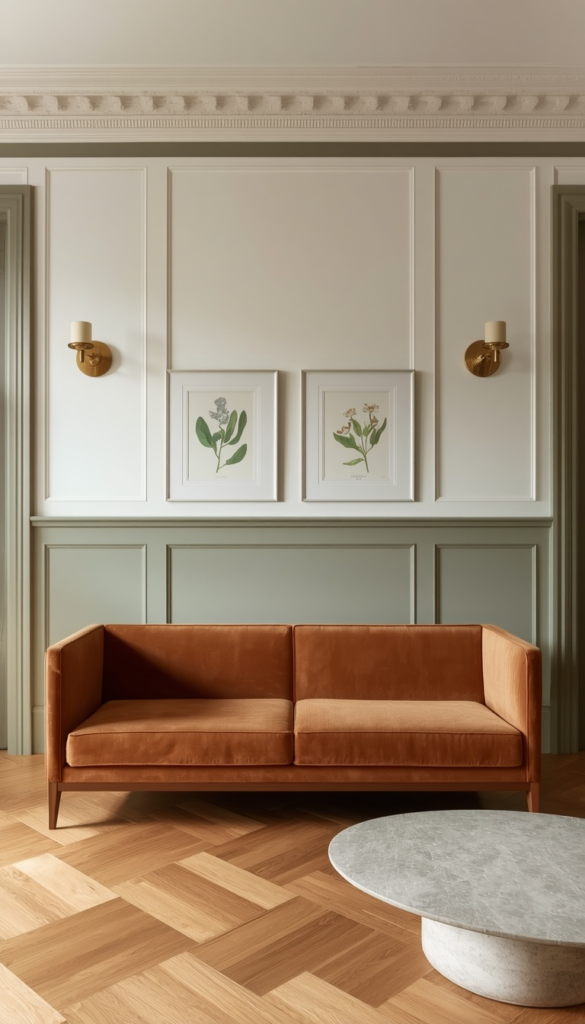
Architectural wall paneling — whether traditional wainscoting, Georgian-style raised panels, or contemporary flat-panel grid designs — is one of the most reliably transformative emphasis treatments in interior design. It adds an immediate sense of depth, structure, and considered craftsmanship to a wall that goes far beyond what paint alone can achieve. The lower panel section creates a natural dado level that visually anchors the room and makes it feel more contained and proportioned. Painting the paneling in a contrasting tone to the wall above — sage green below and warm white above, or deep navy below with pale grey above — creates a two-tone drama that looks genuinely expensive and architecturally significant without structural work.
The versatility of wall paneling across different design styles is extraordinary. In a traditional Georgian or Victorian interior, ornate raised panels in deep lacquered tones or glossy off-white paint feel authentically period-correct and timelessly grand. In a contemporary Scandinavian-influenced space, simple flat rectangular grid panels in a single tone — all walls, ceiling included — create a quiet, understated sophistication. In maximalist interiors, painted panels in jewel tones with gold picture rail and brass picture lights become a backdrop for curated art that looks genuinely museum-worthy. Whatever your design language, adding paneling to a key wall immediately communicates that this is a room where architecture and beauty have been taken seriously.
30. The Grand Dining Table as Ceremonial Centerpiece
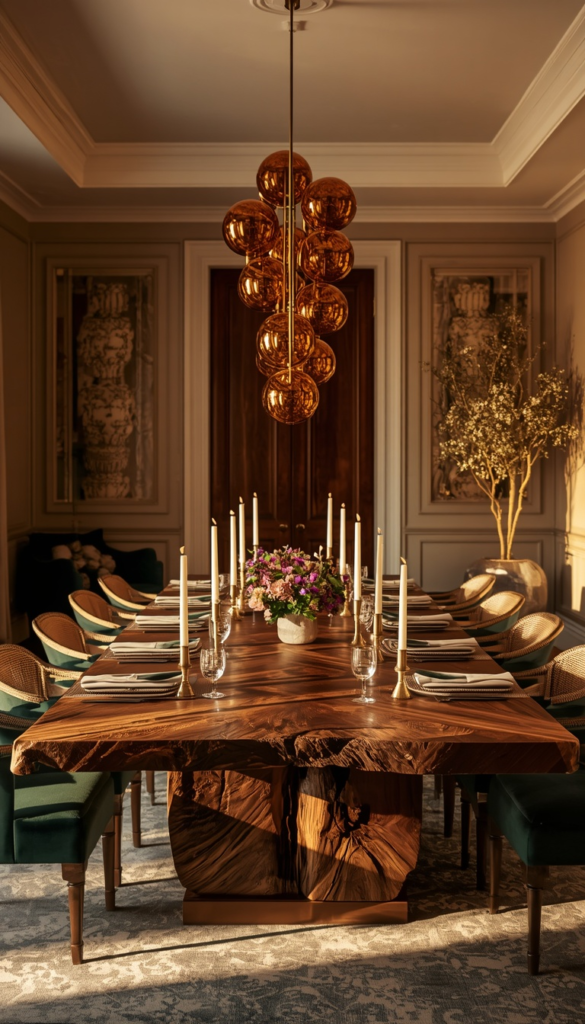
The dining table is perhaps the most emotionally significant piece of furniture in a home — it is where families gather, where friendships deepen, where celebrations are held and difficult conversations are navigated. When you invest in a truly extraordinary dining table and make it the conscious centerpiece and emphasis element of a dedicated dining space, you are elevating the entire act of eating together into something ceremonial and beautiful. A live-edge walnut table with natural bark detail retained carries within it the history of a single tree — organic, irreplaceable, and genuinely magnificent. Pair it with statement chairs in rich velvet or aged leather and the table becomes a destination rather than just a piece of furniture.
The ritual of dressing a beautiful table — laying linen napkins, positioning candles, arranging simple seasonal flowers from the garden, choosing music for the evening — becomes a genuinely pleasurable act when the table itself is this beautiful. The statement light above the table is the other crucial element: a cluster of hand-blown amber glass pendants hung at varying heights above a long dining table creates an intimate, theatrical atmosphere that makes even a simple weeknight dinner feel like a special occasion. This is the magic of emphasis design at its most powerful: it transforms the everyday into the memorable, the functional into the beautiful, and the house into a home worth gathering in.
Conclusion
Great design is never accidental — it is the result of intention, beauty, and knowing exactly where you want the eye to travel when someone walks into your room. These 30 emphasis interior design ideas are more than trends: they are invitations to live more beautifully, to surround yourself with spaces that reflect your personality and your dreams, and to feel genuinely proud of the home you have created.
Whether you fall in love with the drama of dark moody walls, the romance of a canopy bed, the grandeur of a statement staircase, or the quiet beauty of a wabi-sabi inspired corner — each idea has the power to transform a room from ordinary to truly extraordinary. You do not need to implement all thirty. Sometimes one single, thoughtful emphasis choice is all it takes to make an entire room feel complete, considered, and deeply, personally yours. Start with the idea that made your heart beat a little faster when you scrolled past it. Trust that feeling — it is the beginning of your most beautiful room yet.
👉 Which idea did you love the most? Drop a comment below and let us know which emphasis interior design idea you are planning to try first — we would love to be inspired by your space!