

Introduction
There is something truly magical about stepping outside into a garden that feels like it belongs in the English countryside — where roses climb old stone walls, lavender sways in the breeze, and every corner invites you to slow down and breathe deeply. If you have ever dreamed of transforming your yard into a lush, blooming paradise, you are in exactly the right place. English garden ideas have taken over Pinterest for a reason — they are romantic, timeless, and breathtakingly beautiful in a way that no other garden style can match.
Whether you have a tiny backyard or a sprawling lawn, there is an English garden idea waiting to bring it to life. From wildflower meadows to secret garden nooks, cottage herb beds to ivy-covered archways, this list has everything you need to create your dream outdoor space. And trust us — you are going to absolutely fall in love with idea #9. Let’s dig in.
1. Climbing Rose Archway Entrance
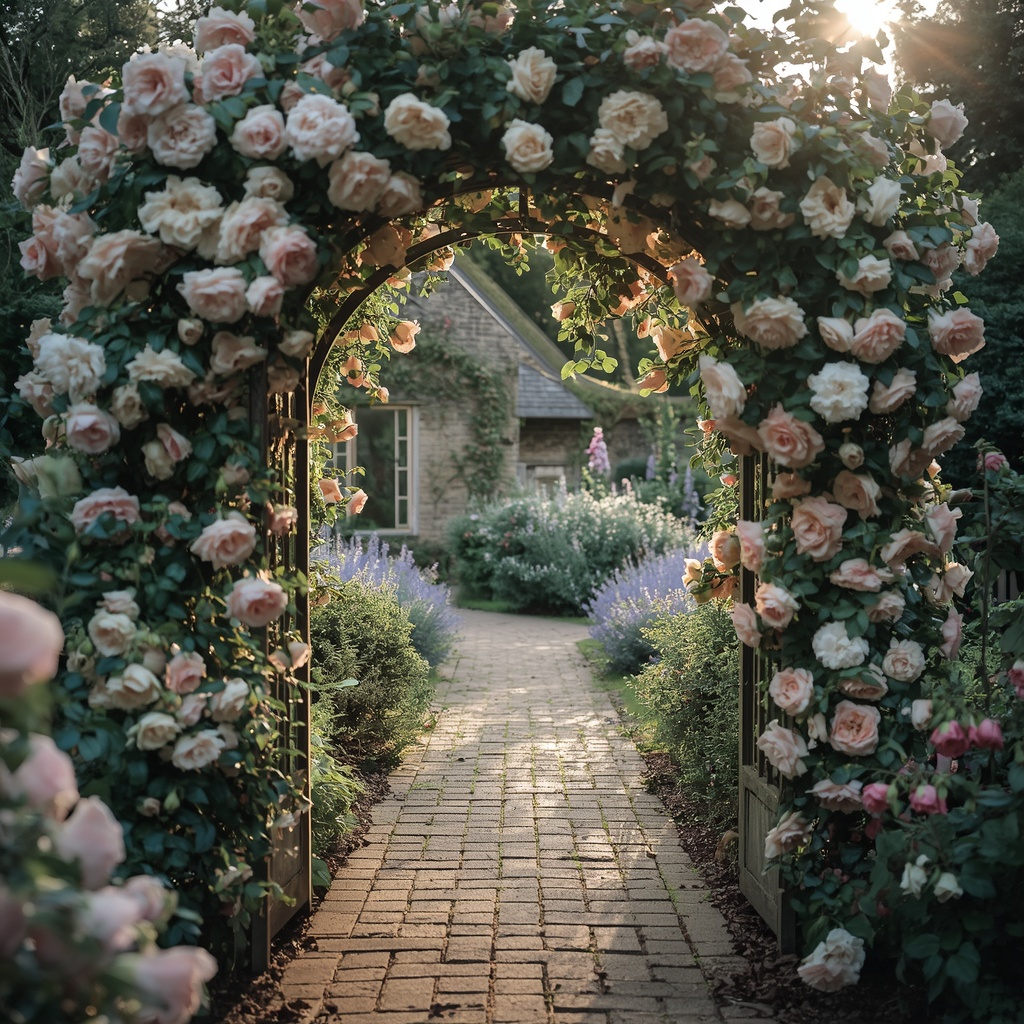
A climbing rose archway is perhaps the most iconic symbol of the classic English garden, and it is making a serious comeback in modern outdoor design. There is something deeply romantic about walking under a cascade of blooming roses — the soft petals, the gentle fragrance, and the way the light filters through the leaves create a moment that feels almost dreamlike. This feature works beautifully as an entrance to your garden, framing a pathway and immediately setting a warm, welcoming tone. Choose heritage varieties like ‘New Dawn’ or ‘Compassion’ in soft pinks, creams, or peaches for that authentic cottage feel.
To build this look, start with a sturdy wooden or wrought iron arch painted in matt black, deep forest green, or weathered white. Allow your climbing roses to grow freely over several seasons — the natural, slightly wild look is exactly what makes this style so charming. Underplant the base with lavender, catmint, or sweet alyssum to add ground-level colour and fragrance. The combination of structure and softness is what gives this idea its Pinterest power. Every time you walk under that archway, you will feel like you have stepped into your own private piece of the English countryside. Pure magic.
2. Wildflower Meadow Corner
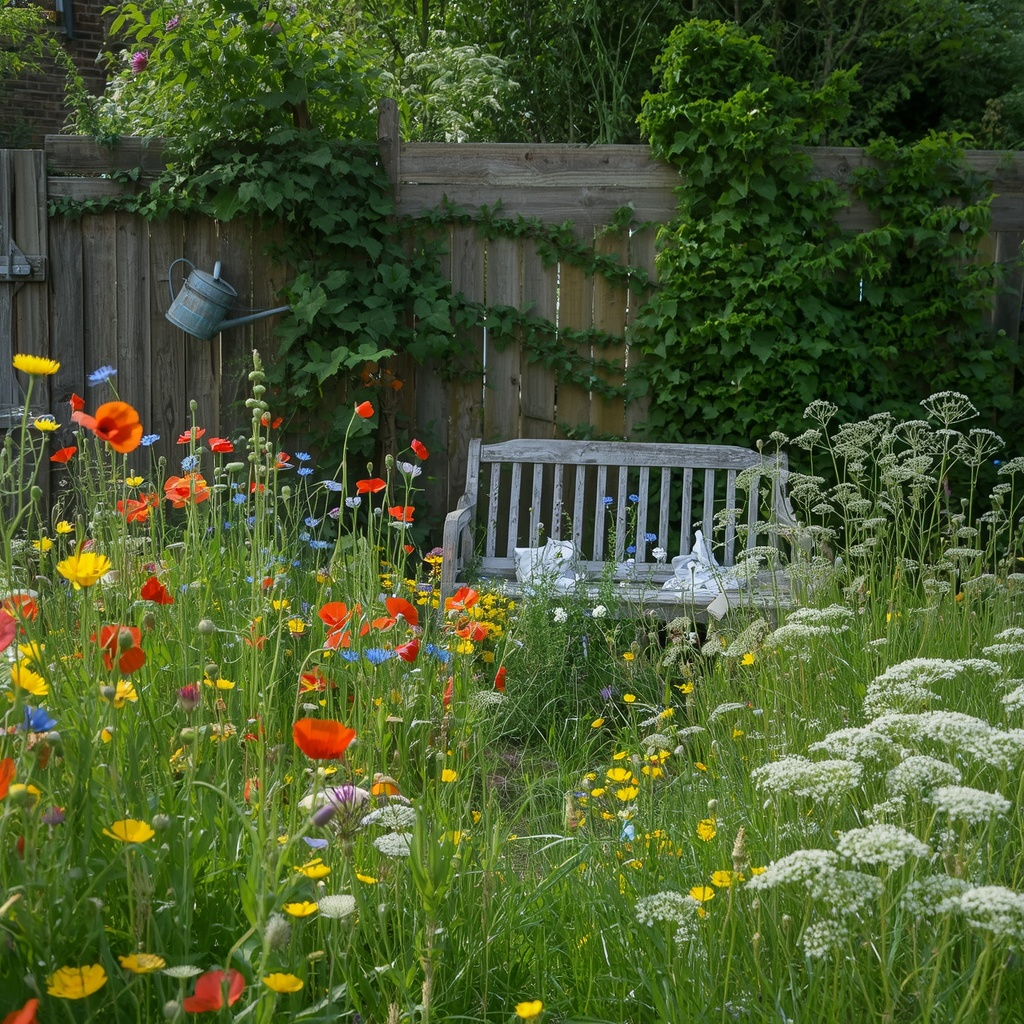
One of the most liberating English garden ideas you can embrace is turning a corner of your yard into a wildflower meadow. Rather than manicured perfection, this style celebrates the beauty of nature doing its own thing — and the results are absolutely breathtaking. A wildflower corner creates a habitat for bees, butterflies, and birds, making your garden feel alive in a way that perfectly planted beds sometimes cannot. The colours are bold yet natural: deep reds, sky blues, soft yellows, and delicate whites all growing together in glorious, joyful abundance. It is effortlessly beautiful and surprisingly easy to achieve.
All you need to get started is a patch of cleared ground, a good wildflower seed mix suited to your climate, and a little patience. Scatter the seeds in autumn or early spring, give them light and water, and watch the magic unfold over the coming weeks. Add a rustic wooden bench or a stone birdbath nearby to create a little sanctuary within the meadow. The beauty of this idea is that it looks better every year as the plants naturalise and spread. There is something deeply satisfying about sitting beside your wildflower corner on a summer afternoon, watching bees drift lazily from flower to flower. It is peace, pure and simple.
3. Lavender-Lined Garden Path
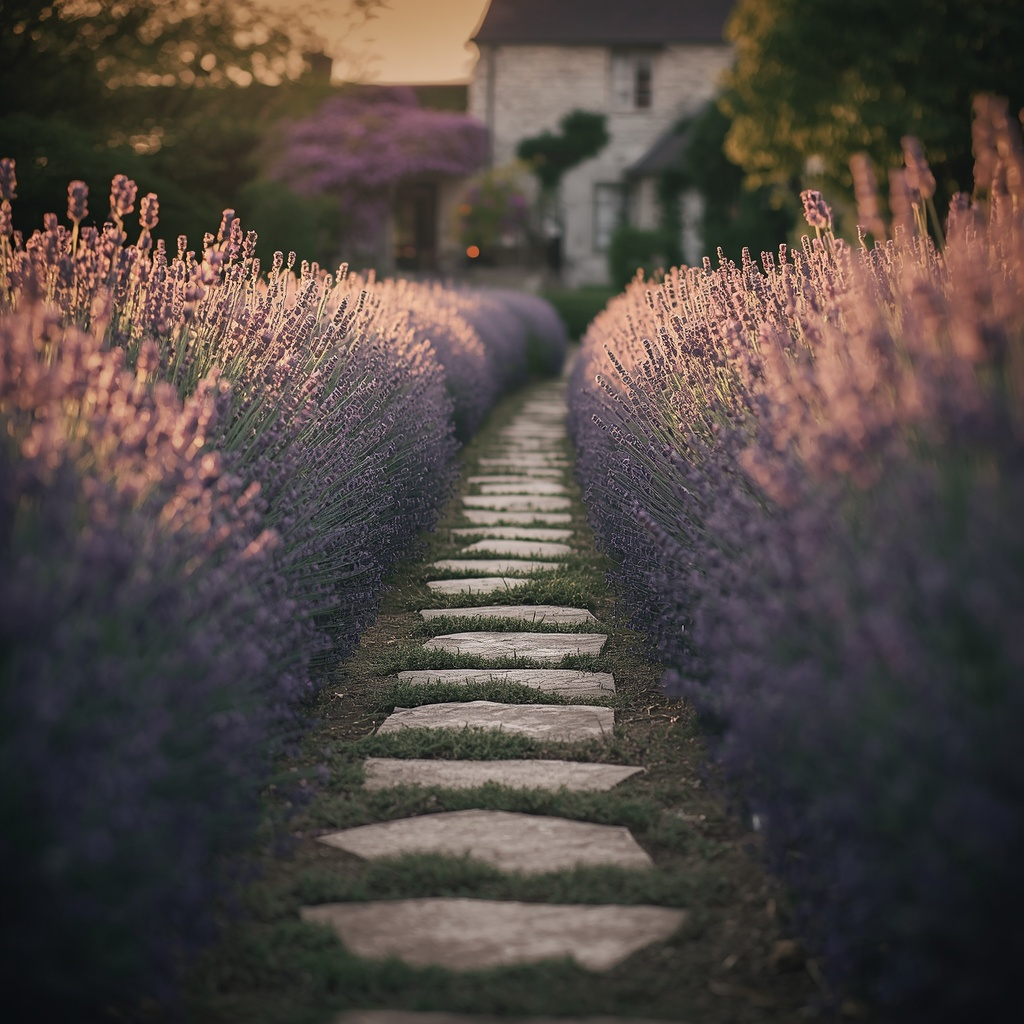
A lavender-lined path is one of those English garden ideas that hits all your senses at once — the colour, the scent, the soft buzzing of bees on summer afternoons. Lavender has been a cornerstone of English cottage gardens for centuries, and it is not hard to see why. Those silver-green stems topped with deep violet flower spikes are beautiful from the moment they emerge in late spring right through to autumn when they dry to a silvery, whisper-soft perfection. Lining a garden path with lavender creates both structure and softness at the same time, guiding your eye and your footsteps while filling the air with one of the most loved fragrances in the natural world.
For the best effect, choose English lavender varieties like ‘Hidcote’ or ‘Munstead’ which stay compact and bushy without flopping. Plant them in generous clumps about 30cm apart on either side of a stone, gravel, or brick path and trim them lightly after each flowering to keep them neat and encourage more blooms. Interplant with alliums, catmint, or white roses for a complementary colour palette that feels classic yet fresh. This path idea photographs beautifully at golden hour when the light turns that gorgeous amber and the purple really glows. Stepping along your lavender path at the end of a long day will feel like the most calming, restorative walk you could ever take.
4. Cottage Herb Garden Bed
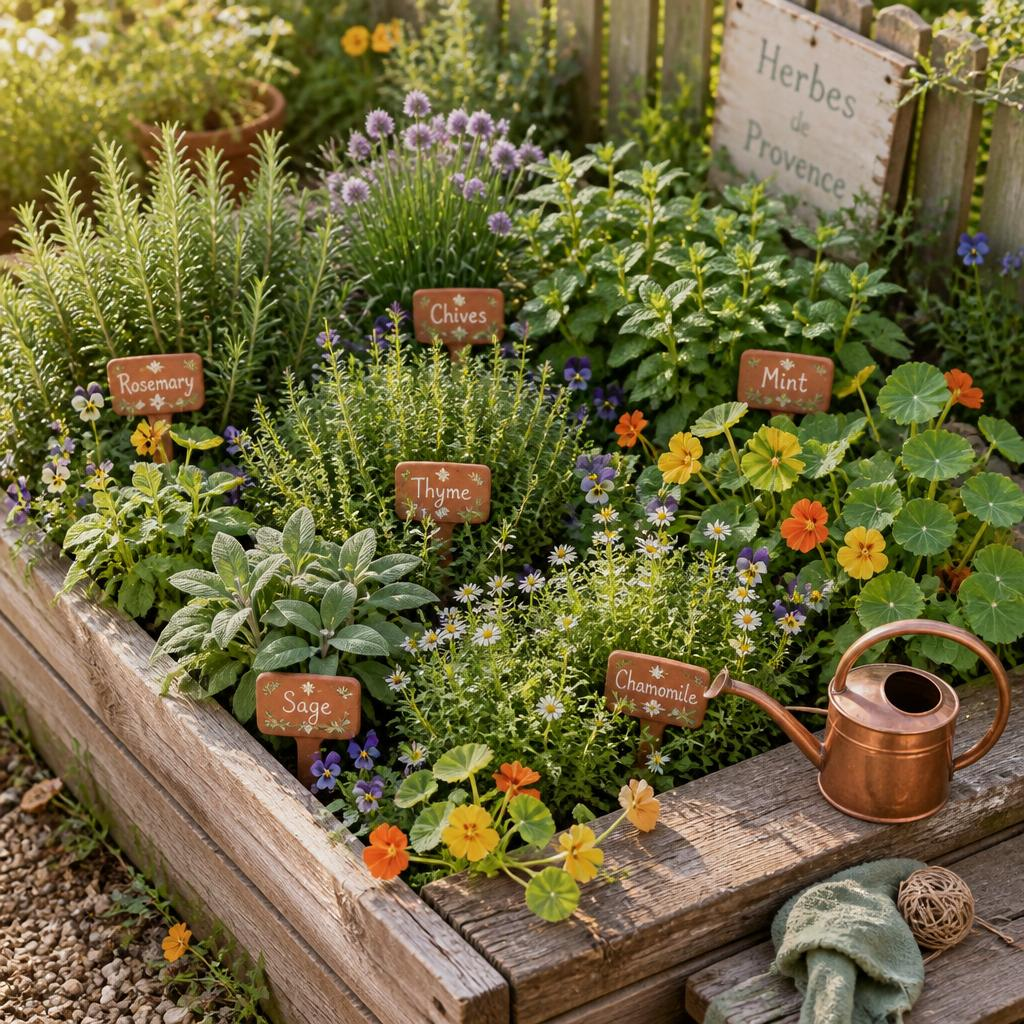
A cottage herb garden is one of those English garden ideas that makes your outdoor space feel genuinely lived in and loved — and it brings incredible practical value too. Imagine stepping outside every morning to snip fresh rosemary for your roast, grab a handful of mint for your tea, or gather chamomile flowers for a soothing evening drink. The English cottage garden tradition has always blended the beautiful with the useful, and a well-planted herb bed does exactly that. The varying textures of herbs — the softness of thyme, the spiky drama of chives, the silvery felted leaves of sage — create a tapestry of green that is endlessly interesting to look at, even before the flowers appear.
To create this look, use a raised wooden bed for both drainage and visual charm. Group herbs in loose clusters rather than strict rows, letting them mingle and spill gently over the edges for that authentic, slightly rambling cottage feel. Tuck in edible flowers like nasturtiums, violas, and borage to add pops of colour and a touch of whimsy. Label each plant with small terracotta or chalkboard markers for a practical yet charming detail. Kept in a sunny, sheltered spot, your herb garden will reward you with incredible scent, flavour, and beauty all season long. There is real joy in growing things you can actually use every day.
5. Stone Birdbath with Rose Surround
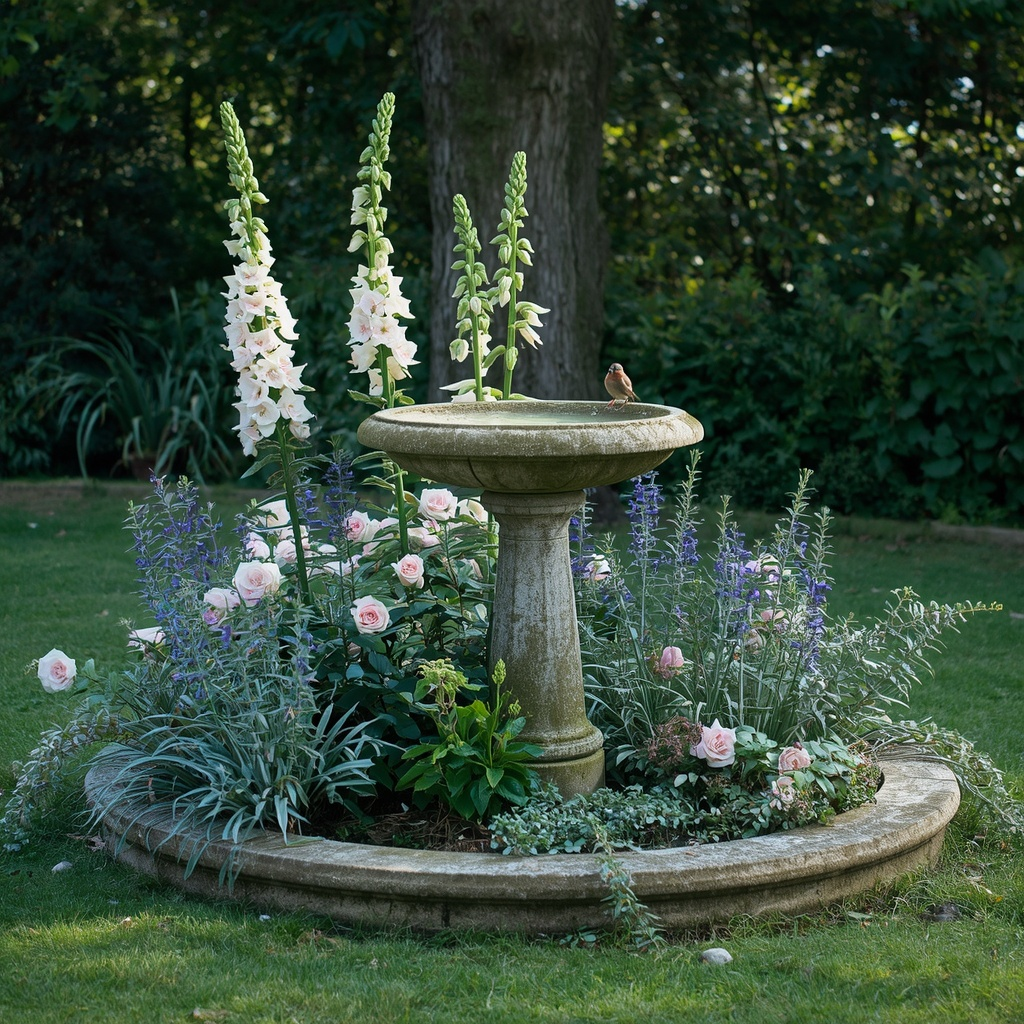
A stone birdbath with a rose surround is the kind of garden feature that turns a simple yard into a living, breathing sanctuary. There is something endlessly charming about watching birds splash and bathe in a mossy stone basin while roses nod their heads gently in the breeze nearby. This combination — the hard permanence of stone and the soft, fleeting beauty of blooms — is deeply rooted in English garden design tradition. It creates a natural focal point in any garden bed or lawn, drawing the eye and inviting you to pause, sit nearby, and simply watch the world happening in miniature around the birdbath.
Choose a birdbath with a slightly rough, aged finish rather than a smooth modern one — the weathered look with patches of moss and lichen is exactly what gives this feature its English charm. Surround it with a generous planting of David Austin roses in blush pink or creamy white, underplanted with white foxgloves, purple salvia, and silver-leaved stachys for contrast and texture. Refresh the water every few days and watch your garden transform into a busy little hub of wildlife activity. Sparrows, robins, blackbirds, and finches will all visit regularly, filling your garden with birdsong that no playlist could ever replicate. It is the most natural kind of joy.
👉 ✨ Keep scrolling, the next ideas get even better!
6. Ivy-Covered Garden Wall
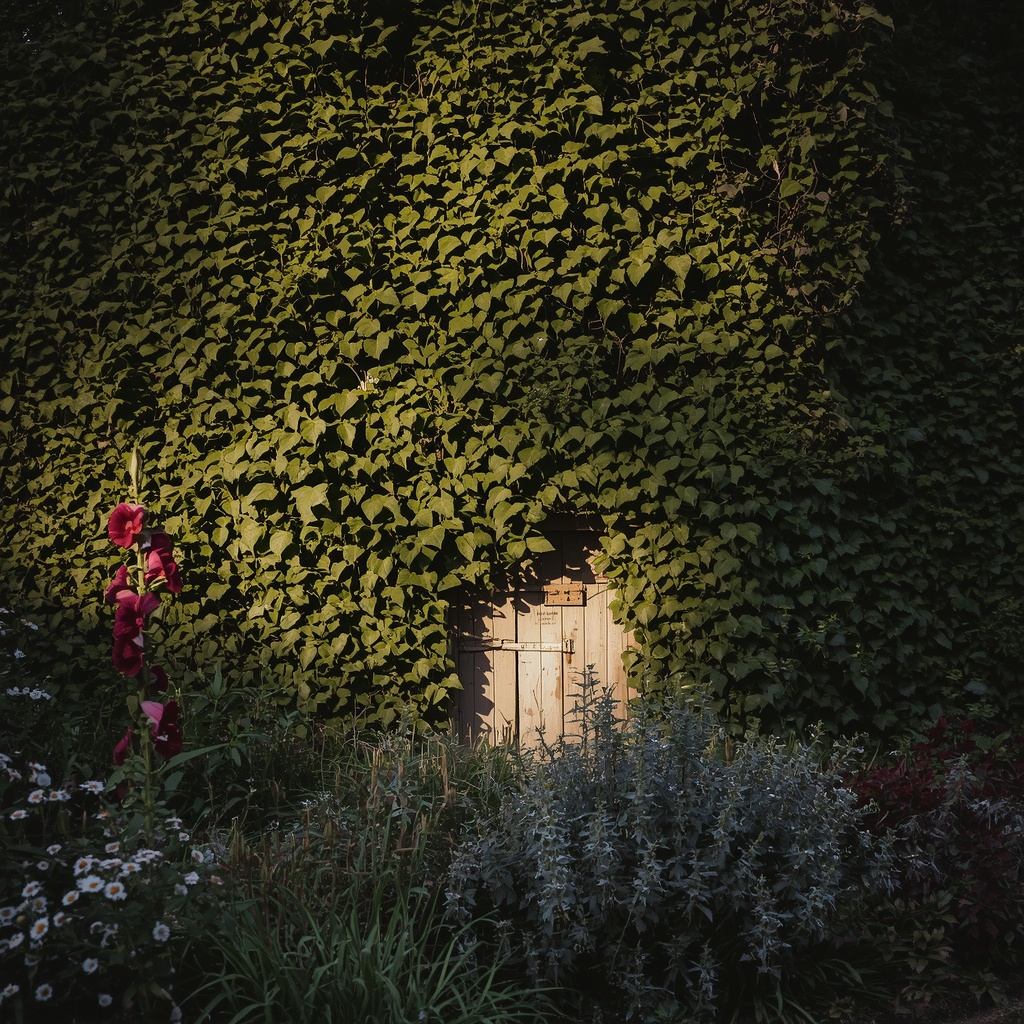
An ivy-covered garden wall instantly adds decades — even centuries — of character to any outdoor space, and it is one of those English garden ideas that works whether your wall is brand new or beautifully old. The way ivy grows and spreads, following the contours of bricks and stones, softening hard edges and filling gaps with glossy, architectural leaves, feels almost like watching a building being gently reclaimed by nature. This look is especially powerful in smaller gardens where a wall might otherwise feel cold or dominating — once covered in ivy, that same wall becomes a rich, textured backdrop that makes everything planted in front of it look even more lush and beautiful.
Common ivy is the classic choice, but for more colour variety consider Boston ivy, which turns a spectacular blazing red in autumn, or Virginia creeper for similar fiery autumn tones. Leave small gaps in the ivy growth to allow natural textures of the underlying stone or brick to peek through — this contrast between plant and material is part of what makes the look so visually rich. At the base, plant bold cottage garden flowers like hollyhocks, lupins, and foxgloves that are tall enough to create a layered effect against the wall. Come evening, when the light drops and the shadows lengthen, an ivy wall has a moody, magical quality that is genuinely hard to describe until you have seen it for yourself.
7. Secret Garden Seating Nook
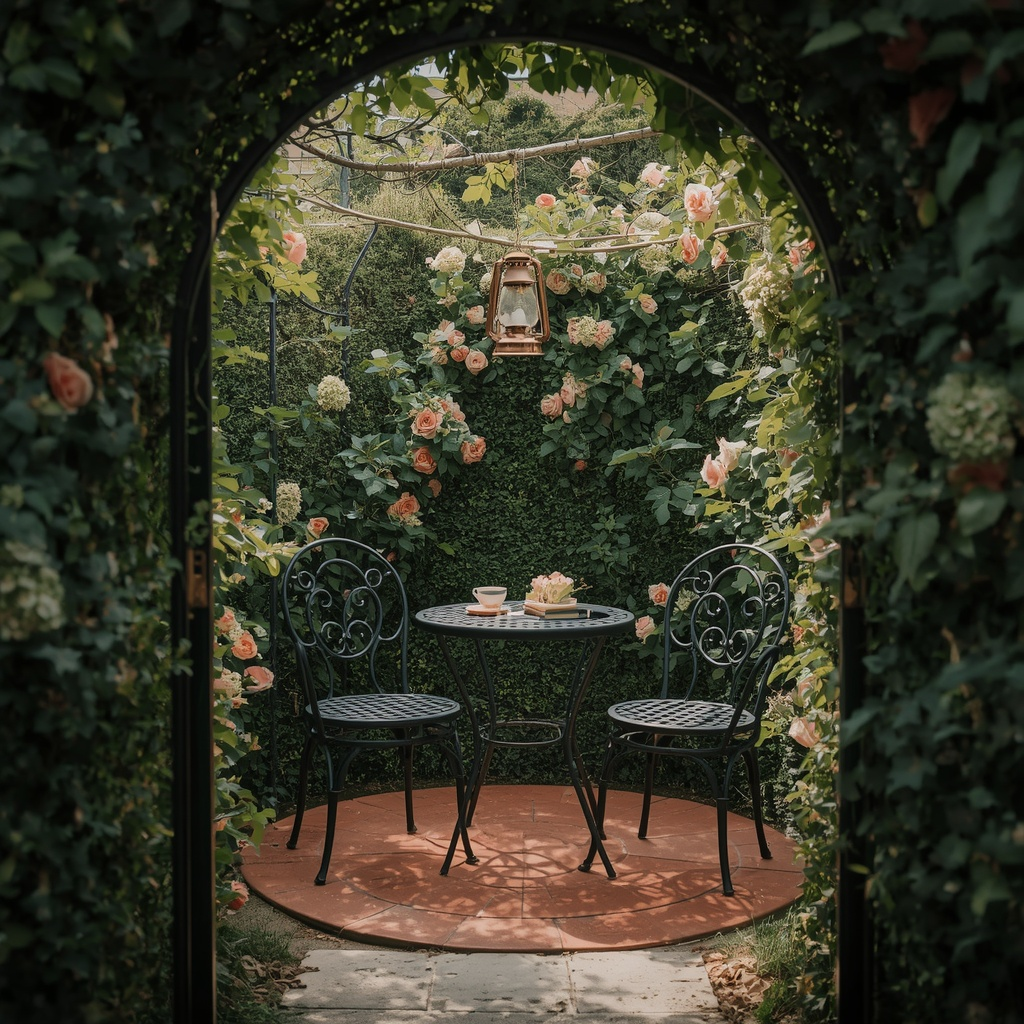
Every garden should have one spot that feels entirely your own — a hidden corner where the outside world fades away and time slows to a gentle, pleasant crawl. A secret garden seating nook is exactly that kind of place, and creating one is one of the most rewarding English garden ideas on this entire list. The key is enclosure — using tall hedging, trellises covered in climbers, or a combination of dense planting to create a sense of being wrapped and sheltered on at least three sides. Once you step inside that little green room, something immediately shifts. The noise drops, the light softens, and you feel completely held by the garden around you.
Furnish your nook with a small bistro table and a pair of comfortable iron or rattan chairs — weather-resistant materials that age beautifully over time. Add a stone or terracotta tile floor beneath the furniture to define the space and prevent it from feeling muddy in wet weather. Hang a simple lantern or string of warm Edison lights overhead for evening use, and train jasmine or honeysuckle up the surrounding trellis for intoxicating fragrance. Keep a small side table for your tea, a book, and perhaps a little vase of freshly cut flowers from the garden. Once you have created this space, you will find yourself gravitating to it every single day without fail.
8. Foxglove and Fern Border
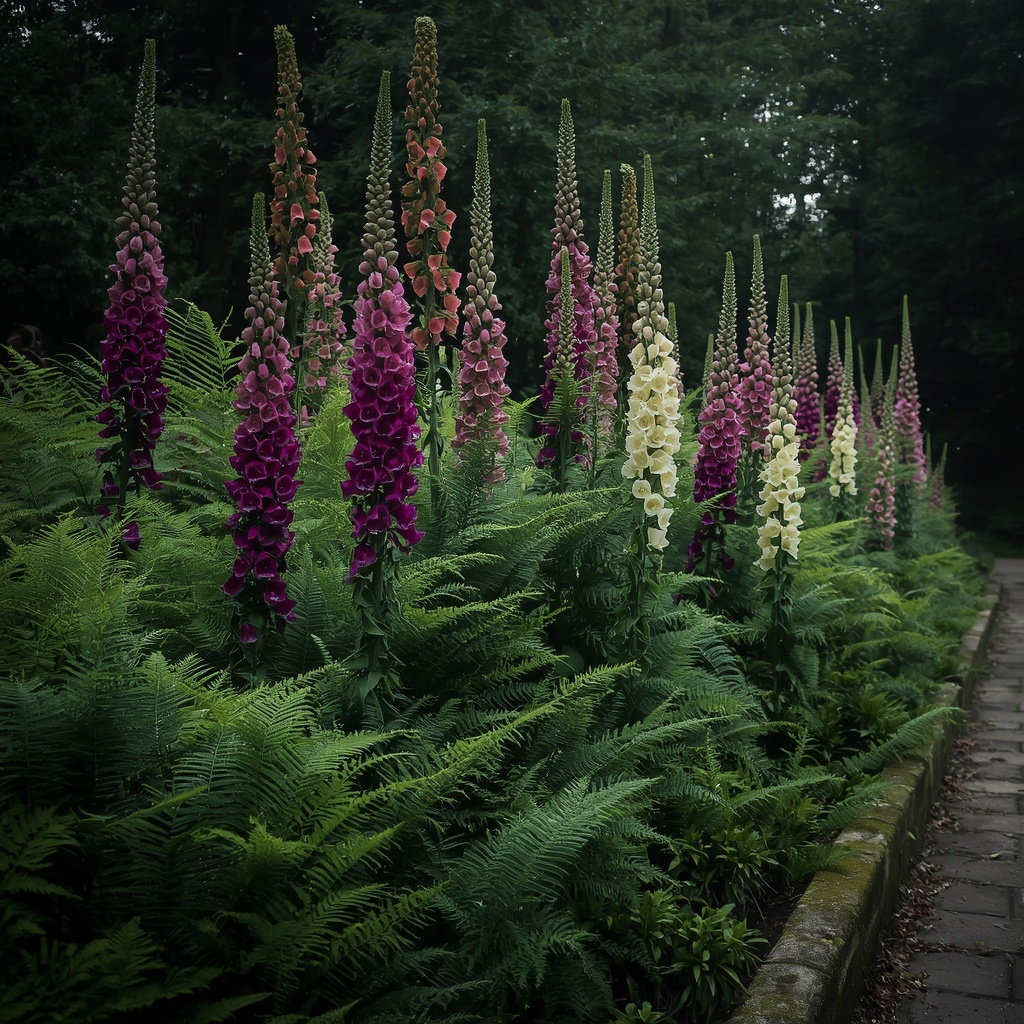
If you have a shaded or partially shaded border that you have been struggling to fill with life, a foxglove and fern combination is a revelation. These two plants were practically made for each other — the tall, architectural drama of foxgloves rising up through a low, textured carpet of ferns creates a border that looks completely natural and yet somehow perfectly composed at the same time. Foxgloves are quintessentially English, their spotted, tubular flowers beloved by bumblebees and cottage gardeners alike for generations. They self-seed prolifically once established, meaning your border will grow and evolve organically each year in the most wonderful, unpredictable way.
For the best effect, plant foxgloves in loose groups of three to five and let ferns of varying sizes fill the spaces between them. Add a few hart’s tongue ferns for their distinctive, undivided glossy leaves alongside feathery soft shield ferns for textural contrast. This border works beautifully alongside a stone path or wooden fence, where the soft planting can drape and soften hard edges. In late spring when the foxgloves are in full bloom and the ferns are unfurling their new season fronds, this combination is genuinely breathtaking — one of those garden moments that makes you stop walking and just stare in quiet, grateful awe.
9. Rose-Covered Pergola Dining Area
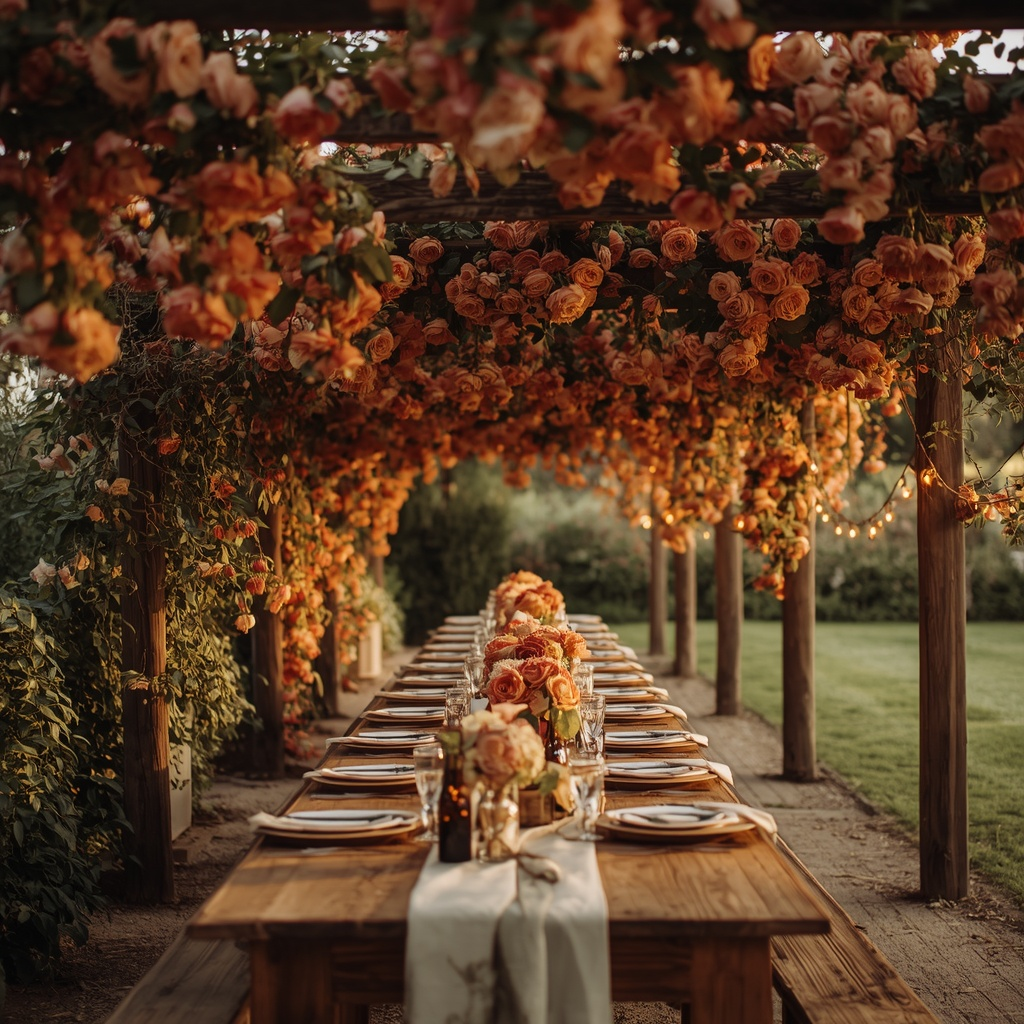
If there is one English garden idea on this list that will make every single person who sees it catch their breath, it is this one — and it is absolutely worth the extra effort to create. A rose-covered pergola dining area takes outdoor eating and transforms it into something that feels closer to a scene from a period drama than a back garden dinner. The pergola provides structure and shade, the climbing roses provide intoxicating colour and fragrance, and the space beneath becomes a room unlike any other — one with living walls and a floral ceiling that changes and grows more beautiful with every passing season.
Choose a sturdy timber pergola with good cross beams for the roses to grow along, and plant two or three vigorous climbing varieties at the base of each post. Roses like ‘Gertrude Jekyll’, ‘Generous Gardener’, or ‘Climbing Iceberg’ are all excellent choices that produce generous, repeated blooms all summer. Underplant with lavender or catmint at the base for additional colour and scent at ground level. Furnish the space with a long farmhouse table, comfortable chairs with cushions in linen or vintage florals, and string lights woven through the overhead branches for evening dinners. Every meal eaten here will feel like a celebration, even if it is just Tuesday.
10. Wisteria-Draped Garden Fence
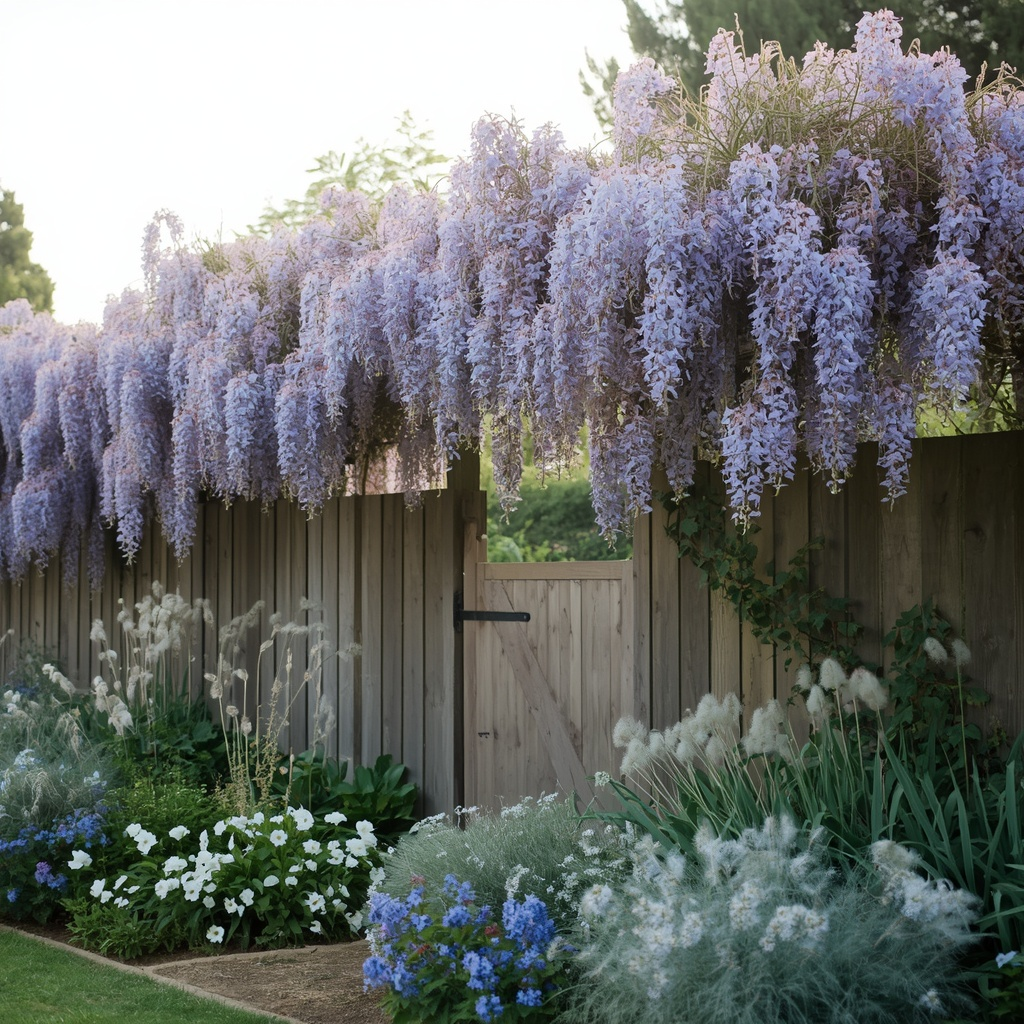
Wisteria is arguably the most spectacular flowering climber in the English garden palette, and training it along a garden fence creates a seasonal display that will leave your neighbours quietly jealous every single spring. Those long, pendulous flower clusters in shades of lavender-blue, lilac, and soft purple have a theatrical quality that no other climber can quite match — and the fragrance that drifts from them on a warm spring morning is nothing short of extraordinary. A wisteria-draped fence creates a stunning seasonal focal point that transforms your garden boundary from a functional divider into an absolute showstopper for four to six spectacular weeks each year.
Wisteria does require patience — it can take two to three years to establish and begin flowering freely — but the wait is absolutely, categorically worth it. Choose Japanese wisteria for longer flower clusters or Chinese wisteria for a slightly earlier and more compact bloom. Train the stems horizontally along the fence using wires or trellis to encourage the best flowering, as wisteria blooms on short spurs from established side shoots. Below the fence, plant a soft cottage border of forget-me-nots, alliums, and white tulips that will bloom at the same time for a coordinated spring display that looks truly magazine-worthy. The first spring your wisteria blooms in full glory, you will understand why gardeners across England have been growing it for centuries.
👉 ✨ Keep scrolling, the next ideas get even better!
11. Cottage Garden Front Border
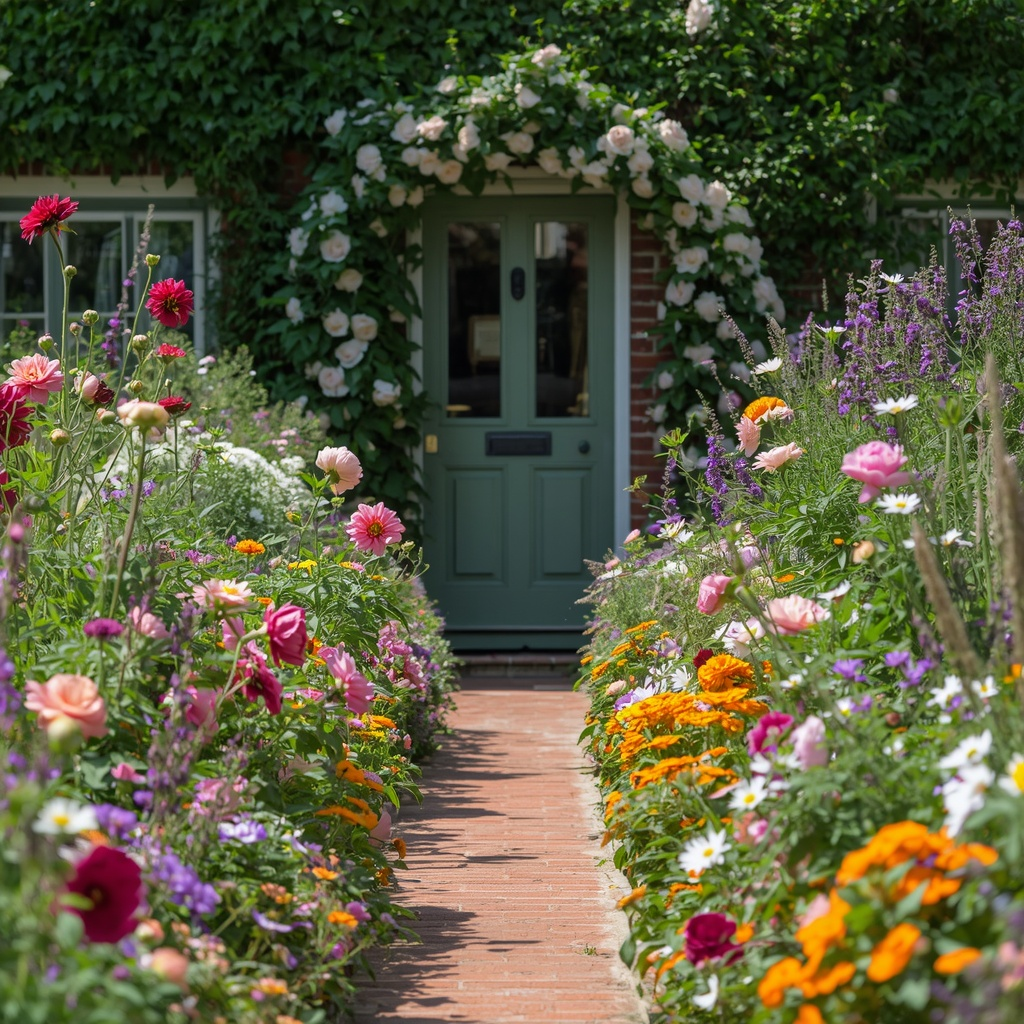
A cottage garden front border is your home’s very first impression, and when it is done well, it makes your property look genuinely extraordinary — the kind of house that passing strangers slow down to admire and photograph. The English cottage garden style at its most front-facing is all about generous, overflowing abundance: flowers jostling happily for space, colours that should not work together somehow doing exactly that, and a lushness that signals care, love, and a deep joy in growing things. This is not a style for those who like everything neat and controlled — it is for people who believe that beauty and a little bit of wildness belong together.
To create your front border, choose a mix of heights: tall dahlias, delphiniums, and hollyhocks at the back; medium roses, peonies, and lupins in the middle; and low-growing catmint, violas, and alchemilla at the front, spilling softly over the path edge. Aim for a long season of interest by mixing spring bulbs, summer perennials, and autumn dahlias so something is always blooming from March right through to October. Keep to a loosely coordinated colour palette — deep pinks, purples, whites, and soft oranges all work beautifully together without clashing — and repeat colours throughout the border to create a sense of rhythm and harmony. Passers-by will stop. They always do.
12. Topiary Balls in Mixed Planting
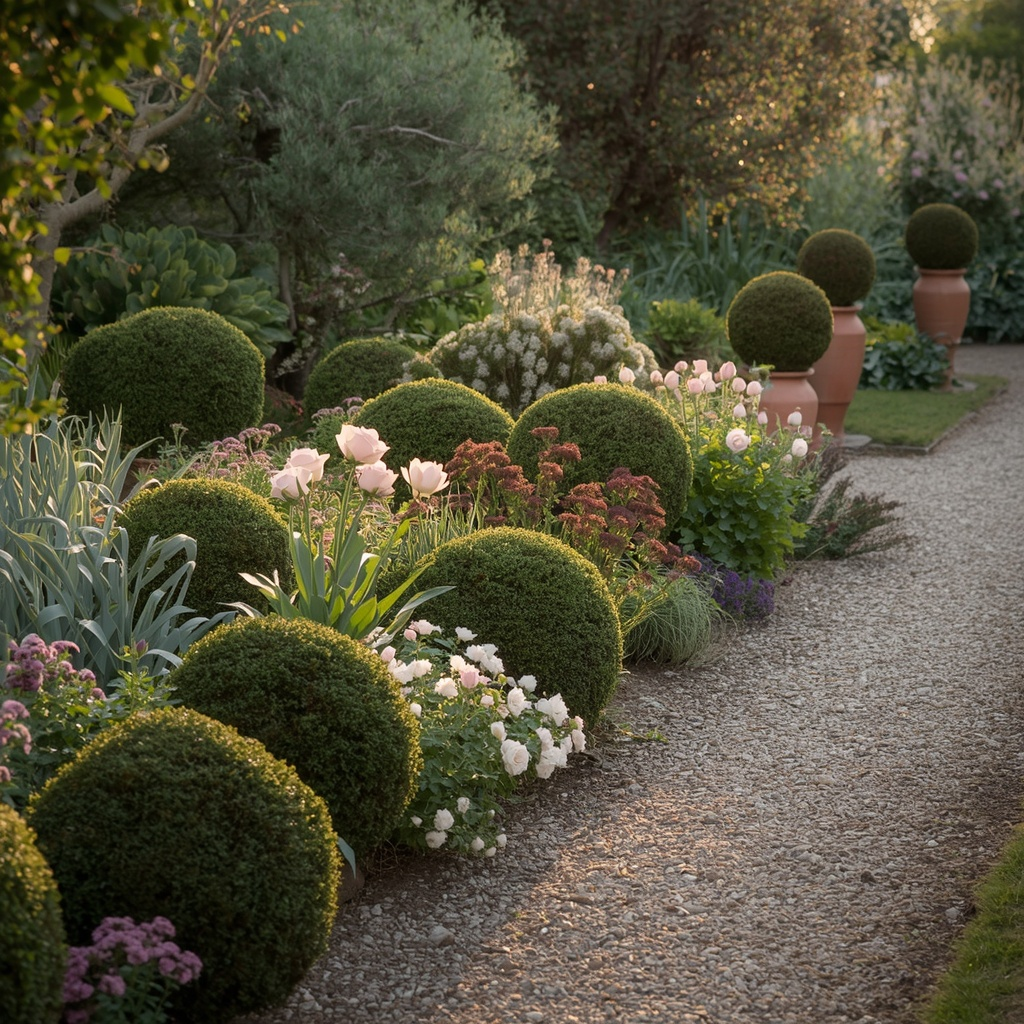
Topiary balls might sound like something reserved for grand English estates and National Trust properties, but they are actually one of the most accessible and transformative English garden ideas for everyday gardens too. The beauty of clipped spheres of box or yew within a loose cottage garden planting is the contrast they create — that interplay between strict, architectural shape and relaxed, romantic blooming is the visual heartbeat of the traditional English garden style. The topiary provides year-round structure and an element of formality that stops the planting from looking simply untidy, while the flowers around it soften the rigidity and add seasonal colour and life.
Box blight has been a concern in recent years, so consider using alternatives like Ilex crenata (Japanese holly) or Euonymus japonicus for topiary if you are planting fresh. Clip your balls into shape in late summer for a neat finish that will hold through winter. Surround them generously with roses, alliums, lavender, and silver-leaved plants like stachys or artemisia for a planting palette that is soft, slightly silvery, and deeply beautiful. In winter, when most of the cottage garden planting has died back, those dark green topiary balls will still be holding the garden together with quiet, sculptural dignity. Structure and romance, living side by side.
13. Sunken Garden with Stone Steps
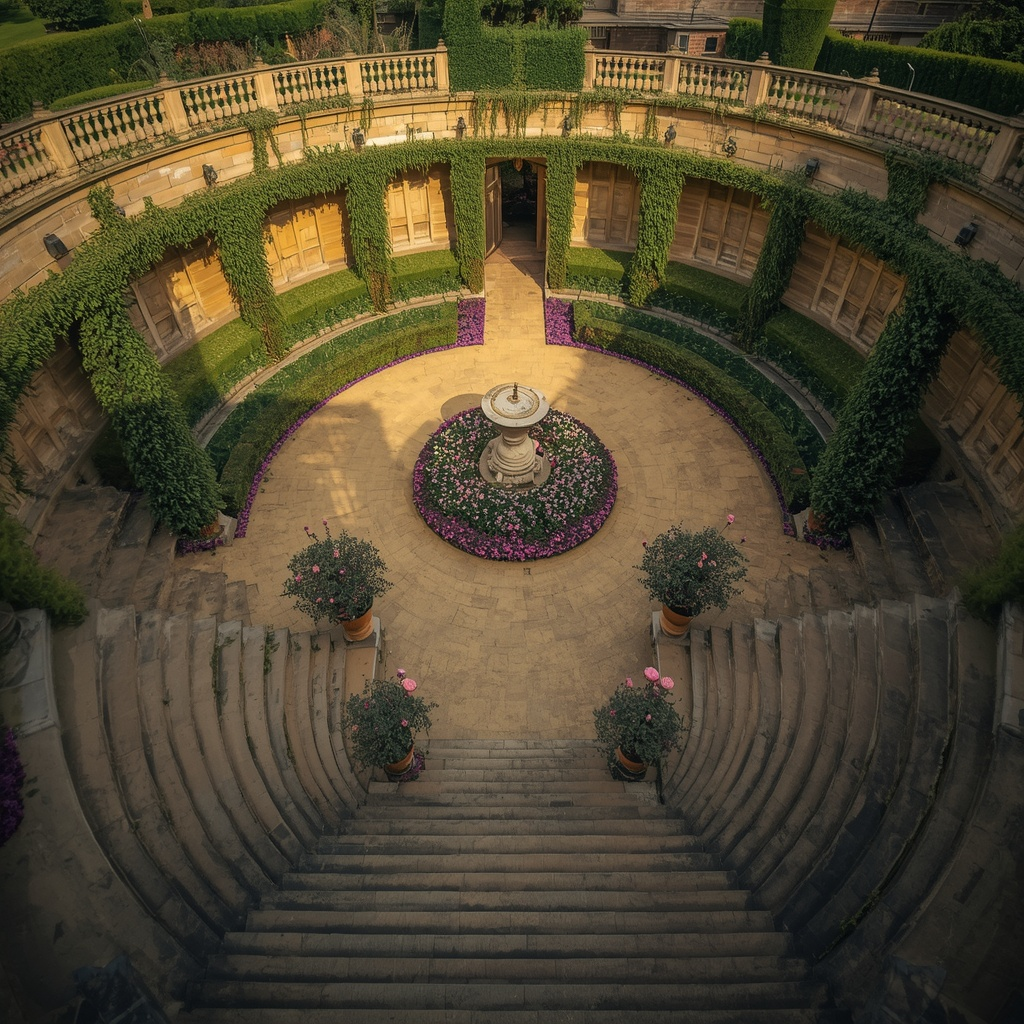
A sunken garden is the kind of feature that elevates a garden from lovely to absolutely extraordinary, creating a sense of drama and discovery that flat gardens simply cannot match. The idea of descending stone steps into an enclosed garden room feels genuinely exciting — there is a magic to that moment of transition, stepping down from the main garden level into a space that feels sheltered, private, and entirely its own world. English country house gardens made famous use of sunken gardens throughout the Arts and Crafts movement period, and the look remains just as powerful and desirable today as it was a century ago.
Even in a modest garden, a small sunken area of just a few steps down can create a remarkable effect. Use natural stone or aged brick for the retaining walls and steps, and let creeping plants like aubrieta, alyssum, and wall pennywort soften the edges. Plant the sunken area with a formal but not fussy rose garden, using standard roses for height and low box hedging or lavender for edging to create a classic parterre feel. Add a central feature — a sundial, a birdbath, or a simple stone urn — to anchor the composition. On a warm afternoon, sitting in your sunken garden with the wind above you and the sun warming the stone, you will feel utterly at peace.
14. Meadow Grass with Bulb Naturalising
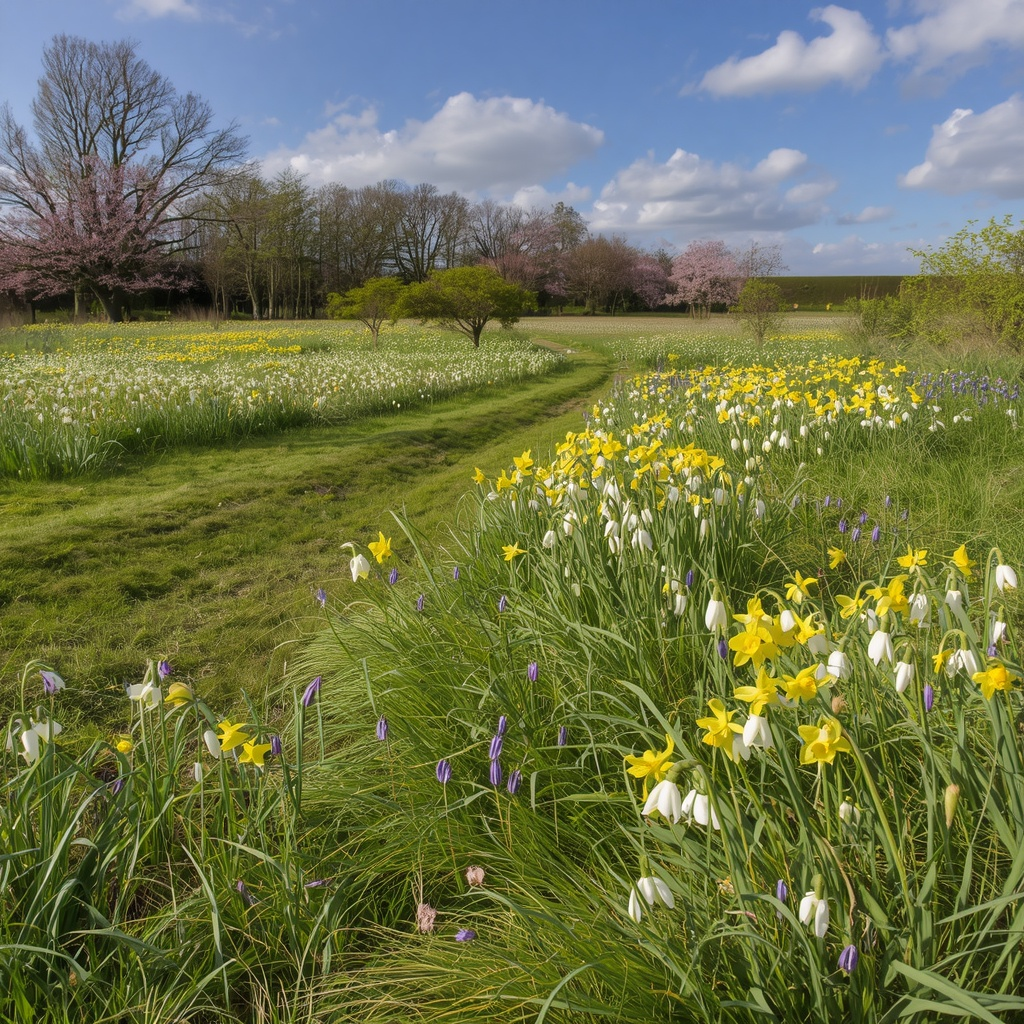
Naturalising spring bulbs through a section of lawn is one of those English garden ideas that asks very little of you but gives back almost unbelievably much. The simple act of scattering and planting daffodils, crocuses, snakeshead fritillaries, and muscari through an area of grass that you allow to grow a little longer creates a wildflower meadow effect that is breathtaking from late winter right through to early summer. Snowdrops emerge first in January, followed by crocuses in February, daffodils in March and April, and then later tulips and camassias as spring deepens — a rolling sequence of colour that changes week by week.
The key to successful naturalising is to plant your bulbs in irregular, naturalistic drifts rather than rows — scatter them randomly and plant them where they fall for the most convincing wild look. After flowering, allow the foliage to die back fully before mowing, as this feeds the bulbs for next year’s display. Mow a simple path or two through the meadow area to create a sense of intentionality — the contrast between mown path and long meadow grass is part of what makes this look so beautiful and considered. Each spring, your naturalised meadow will look a little fuller and more glorious as the bulbs multiply and spread of their own accord. Nature doing the best work all by itself.
15. Potager Kitchen Garden
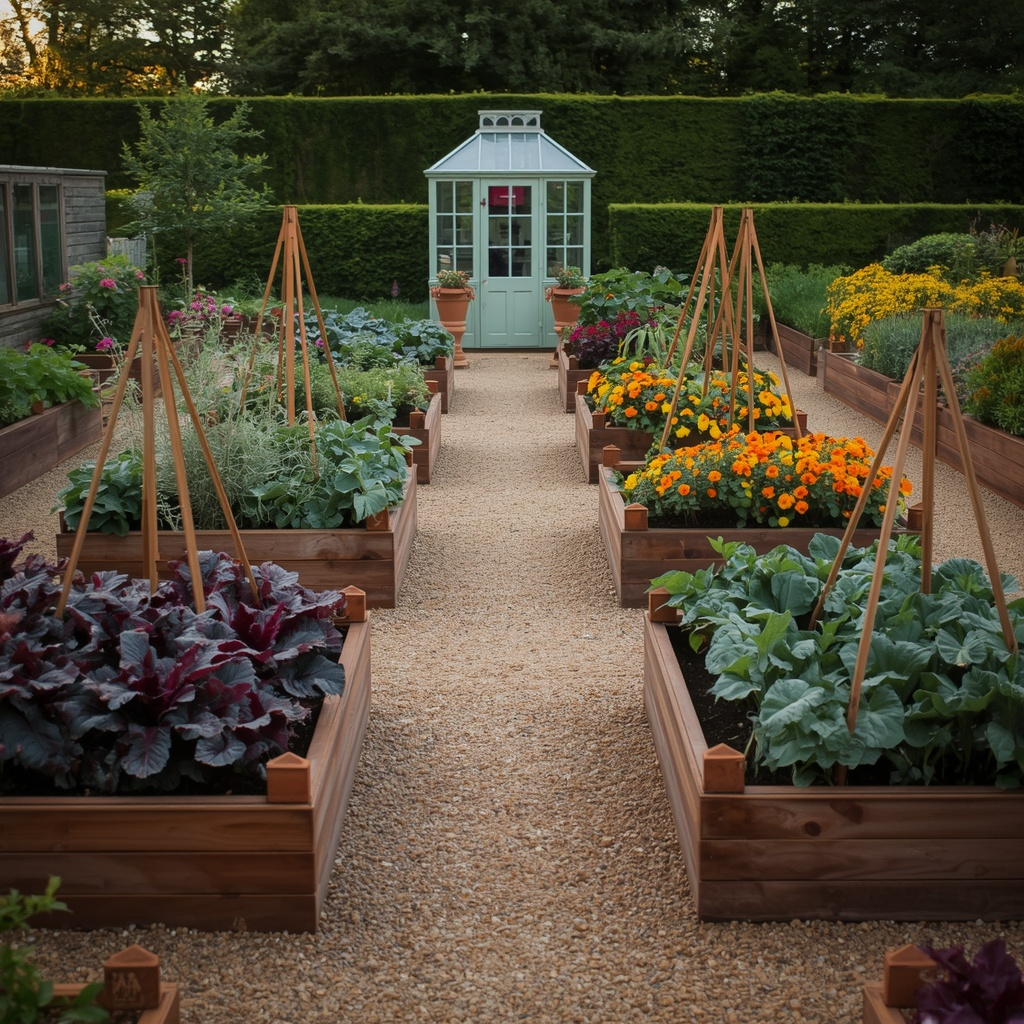
A potager — the French-inspired kitchen garden that has become a cornerstone of the English country garden tradition — is living proof that vegetables can be just as beautiful as flowers when they are grown with a little thought and care for their visual arrangement. The potager style takes the practical business of growing food and elevates it into something genuinely artistic, using colour, texture, height, and shape to create kitchen garden beds that look as good as they taste. Purple kale, ruby red chard, yellow courgette flowers, climbing beans on elegant rustic poles — each vegetable is chosen as much for how it looks as for what it produces.
The key to a beautiful potager is a structured layout — traditionally beds arranged in geometric patterns, divided by neat paths, with low edging plants like box, lavender, or chives defining each bed’s boundary. Within this structure, you can be wonderfully creative and relaxed about what you plant and where, mixing vegetables, herbs, and edible flowers freely. Add climbing plants on bamboo or hazel pole wigwams for vertical interest, and use terracotta pots at path junctions for additional height and charm. A well-tended potager in midsummer, when everything is growing abundantly and the evening light is golden, is one of the most satisfying and beautiful sights a garden can offer.
16. Dry Stone Wall Garden Feature
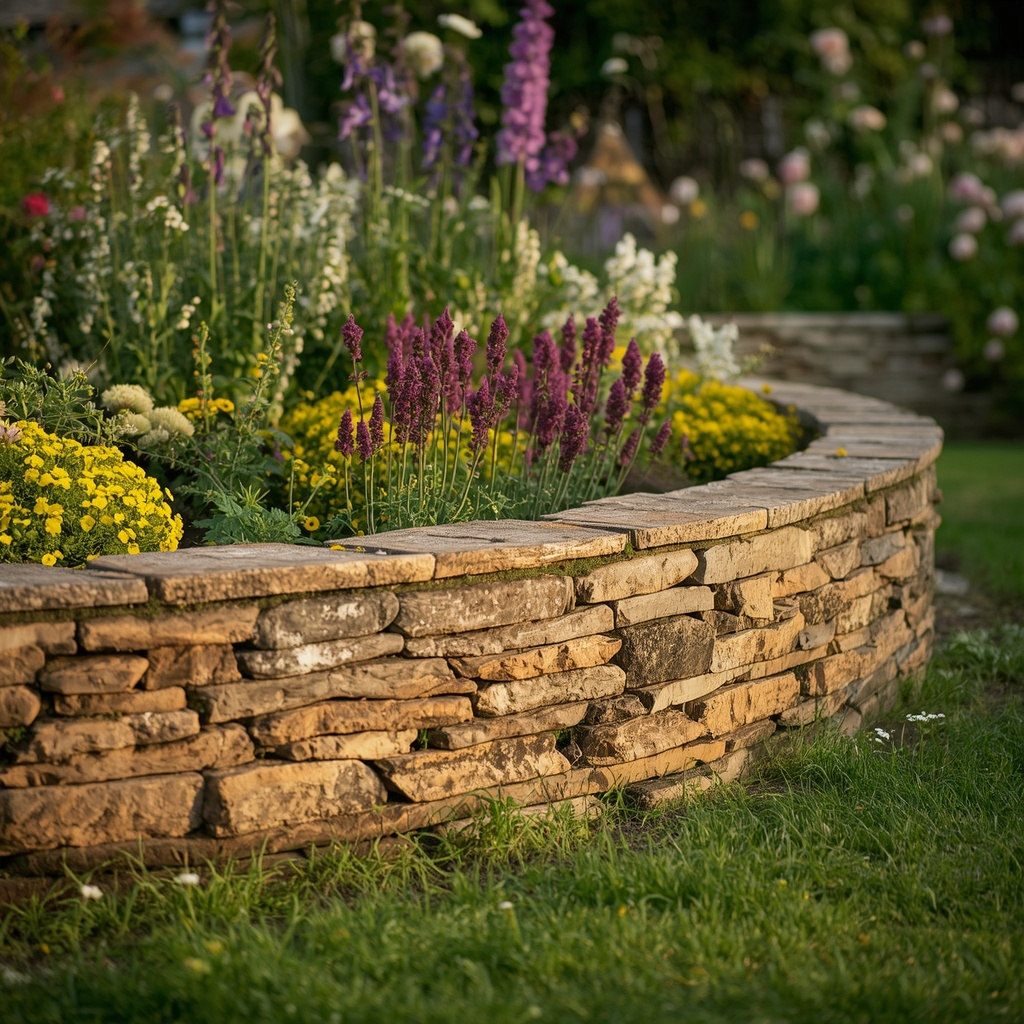
A dry stone wall is one of the most enduringly beautiful structural features in the English garden tradition — a piece of working craftsmanship that connects a garden to its landscape and its history in a deeply satisfying way. Unlike mortared walls, dry stone walls are built without cement, the stones fitted together so precisely that they hold by their own weight alone. This means the wall remains slightly permeable, and over time mosses, lichens, ferns, and small flowering plants colonise the crevices naturally, softening the hard edges and giving the wall a quality of having grown up organically from the ground itself. It is one of those features that looks better every single year.
If building a full wall feels too ambitious, consider a shorter retaining wall to create a raised bed, or simply use reclaimed stone to build a low, decorative wall feature as a garden divider. Plant the crevices deliberately with small alpine and trailing plants — aubrieta, thyme, stonecrop, and wall pennywort are all perfect — and let time and nature do the rest. Top the wall with prostrate rosemary or trailing plants for a softening effect that blurs the line between structure and planting. Sit near a dry stone wall on a warm afternoon and you will almost certainly find a lizard basking, a bumblebee investigating the crevices, or a wren threading its way through the gaps. Wildlife loves these walls as much as gardeners do.
17. English Rose Border with Repeat Blooms
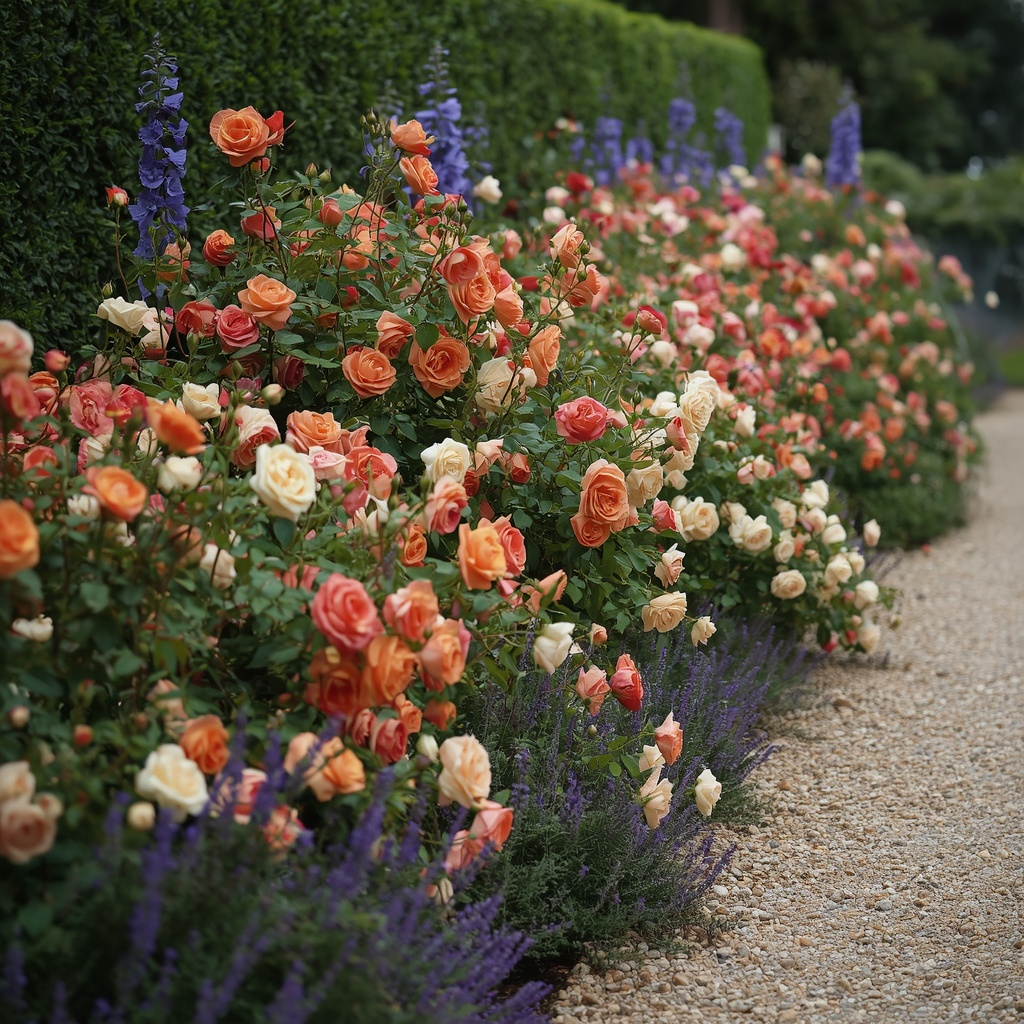
A repeat-flowering English rose border is perhaps the ultimate expression of the classic English garden aesthetic — and once established, it delivers months of incredible colour, fragrance, and beauty that rewards every bit of effort you invest in it. David Austin roses are the gold standard for this kind of planting: bred to combine the beautiful, many-petalled flower form and rich fragrance of old roses with the long, repeat-flowering season of modern varieties. A well-planted rose border using these varieties will give you waves of colour from June right through to the first frosts of autumn, with each flush often more generous than the last as the season progresses.
For a border that looks truly spectacular, layer your plants thoughtfully: tall roses at the back, medium and compact varieties in the middle, and low-growing companion planting — lavender, geraniums, alchemilla, catmint — at the front to cover the often bare lower stems of the roses. Dark green yew or beech hedging as a backdrop makes the colours of the roses sing. Feed your roses generously in spring and after each flowering flush to encourage maximum repeat blooming. Deadhead regularly to prevent the plant from putting energy into hips rather than new flowers. In midsummer, when the whole border is in full cry and the fragrance drifts across the garden on a warm evening, the effect is simply, indescribably glorious.
18. Formal Box Parterre
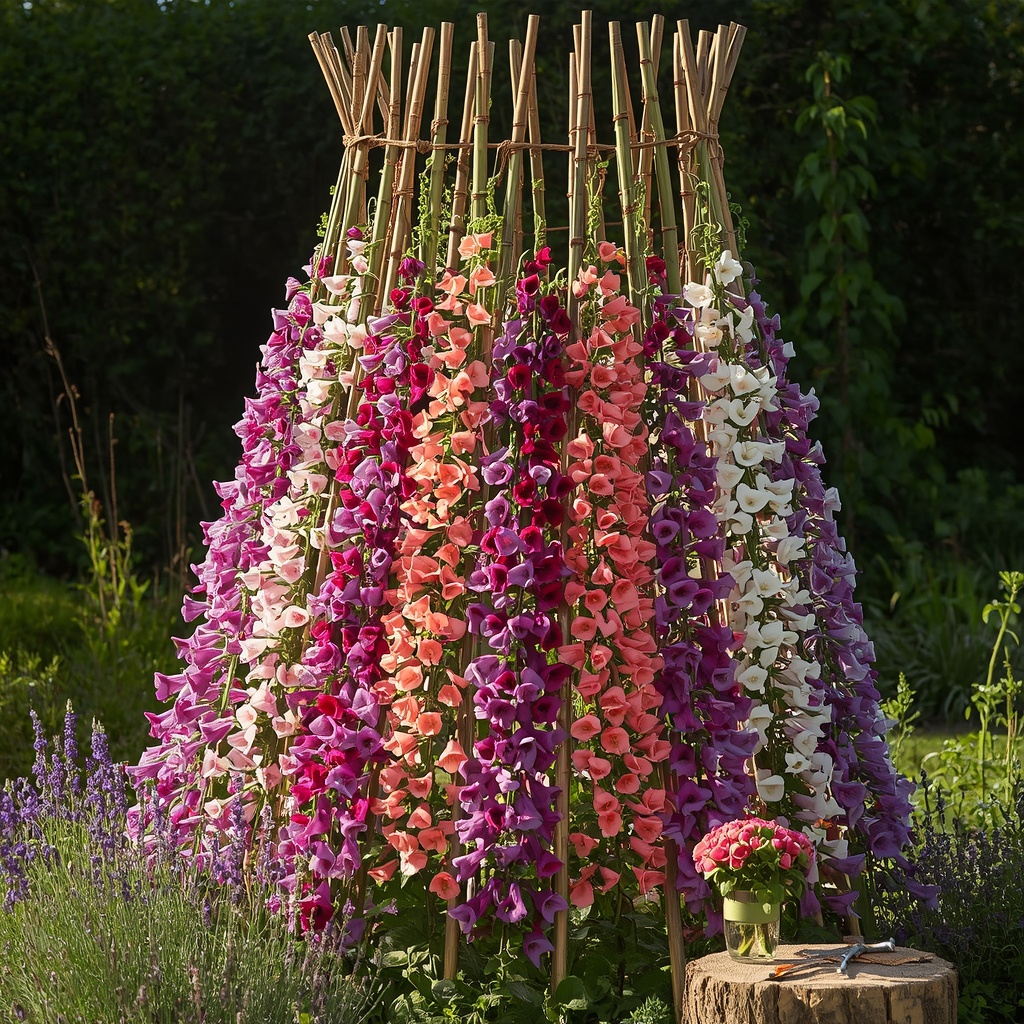
A box parterre is the most architectural of all English garden ideas — a living piece of design that is as much about geometry and structure as it is about plants and flowers. Parterres have been a feature of English formal gardens since the Tudor period, and their appeal has never diminished, because a well-executed parterre is genuinely beautiful in every season. In summer, the low box hedges frame colourful infill planting or coloured gravels; in winter, when everything else has died back, the dark green geometric shapes remain, dusted with frost, creating a garden that is just as beautiful in December as it is in July.
Designing a parterre requires some careful planning on paper before you begin — sketch out your geometric pattern (interlocking squares, diamonds, scrolls, or knot-garden shapes all work beautifully) and mark it out on the ground with string before planting. Use box, Ilex crenata, or teucrium for the hedging, and keep clipping sharp and precise twice a year to maintain crisp edges. Fill the spaces between the hedges with gravel in contrasting colours, low flowering plants, or even coloured mulch for a more contemporary take. Even a small parterre in a courtyard or formal front garden creates an immediate impression of confident, considered design. It is gardening as architecture.
19. Apple and Pear Espalier Wall
Espalier fruit trees trained flat against a sunny garden wall are one of the most beautiful and practical English garden ideas you can incorporate into your outdoor space — a feature that is both deeply decorative and genuinely productive in equal measure. The technique of training apple, pear, or plum trees into flat, geometric fan or horizontal tier shapes against a wall has been used in English kitchen gardens for centuries, making the most of warm wall-facing aspects for ripening fruit while creating an extraordinary living wall feature at the same time. A mature espalier tree, with its perfectly symmetrical tiers covered in blossom in spring and fruit in autumn, is a genuinely spectacular sight.
Choose a south or west-facing wall for maximum warmth and light, and select self-fertile or companion varieties grafted onto semi-dwarfing rootstocks for manageable size. Fix horizontal wires at 40cm intervals up the wall before planting, and train the young branches along the wires methodically over the first few years. Annual summer pruning — cutting back the side shoots to two or three leaves — keeps the tree in its trained shape and directs energy into fruit production rather than leafy growth. The harvest from an established espalier is often surprisingly generous, and the aesthetic value in the months between harvest is extraordinary. This is one of those English garden ideas that makes people ask ‘how did you do that?’ every single time they see it.
20. Sweet Pea Wigwam Feature
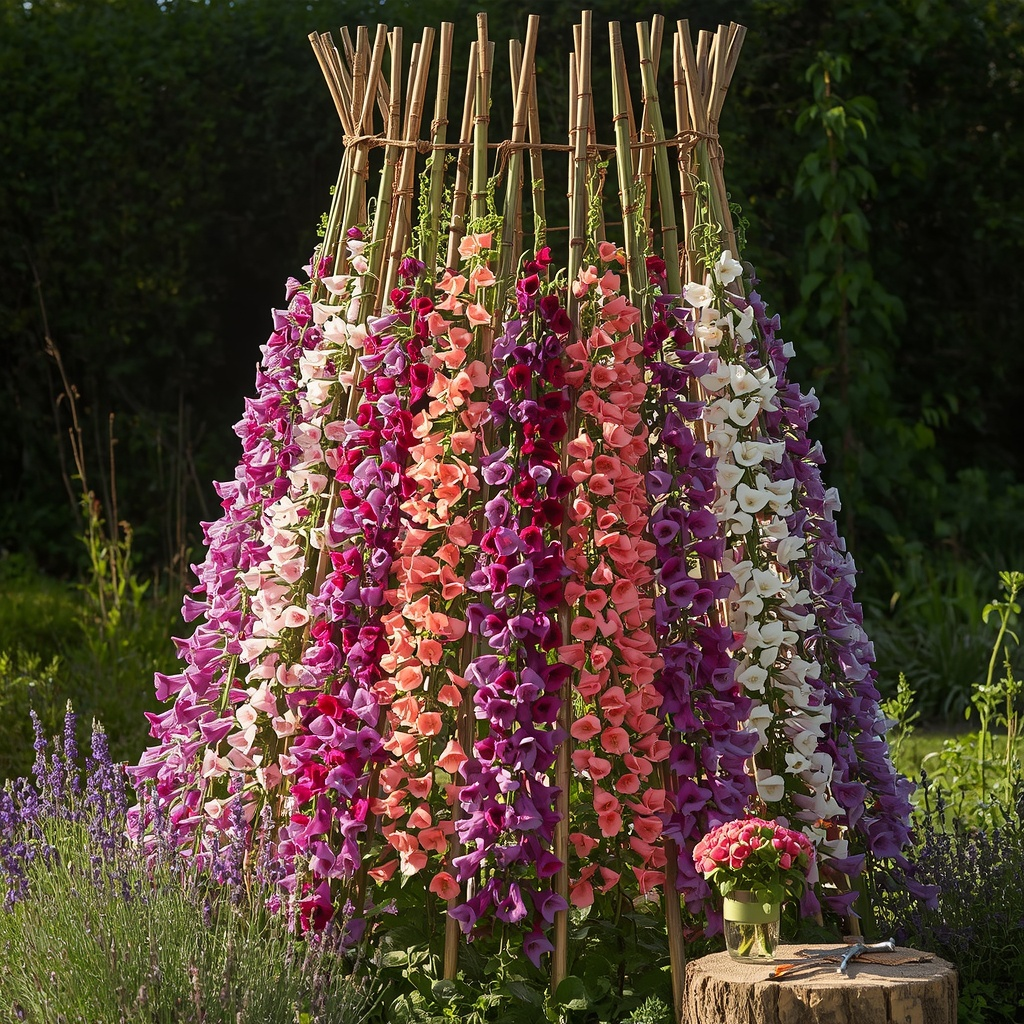
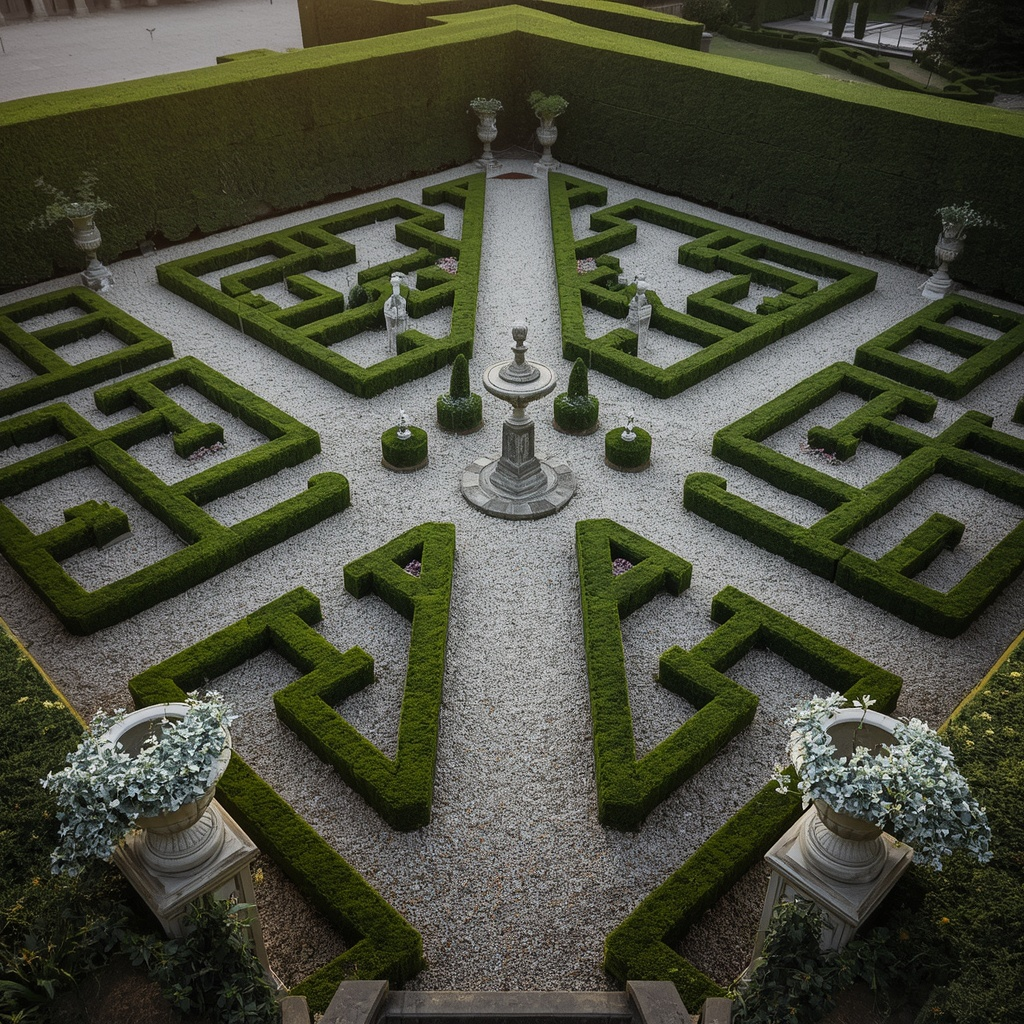
A sweet pea wigwam is pure, concentrated cottage garden joy in a single garden feature — and it is one of those English garden ideas that has been making gardeners happy for generations with remarkably good reason. There is something uniquely pleasurable about growing sweet peas: the extraordinary range of colours, the tendrils reaching and curling as they climb, and above all the fragrance, which is as close to a perfect natural scent as flowers get. Training them up a rustic wigwam of bamboo poles or hazel rods creates a focal point in the border that draws the eye upward and, for six to eight glorious weeks, fills the surrounding air with fragrance so intoxicating that it seems almost too good to be real.
Sow sweet peas in autumn for the strongest plants, or in late winter indoors for transplanting out after frost. Pinch out the growing tips when they have two pairs of leaves to encourage bushy, floriferous plants. Tie in the stems regularly as they grow and pick the flowers constantly — this is crucial, as sweet peas flower most generously when prevented from setting seed, meaning regular cutting for the house actually makes the garden display better and longer. Keep them well-watered at the roots in dry spells. When you bring a fresh bunch of sweet peas indoors and the fragrance fills the room, you will understand in that moment exactly why English cottage gardeners have been growing them with such devotion for over three hundred years.
21. Hydrangea Walk
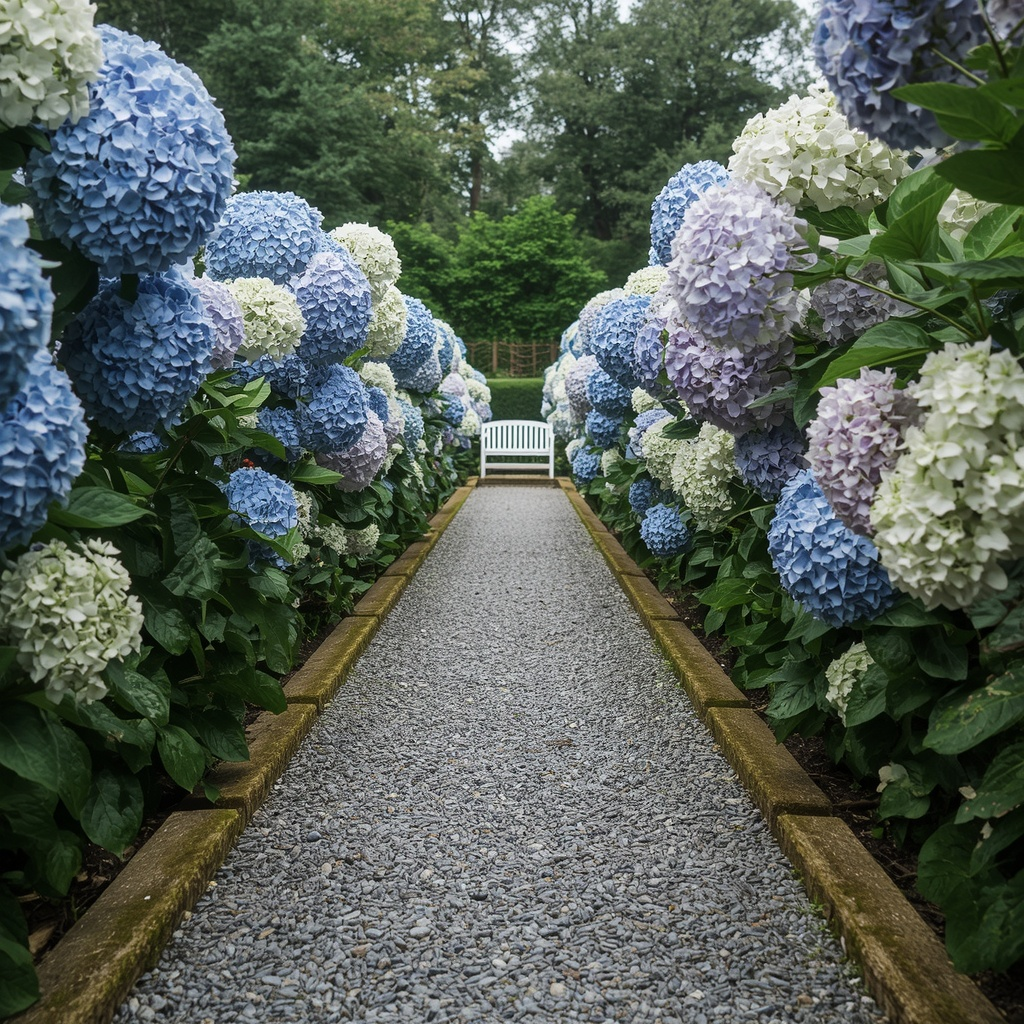
A hydrangea walk is one of those English garden ideas that photographs so magnificently it almost does not look real — and yet creating one is far more achievable than it might appear. The key is choosing the right variety for your conditions and planting generously on both sides of a garden path to create that wonderful enclosed corridor effect. Mophead hydrangeas in shades of blue, lilac, and white are the classic choice for this look, their enormous rounded flower heads creating a visual impact that few other shrubs can match. They are at their most spectacular in mid to late summer when in full bloom, but they continue to look beautiful as the flowers dry on the plant through autumn into winter, taking on parchment and russet tones that are quietly lovely in their own right.
Blue-flowering hydrangeas need acidic soil to produce their best colour — add sulphur chips or ericaceous compost at planting time, and water with a specialist feed during the growing season if your soil tends toward alkaline. White varieties like ‘Annabelle’ or ‘Limelight’ are less demanding and work beautifully as an alternative or alongside the blue varieties. Plant each hydrangea at least 1.5m from its neighbours to allow for their eventual spread, and do not be tempted to dead-head the spent flower heads until spring — they protect the new growth beneath during frosty weather and look genuinely beautiful when frosted in winter. Walking between two rows of full-bloom hydrangeas on a still summer morning is an experience of such simple, saturated beauty that it stays with you long afterwards.
22. Cottage Garden Greenhouse Corner
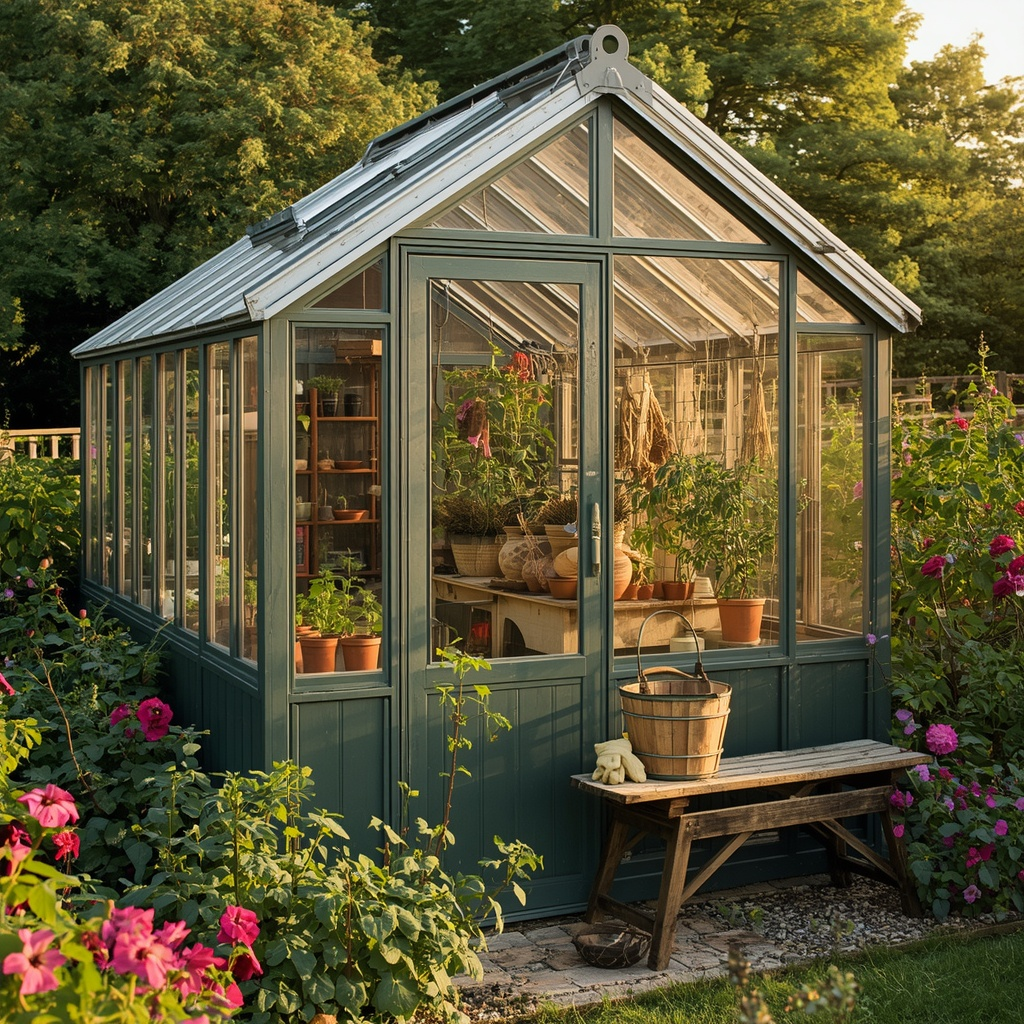
A greenhouse in a cottage garden is not just a practical growing space — it is a whole atmosphere, a room of warmth and possibility that smells of damp compost and new growth and represents everything that is most joyful about the English gardening tradition. Even a small, vintage-style greenhouse tucked into a garden corner creates something magical: a place where you can start seedlings in February when the garden outside is still bare, pot on young plants through spring, grow tomatoes and cucumbers through summer, and even sit on a cool autumn afternoon surrounded by the last of the growing season’s produce. It becomes the heart of the whole garden enterprise.
Style your greenhouse exterior to suit the cottage garden surroundings — a painted cast iron or timber frame in deep hunter green, cream, or soft black looks beautiful surrounded by climbing roses and cottage border planting. Inside, resist the urge to be too clinical: terracotta pots, wooden staging, old wooden seed trays, and bunches of drying flowers hung from the roof all contribute to that particular atmosphere of productive charm. Add a small table and stool inside so you can sit and pot on seedlings in comfort. The moments spent inside a warm greenhouse on a cold spring morning, with rain pattering on the glass roof and rows of seedlings unfurling their first true leaves, are among the very best gardening has to offer.
23. Pond with Marginal Planting
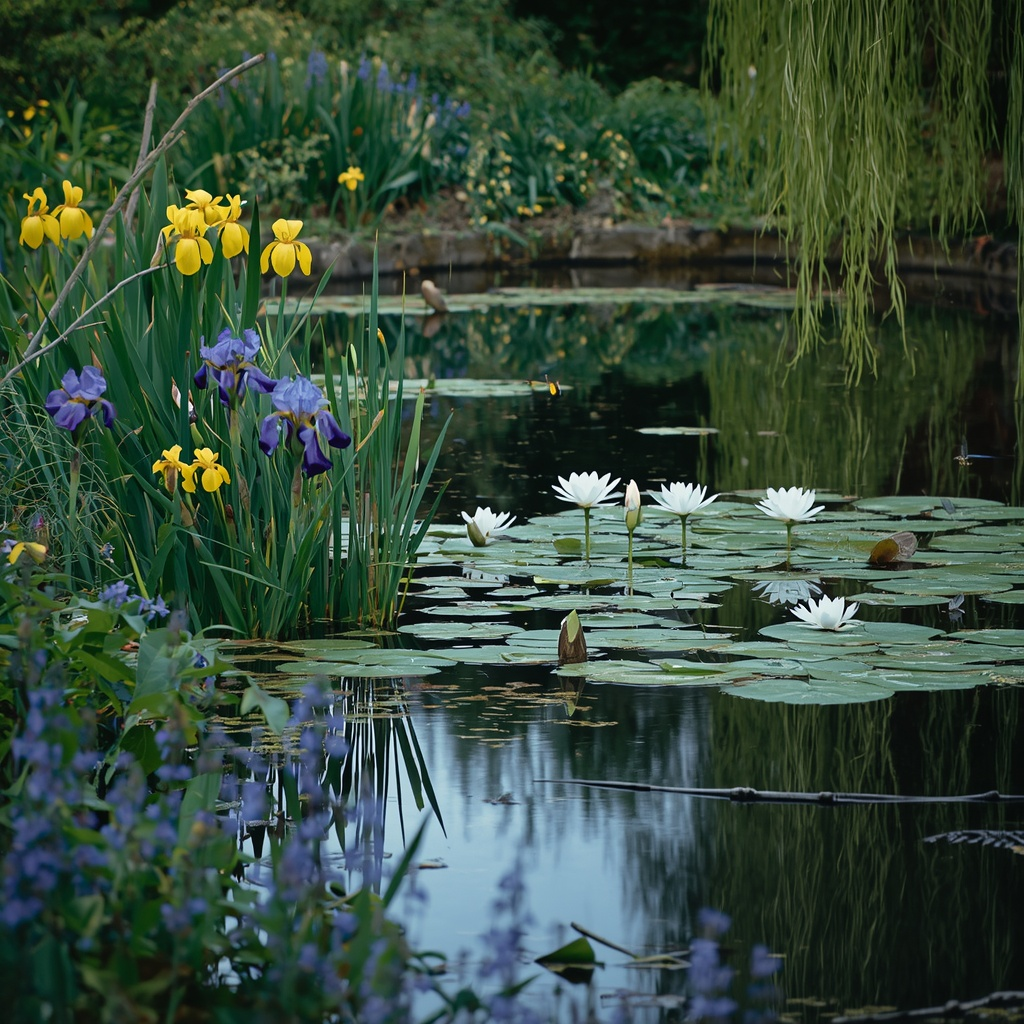
A garden pond with generous marginal planting is one of the most transformative English garden ideas you can implement, taking a garden from being purely decorative to being a living, breathing ecosystem that thrums with life through every season. Water has a uniquely calming effect on the human psyche — the way it reflects the sky, catches the light, and creates that background stillness even in a busy garden is remarkable. Add lush marginal planting around the edges and water plants floating on the surface, and your pond becomes a complete world in itself: home to frogs and newts, visited by dragonflies and damselflies, and a drinking and bathing spot for every bird in the neighbourhood.
Even a modest pond of two or three metres across can be transformative if planted well. Use a good pond liner and create different depth zones: shallower areas around the edges for marginal plants like iris, marsh marigold, and water mint, and a deeper central zone for water lilies and submerged oxygenating plants. Keep at least one edge gently sloped so that wildlife can easily access and escape the water. Avoid fish if your primary goal is wildlife, as fish will eat tadpoles and many pond invertebrates. Once established — usually after just one full season — your pond will have colonised itself with life you never deliberately introduced, and watching it on a summer evening will feel like having a tiny nature reserve at the end of your garden.
24. Fernery and Shade Garden

If you have a shaded corner of your garden that you have been struggling to bring to life, a dedicated fernery might be the most exciting and liberating solution you could choose. Shade gardening is sometimes treated as a problem to be solved, but a well-planted fernery reframes that same shade as an asset — a unique environment in which a wholly different and entirely beautiful plant world can thrive. Ferns are among the most ancient plants on earth, with a lineage stretching back hundreds of millions of years, and there is something deeply primeval and calming about a garden space dominated by their arching, intricately divided fronds. In the right setting, a fernery feels like stepping into an enchanted woodland glade.
To build your fernery, start by improving the soil with generous quantities of leaf mould and well-rotted organic matter to create the cool, moisture-retentive conditions that ferns love. Choose a range of varieties for textural contrast: bold architectural ostrich ferns alongside delicate maidenhair ferns, glossy hart’s tongue alongside soft-textured shield ferns. Add hostas in varying shades and leaf sizes for complementary large-leafed drama. Partially buried mossy logs and rounded stones complete the naturalistic look and provide additional habitat for beneficial insects and amphibians. Water deeply during dry spells in the first season until plants are established, and then your fernery will largely look after itself, cooling the air around it and providing a deeply restorative green sanctuary in every season of the year.
25. Beekeeping Corner with Pollinator Planting
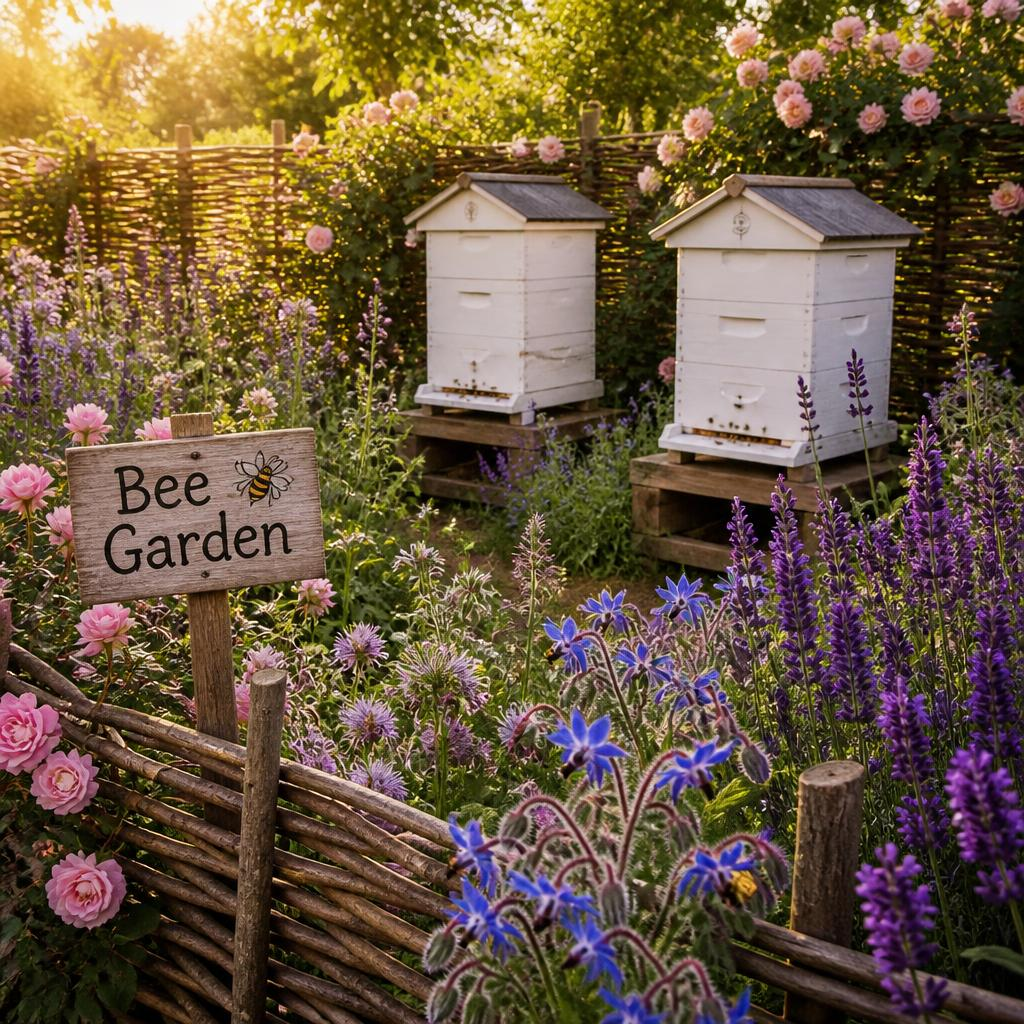
Creating a dedicated pollinator planting area — or even adding beehives if you are feeling adventurous — is one of the most meaningful English garden ideas on this list, one that makes your garden not just beautiful for you but genuinely beneficial for the wider natural world. The decline of bee populations makes this kind of planting more important than ever, and the beautiful thing is that the plants that bees and other pollinators love most — lavender, borage, alliums, single roses, catmint, phacelia, and wildflowers — are also some of the most beautiful and charming cottage garden plants you could possibly grow. Making your garden pollinator-friendly is a completely joyful win-win situation.
Focus on planting single-flowered varieties rather than highly bred doubles, as single flowers provide accessible pollen and nectar that bees can actually reach. Aim for a succession of blooms from earliest spring right through to late autumn to provide food for pollinators throughout the full season. Borage, with its brilliant blue star-shaped flowers, is irresistibly attractive to bumblebees. Purple phacelia is often called ‘bee candy’. Lavender in long rows hums and vibrates on summer afternoons with the sound of hundreds of feeding bees. Plant these generously throughout your whole garden rather than in a single corner, and watch the insect life in your outdoor space multiply magnificently year on year. A garden full of bees is a garden full of health.
26. Romantic Evening Lighting Garden
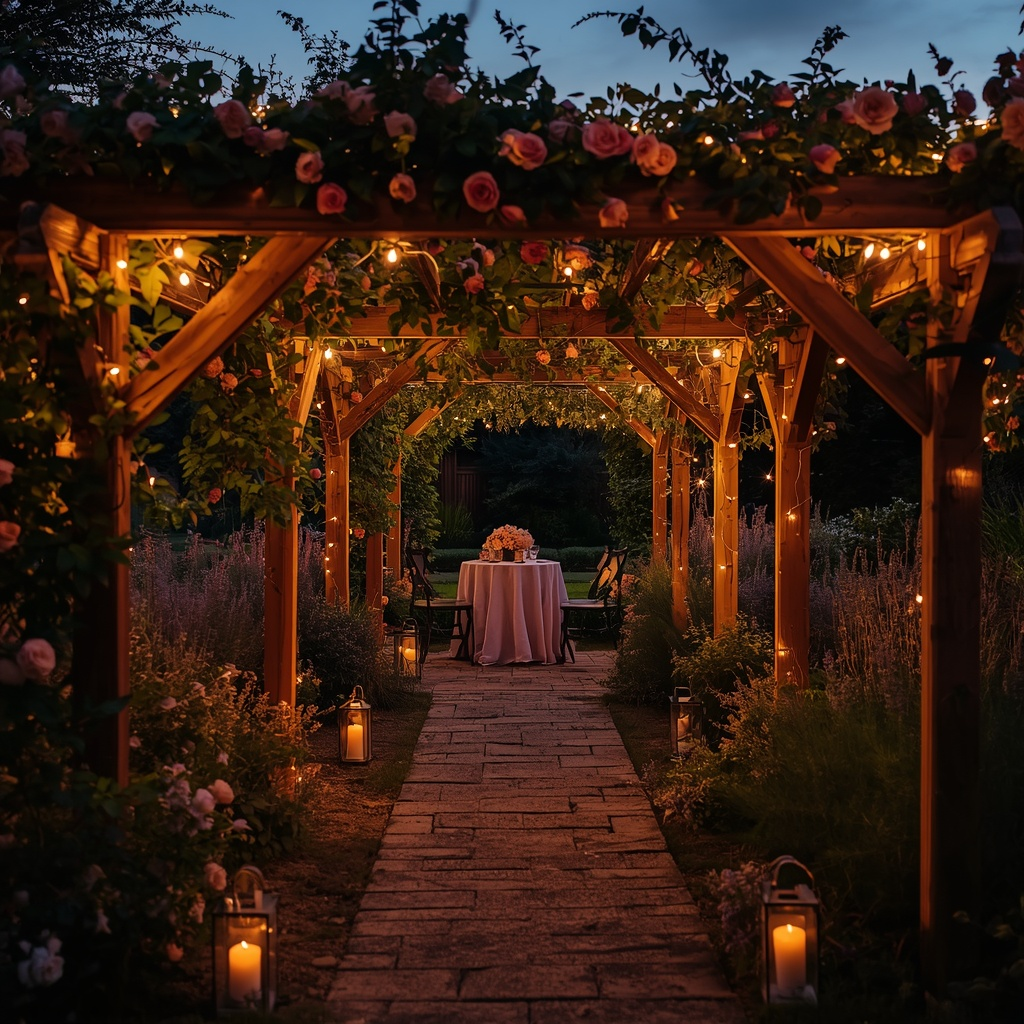
An English garden that is beautiful by day but magical by night is something genuinely special, and the right evening lighting can transform even a modest garden into a place of extraordinary romantic beauty after dark. The secret is using warm, low-level lighting that mimics and complements natural light rather than overpowering it — harsh spotlights and bright uplighting strip away all the atmospheric charm, while warm Edison bulbs, flickering candle lanterns, and softly glowing solar lights create an environment that feels genuinely enchanting. The flowers seem to glow, the shadows become beautiful rather than gloomy, and the garden takes on a depth and intimacy that daylight hours cannot quite replicate.
String warm Edison bulb fairy lights between wooden posts or through the branches of a rose-covered pergola for overhead ambient light that creates a golden canopy above your outdoor dining space. Line paths with solar-powered or low-voltage glass lanterns for safe navigation combined with atmospheric charm. Add pillar candles in hurricane glass on tabletops and garden surfaces — their gentle flicker is something no electric light can really replicate. Plant night-fragrant flowers — white tobacco plants (nicotiana), evening primrose, night-scented stock, and white jasmine — near seating areas so that after-dark evenings in the garden are filled with fragrance as well as beauty. On a warm summer evening, with the lights glowing and the scent drifting, your garden will feel like the most enchanting place on earth.
27. Painted Garden Shed Feature
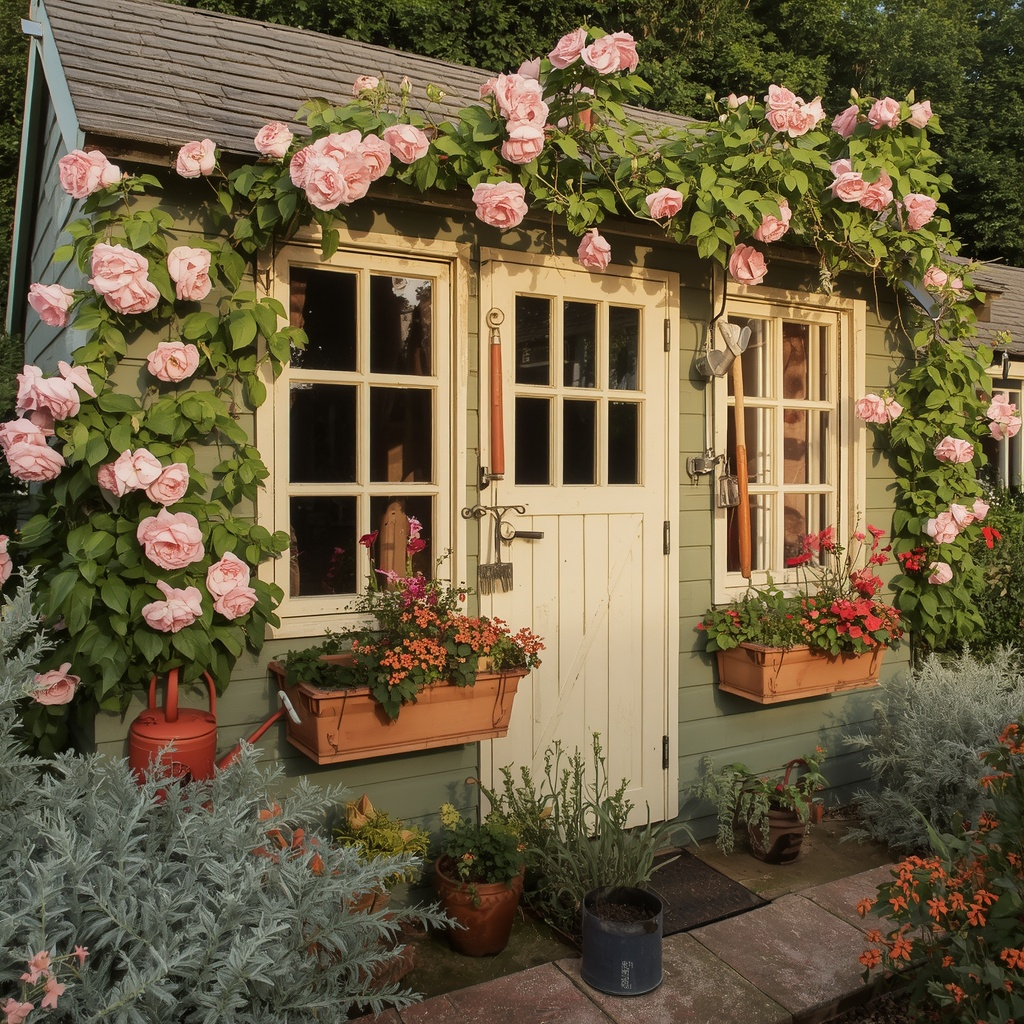
A garden shed does not have to be an eyesore lurking apologetically in the corner of your yard — painted the right colour and decorated with climbing plants and thoughtfully arranged accessories, a shed can actually become one of the most charming and photogenic features in the entire garden. The English cottage garden tradition has long understood that even purely functional garden buildings can and should be beautiful, and a well-styled shed anchors the garden visually while adding a layer of human story and character that purely planted spaces sometimes lack. Think of it as a stage set — the backdrop that everything else in the garden plays against.
Choose a paint colour that works harmoniously with your garden palette: deep sage green, soft duck egg blue, warm cream, deep charcoal, or classic black all work beautifully in a cottage garden setting. Plant one or two climbing roses or a clematis at each corner and allow them to grow up and over the shed walls over the coming years — even after just two or three seasons the effect is dramatically transformed. Add window boxes to any shed windows and fill them with trailing geraniums, lobelia, and silvery-leaved plants. Hang hooks on the outside walls for decorative display of old tools, terracotta pots, or a vintage tin watering can. Your shed will go from something you want to hide to something you want to show off every time someone visits.
28. Cutting Flower Garden
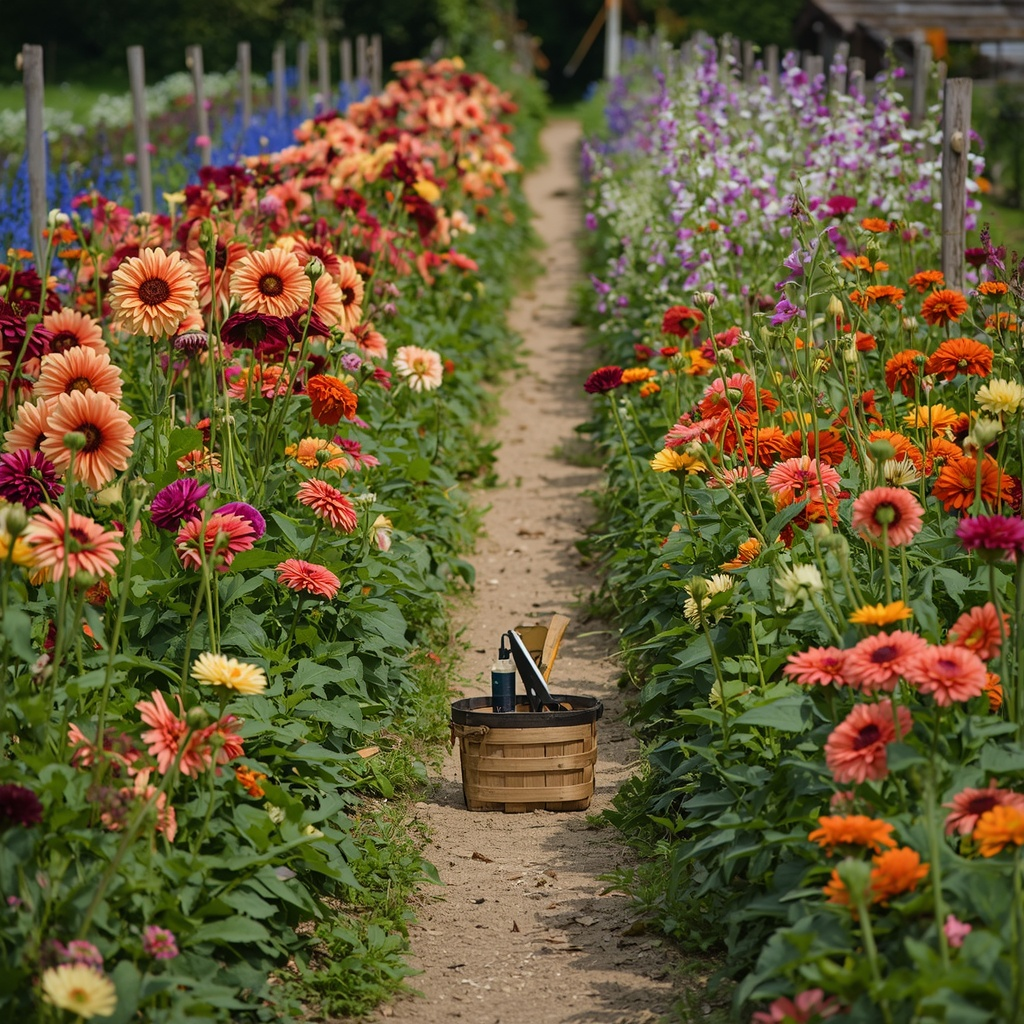
A dedicated cutting flower garden is one of those English garden ideas that, once you have experienced it, you cannot imagine your outdoor space without. The idea is beautifully simple: a section of your garden given over entirely to growing flowers for cutting and bringing indoors — no ornamental concerns, no worrying about gaps in a border, just row after row of beautiful, generous blooms that you can harvest freely all summer long without a trace of guilt. The result is an endless supply of fresh flowers for the house, and there is something deeply satisfying about creating your own arrangements from flowers you have grown yourself from seed.
The best cutting garden plants for an English-style approach include dahlias (which deserve their own extended article), sweet peas, zinnias, larkspur, cornflowers, cosmos, rudbeckia, and lisianthus. Grow them in parallel rows with generous spacing and a working path between for easy access. Pick regularly and early in the morning when stems are firm with moisture for the longest vase life. Feed generously with a high-potassium feed through the growing season to encourage flower production rather than leafy growth. Even a single raised bed of 2m by 3m given over to cutting flowers will yield more blooms than you can possibly use, and giving bunches away to friends and neighbours is one of the great generous pleasures of the English garden summer.
29. Topiary Animal Feature
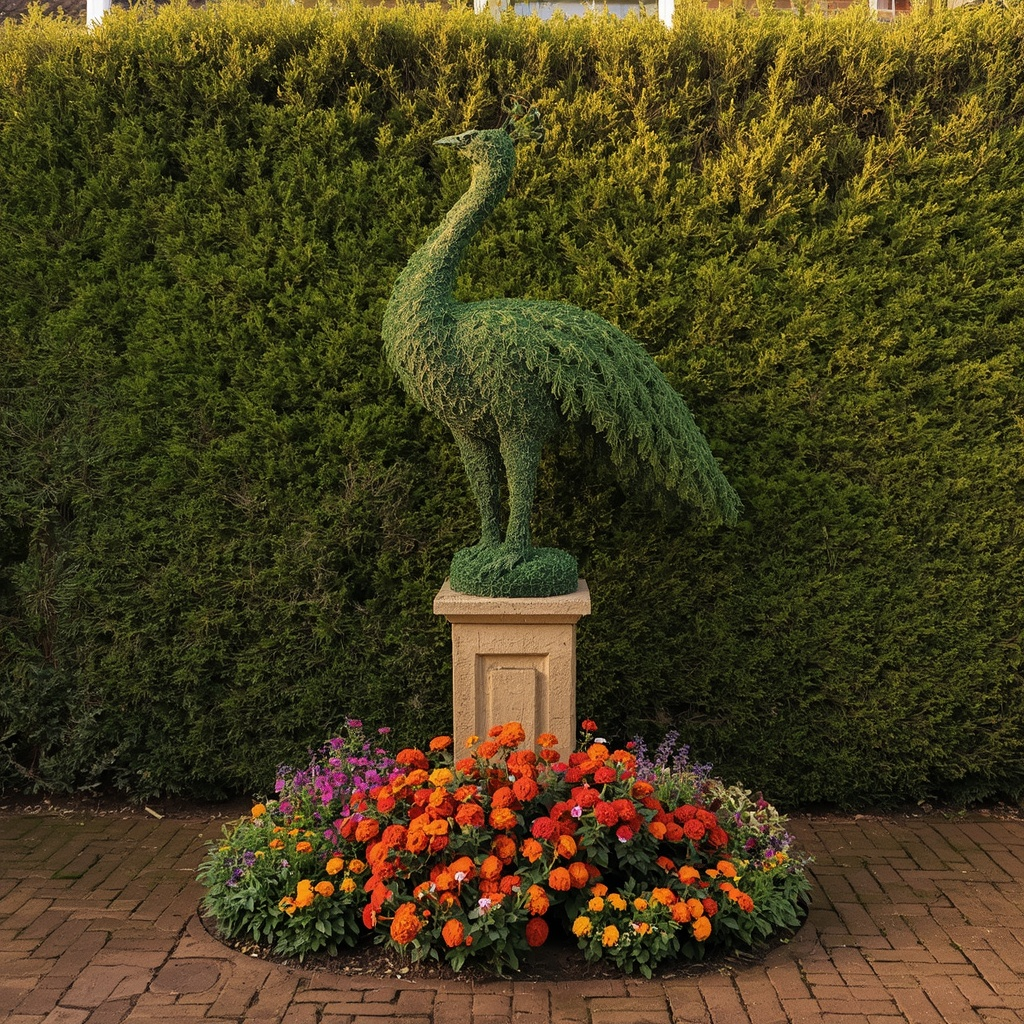
Topiary animals have been a part of the English garden tradition since the Tudor and Stuart periods, and there is something absolutely delightful about the idea of a carefully sculpted yew or box peacock, rabbit, or fox standing in a garden, the result of years of patient clipping and a complete commitment to the idea that gardening should sometimes be joyful and even a little bit silly. Well-executed topiary animals add enormous personality and talking-point interest to a garden — they are the detail that guests notice and remember long after everything else has faded from memory, and they give a garden a sense of story and human character that purely planted spaces sometimes lack.
You can approach topiary animals in two ways: either clip an existing established shrub freehand over several years, gradually teasing the shape out of the plant, or use wire topiary frames that guide the growth from the very beginning. Frames are particularly useful for complex shapes and are available for dozens of different animals and figures. Box is the traditional choice for smaller, more detailed topiary, while yew is better for larger, longer-lived features. Maintenance means clipping once or twice a year with good sharp topiary shears to keep the shape crisp and recognisable. Position your topiary animal at a focal point where it can be seen and appreciated — the end of a path, the corner of a border, or as a pair of sentinels flanking a gate or entrance. They bring an irreplaceable personality to a garden.
30. Heritage Vegetable and Flower Cottage Border
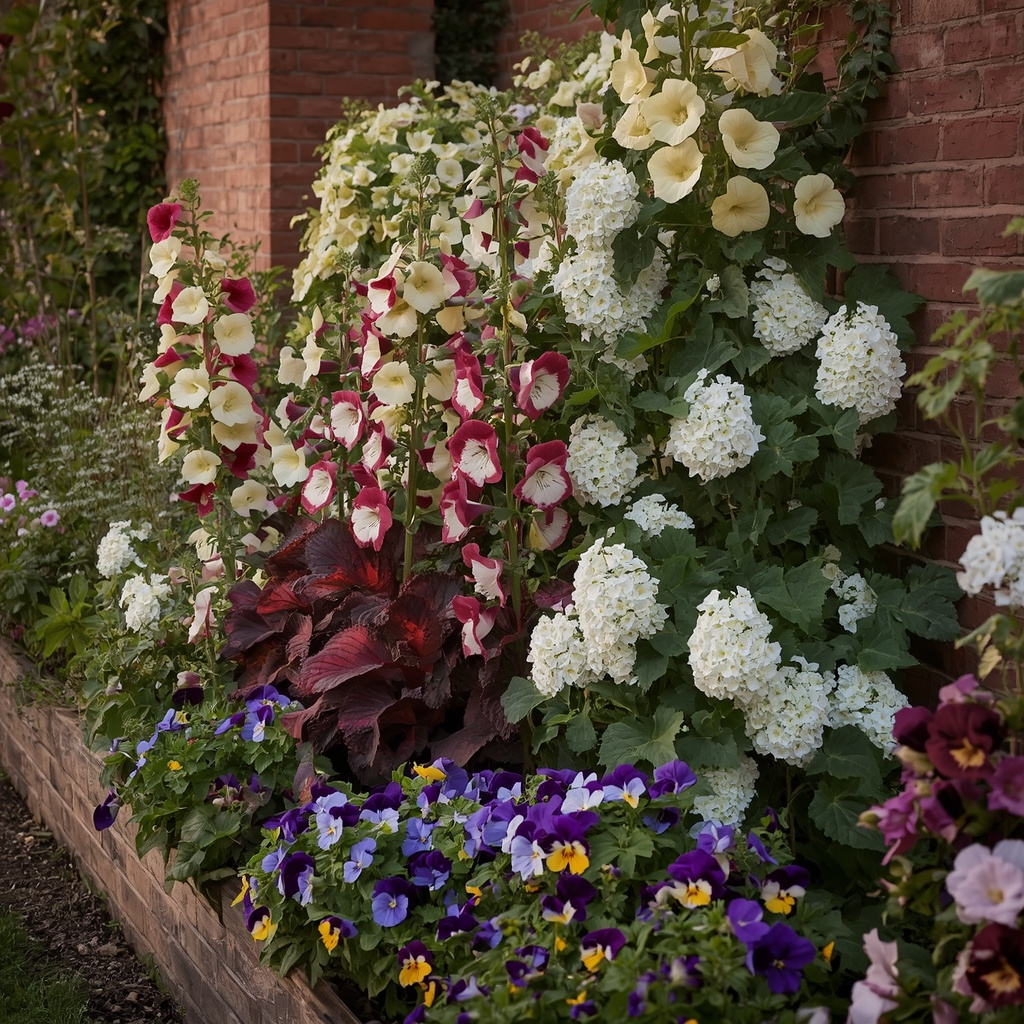
Ending this list with a heritage cottage border feels entirely right, because it speaks to the very heart and soul of the English garden tradition — that deep, passionate commitment to the plants that have been grown, loved, shared, and passed down through generations of cottage gardeners stretching back centuries. Heritage and heirloom varieties have an authenticity and often a beauty that modern highly bred plants sometimes sacrifice in pursuit of greater disease resistance or longer shelf life. Old roses with names like ‘Cardinal de Richelieu’ and ‘Tuscany Superb’, double hollyhocks that would look at home in a Beatrix Potter illustration, sweet Williams in bicolour combinations that have not changed in two hundred years — these plants carry history in their petals.
Seek out heritage seed suppliers and specialist nurseries for these varieties, as they are not always available in mainstream garden centres. The Heritage Seed Library in the UK is a wonderful resource for vegetable varieties that would otherwise be lost. Mix heritage flowers with heritage vegetables — a ‘Bull’s Blood’ beetroot with its stunning deep burgundy leaves is as beautiful as any ornamental plant — for a cottage border that is layered with history and character. This is gardening as a form of cultural preservation, and there is something genuinely moving about growing varieties that have been tended in English gardens since the eighteenth or nineteenth century. Plant these seeds, tend these plants, and you are part of a living, growing tradition that stretches back through time.
Conclusion
There you have it — thirty beautiful, inspiring, deeply liveable English garden ideas to spark your imagination and get your hands itching to pick up a trowel. From the romance of climbing roses and the wildness of meadow corners to the structure of formal parterres and the practicality of a cutting flower garden, the English garden tradition offers something genuinely wonderful for every taste, every budget, and every size of outdoor space. What makes these ideas so enduringly popular is not just their beauty — though that beauty is undeniable — but the way they connect us to something slower and more meaningful, a way of being outdoors that is about noticing small things, nurturing living things, and creating spaces where life genuinely feels more beautiful.
You do not need a grand estate or a professional gardener to create magic in your outdoor space. You need a handful of good ideas, some soil, some seeds, and that quiet but powerful desire to make something grow. Start with one idea that spoke to you today — perhaps it was the rose archway, or the secret garden nook, or the sweet pea wigwam — and let that one idea lead you somewhere wonderful. Your English garden is waiting.
👉 Which idea did you love the most? Drop it in the comments — we would love to know which corner of an English paradise is calling your name!