

Introduction
There is something truly magical about walking into a home that feels like a warm embrace at the end of a long day. Farmhouse design has this incredible power to wrap you in comfort while still looking absolutely breathtaking. It is not just about exposed wood beams and mason jars anymore. Today’s farmhouse style is a beautiful blend of rustic soul and modern elegance, creating spaces that feel lived-in, loved, and undeniably luxurious. Whether you are dreaming of a cozy reading nook bathed in golden afternoon light or a grand kitchen where family gathers around a weathered island, the right farmhouse design can turn any house into your personal sanctuary.
In this collection of thirty stunning ideas, we are going to explore everything from dreamy bedrooms to jaw-dropping living rooms that will make your heart skip a beat. Some ideas are bold and dramatic, while others are soft and subtle, but every single one is designed to inspire. You will find yourself mentally rearranging your furniture, pinning images like crazy, and maybe even picking up a paintbrush by the time you finish reading. Keep your eyes peeled for idea number nine, because it is an absolute game-changer that will have you rethinking your entire space. So grab your favorite warm drink, get comfortable, and let us dive into a world where comfort meets pure design magic.
1. Exposed Wooden Ceiling Beams
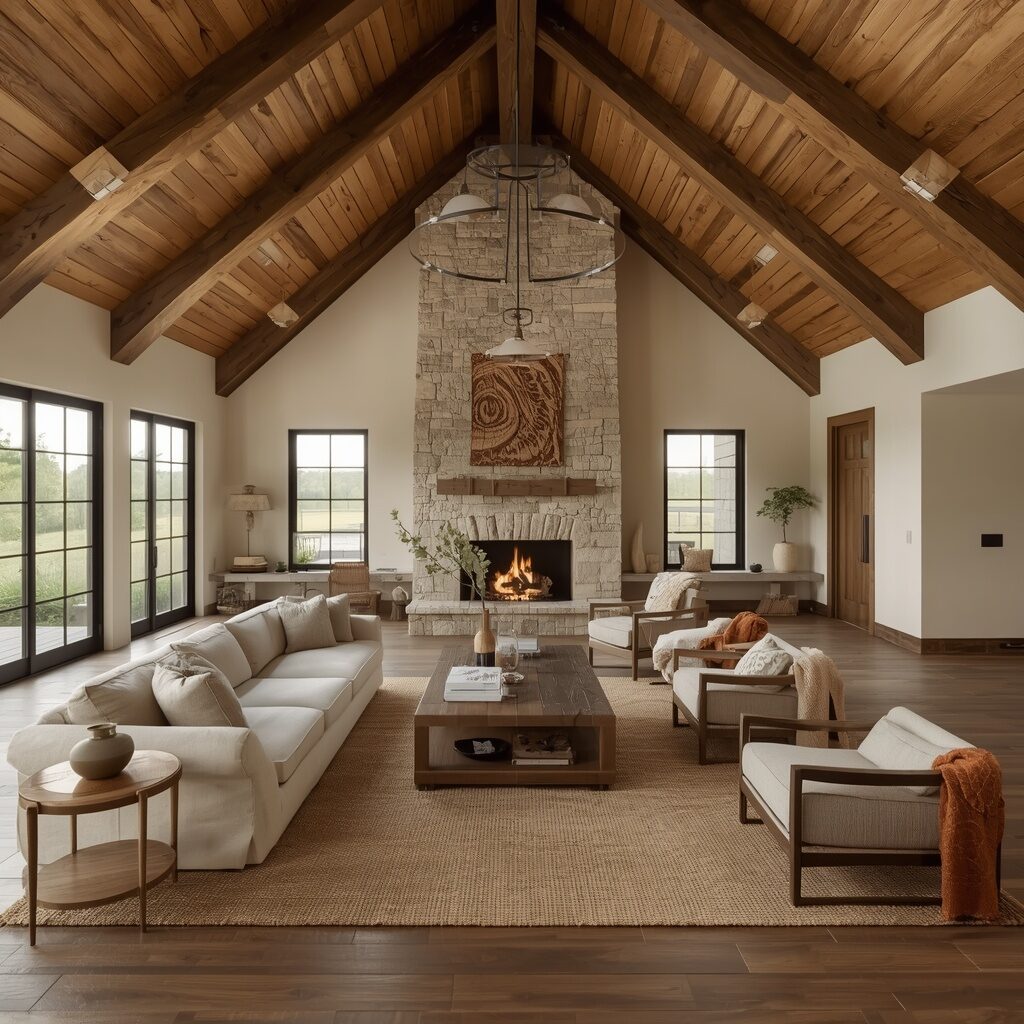
There is a reason exposed wooden ceiling beams have remained a beloved staple in farmhouse design for generations. They instantly draw the eye upward, creating a sense of grandeur and history that makes any room feel larger and more established. Whether your home is a century-old barn conversion or a brand-new build, adding beams transforms an ordinary ceiling into a stunning architectural feature that tells a story. The natural grain and texture of aged wood bring warmth and character that no amount of paint or wallpaper can replicate. You can choose dark, dramatic beams for a moody, lodge-like feel, or lighter, whitewashed versions for an airy, coastal farmhouse vibe. The key is to let the wood speak for itself without overwhelming the space. Pair your beams with soft, neutral walls and simple lighting fixtures to create a balanced look that feels intentional rather than cluttered. This is one of those design choices that guests will notice immediately and remember long after they leave.
The beauty of ceiling beams lies in their incredible versatility and ability to work with nearly any farmhouse sub-style. In a modern farmhouse, sleek, sanded beams with clean lines add just the right amount of rustic edge without feeling heavy or outdated. In a more traditional setting, rough-hewn, hand-carved beams with visible knots and imperfections create an authentic, timeworn charm that feels like it has been there for a hundred years. You can even mix materials by combining wood beams with metal brackets or straps for an industrial farmhouse twist. When it comes to lighting, consider hanging pendant lights or a statement chandelier from the center beam to create a gorgeous focal point. The shadows cast by the beams throughout the day add another layer of visual interest that changes from morning to evening. If you are working with a lower ceiling, faux beams are an excellent option that gives you the same stunning look without the structural weight. Either way, this is a design element that adds instant value, warmth, and undeniable farmhouse soul to your home.
2. Shiplap Accent Walls
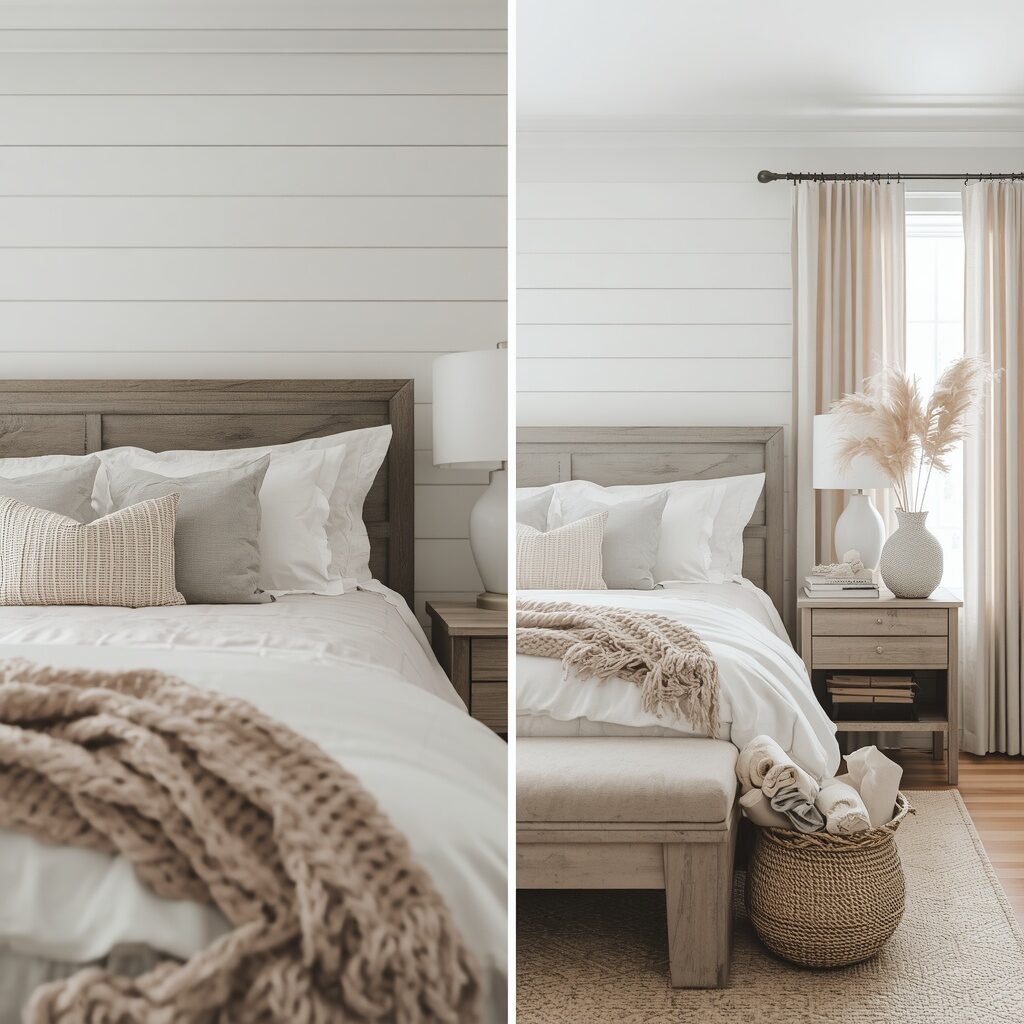
Shiplap has become practically synonymous with farmhouse style, and for very good reason. This simple yet stunning wall treatment consists of wooden boards with a slight groove between each plank, creating subtle shadow lines that add texture and depth to any room. When painted in soft whites, warm creams, or gentle grays, shiplap brings a clean, fresh feeling that makes spaces feel larger and more open. It is the perfect backdrop for everything from modern minimalist decor to layered, collected-over-time styling. The horizontal lines naturally draw the eye across the room, making walls appear wider and more expansive. What makes shiplap truly special is how it bridges the gap between rustic and refined, giving you that coveted farmhouse look without feeling like you are living in an actual barn. It works beautifully in bedrooms behind the bed, in living rooms as a fireplace surround, or even in bathrooms for a spa-like, cottage feel.
Installing a shiplap accent wall is one of the most impactful DIY projects you can tackle, and the results are absolutely worth the effort. You can use authentic reclaimed wood for a weathered, historic look, or opt for new boards that you paint or stain to match your vision. Many homeowners love the classic all-white shiplap because it reflects light beautifully and pairs with virtually any color scheme. However, do not be afraid to experiment with darker, moodier tones like charcoal gray or deep navy for a dramatic, modern farmhouse statement. The key to making shiplap feel premium rather than basic is in the details, use high-quality paint with a soft matte or eggshell finish, ensure your boards are properly spaced, and consider adding trim or molding for a polished, finished look. Whether you cover an entire room or just one statement wall, shiplap brings an instant sense of farmhouse charm that feels both timeless and totally on-trend.
3. Farmhouse Kitchen Islands
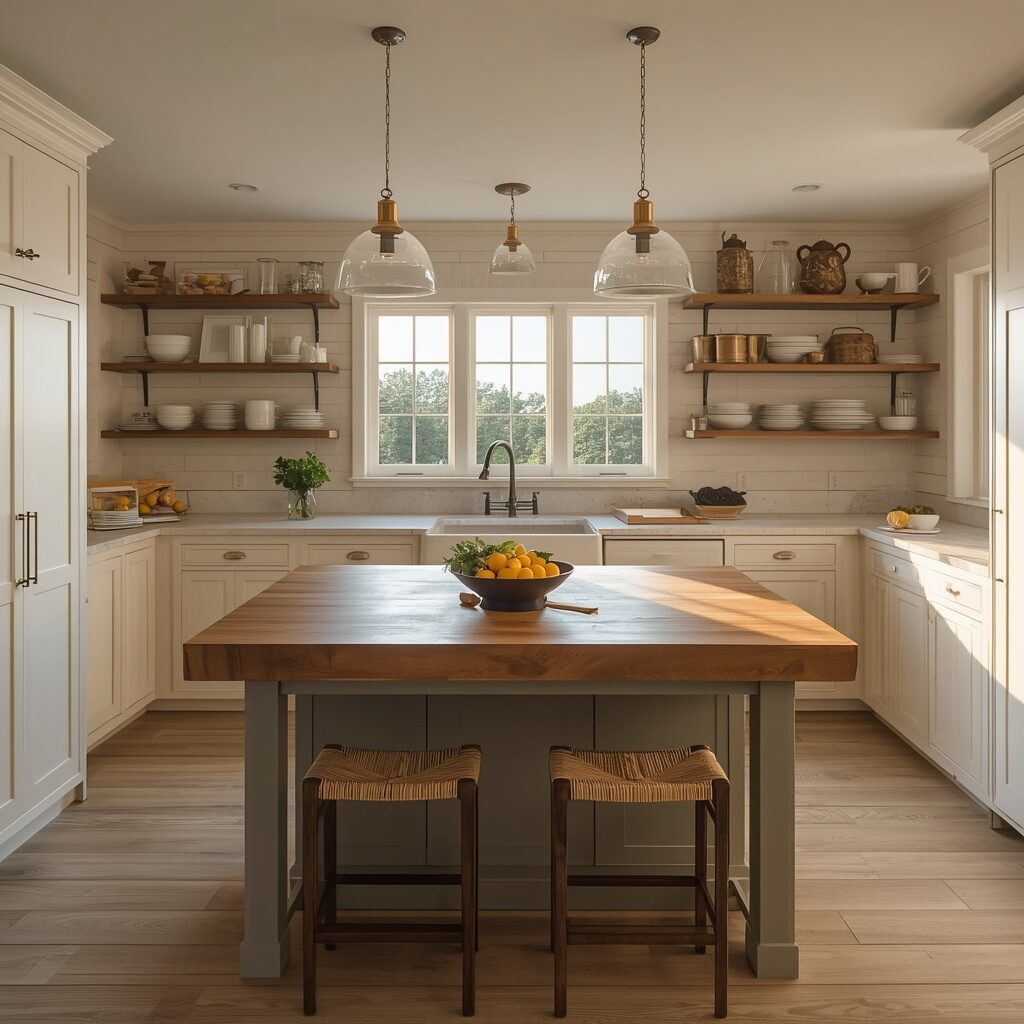
The kitchen island is the undisputed star of any farmhouse kitchen, serving as both a functional workspace and a stunning visual centerpiece. A well-designed farmhouse island is typically larger and more substantial than standard kitchen islands, often featuring thick butcher block countertops, reclaimed wood bases, or even a contrasting painted finish that sets it apart from the surrounding cabinetry. This is where the magic of farmhouse design truly comes alive, combining practical utility with breathtaking beauty. The island becomes a natural gathering spot where kids do homework, friends lean in with glasses of wine, and holiday meals come together one ingredient at a time. The materials you choose matter immensely, warm woods like oak, maple, or walnut bring organic texture, while stone or marble countertops add a touch of refined luxury. The best farmhouse islands feel like they have been there forever, with a sense of weight and permanence that anchors the entire room.
To make your farmhouse island truly spectacular, focus on the details that elevate it from functional to phenomenal. Consider adding a built-in bookshelf on one end for cookbooks and decorative objects, or open shelving underneath to display beautiful pottery and woven baskets. Vintage-inspired hardware, like bin pulls and cup handles in oil-rubbed bronze or brushed brass, adds authentic character. Pendant lighting is essential, choose oversized glass pendants, woven rattan fixtures, or industrial metal shades to create a warm pool of light over the workspace. Do not forget seating, a row of comfortable bar stools invites conversation and casual dining. For the countertop, butcher block is the classic farmhouse choice because it is warm, forgiving, and develops a gorgeous patina over time. However, a thick slab of Carrara marble or soapstone can bring an unexpected layer of sophistication. However you design it, your farmhouse island should feel like the warm, beating heart of your home.
4. Vintage Farmhouse Sinks
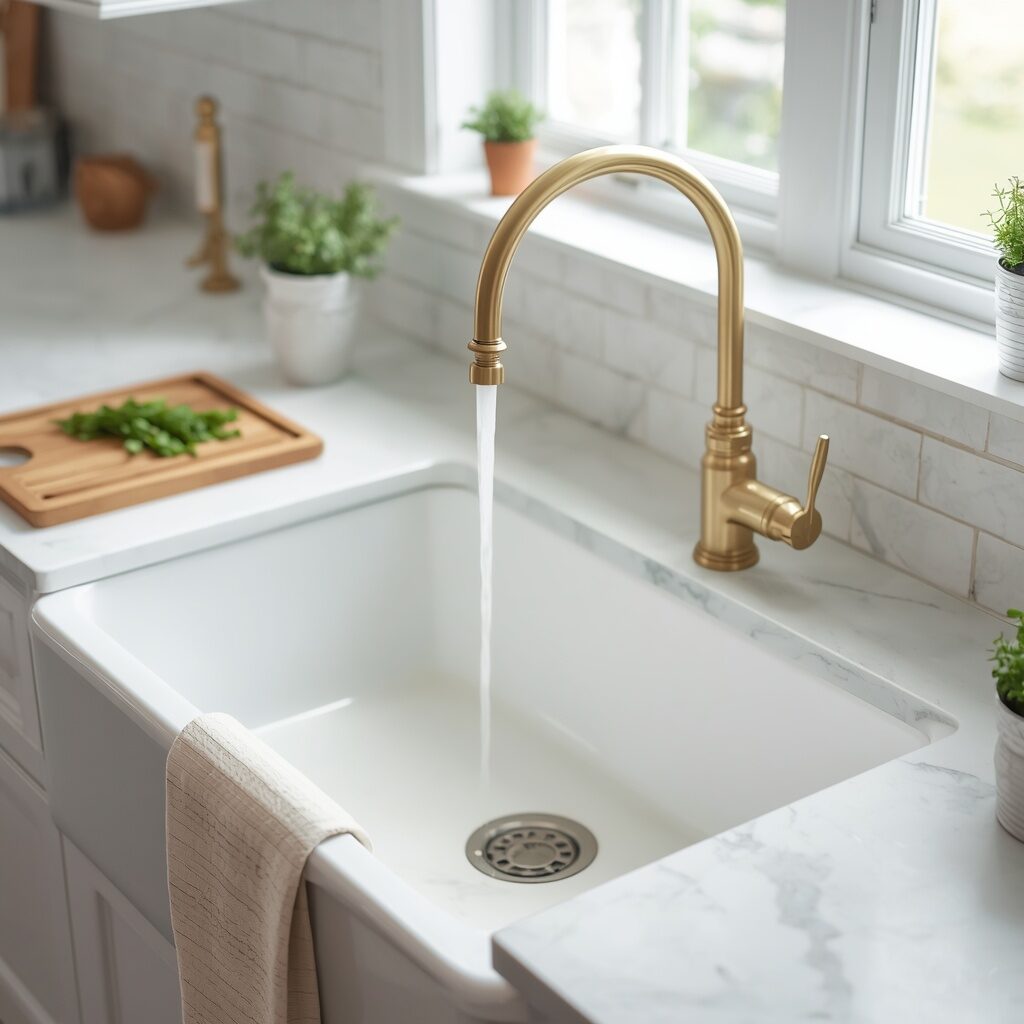
There is perhaps no single element that says “farmhouse kitchen” quite like a deep, apron-front sink. Also known as a farmhouse sink, this iconic fixture features a wide, exposed front panel that extends slightly beyond the cabinetry, creating a distinctive and timeless silhouette. Originally designed for rural homes where large pots, pans, and even small children needed washing, these sinks are as practical as they are beautiful. The generous basin depth makes washing oversized cookware, filling vases, and even bathing pets an absolute breeze. Available in materials like classic white fireclay, durable cast iron, sleek stainless steel, and even natural stone, farmhouse sinks can be tailored to fit any aesthetic from traditional country to ultra-modern. The front-facing apron creates a natural focal point that draws the eye and sets the tone for the entire kitchen design.
Choosing the right farmhouse sink involves balancing beauty with functionality and making sure it complements your overall kitchen vision. Fireclay remains the most popular choice because it is non-porous, incredibly durable, and develops a lovely, soft sheen over time. White fireclay sinks pair beautifully with marble countertops and brass fixtures for a bright, airy feel, while darker finishes like navy or matte black create striking contrast in modern farmhouse spaces. Installation does require some planning since the cabinet base must be modified to accommodate the exposed front, but the result is well worth the extra effort. Consider accessorizing your sink area with a vintage-inspired bridge faucet, a wooden cutting board that rests across the basin, and a pretty ceramic soap dispenser. Add a window above the sink with a view of your garden, and you have created the quintessential farmhouse moment that feels like it belongs on the cover of a design magazine.
5. Barn Door Room Dividers
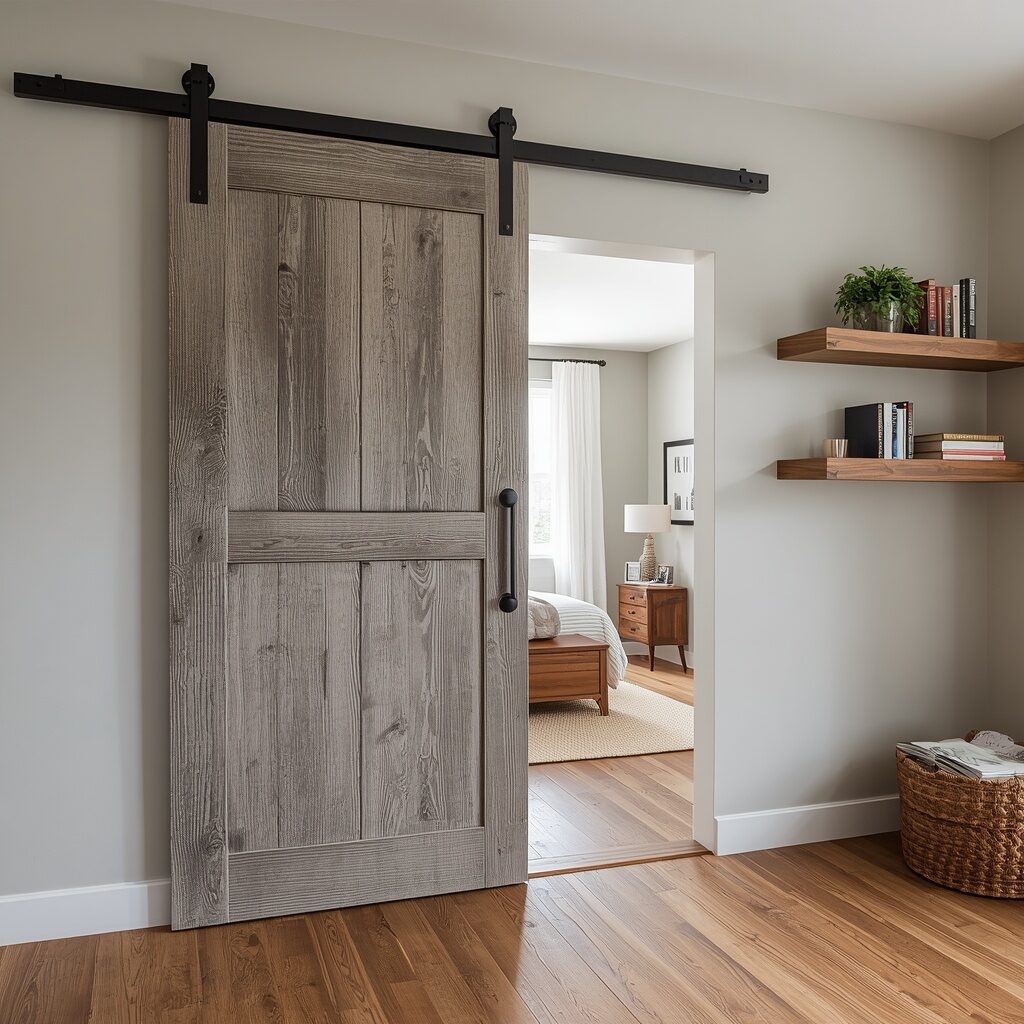
Barn doors have evolved from purely functional farm structures to one of the most sought-after design features in modern homes. These sliding room dividers offer a brilliant solution for spaces where a traditional swinging door would be impractical or where you want to make a bold design statement. The beauty of a barn door lies in its ability to divide spaces while still maintaining an open, connected feeling. When left open, it creates a seamless flow between rooms, when closed, it provides privacy without the harsh separation of a standard door. The hardware itself is part of the appeal, with exposed metal tracks and rollers adding an industrial edge that contrasts beautifully with the warmth of wood. Whether you choose a single large door, a pair of smaller doors, or even a bi-parting system, barn doors bring instant farmhouse credibility and architectural interest.
The key to making barn doors feel premium rather than trendy is in the materials and proportions. A door crafted from reclaimed barn wood with authentic patina, nail holes, and weathered texture tells a story that a mass-produced panel simply cannot match. For a more modern farmhouse look, consider a door with clean lines painted in a soft sage green, deep charcoal, or classic black. The track hardware comes in various finishes from matte black and oil-rubbed bronze to brushed nickel and even brass, allowing you to coordinate with your existing fixtures. Barn doors work beautifully as pantry doors, bathroom entrances, laundry room dividers, or even as closet doors in bedrooms. Just be sure to allow enough wall space beside the opening for the door to slide fully open. When installed correctly with high-quality hardware, a barn door becomes a functional piece of art that elevates your entire home.
✨ Keep scrolling, the next ideas get even better!
6. Mason Jar Lighting Fixtures
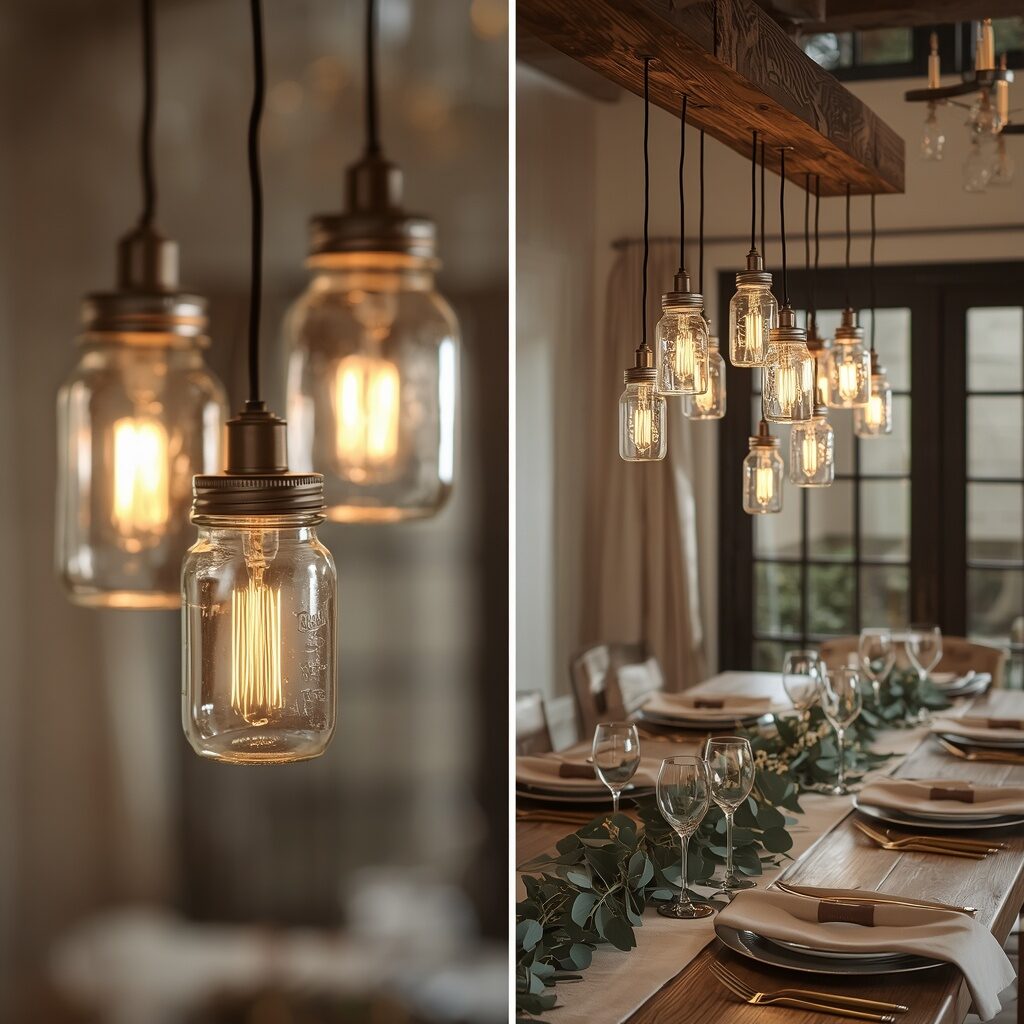
Mason jars have transcended their humble origins as food preservation containers to become beloved icons of farmhouse decor, and nowhere do they shine more beautifully than in lighting fixtures. There is something undeniably charming about the way light filters through the clear, slightly imperfect glass of a mason jar, casting a warm, inviting glow that feels both nostalgic and fresh. Mason jar lighting comes in endless varieties, from single pendant lights hanging over a kitchen sink to elaborate chandeliers with dozens of jars clustered together. The simplicity of the glass allows the bulb inside to become part of the design, and Edison-style filament bulbs are the perfect companion, adding vintage industrial flair with their exposed filaments and amber light. These fixtures work wonderfully in kitchens, dining rooms, bathrooms, and even bedrooms where you want a softer, more romantic ambiance.
Creating a cohesive look with mason jar lighting is all about balance and context. In a kitchen, a row of single jar pendants over the island brings farmhouse charm without overwhelming the space. In a dining room, a larger chandelier with multiple jars becomes a stunning conversation piece that draws every eye upward. For a more subtle approach, consider wall sconces with mason jar shades flanking a bathroom mirror or bed. The key is to pair these fixtures with other natural materials, wood, metal, linen, and stone to ground them in the farmhouse aesthetic. Avoid going overboard by limiting mason jar elements to lighting only rather than using them for storage, vases, and every other purpose simultaneously. When done thoughtfully, mason jar lighting adds a touch of handcrafted, homespun beauty that makes your space feel personal, warm, and utterly enchanting.
7. Reclaimed Wood Furniture
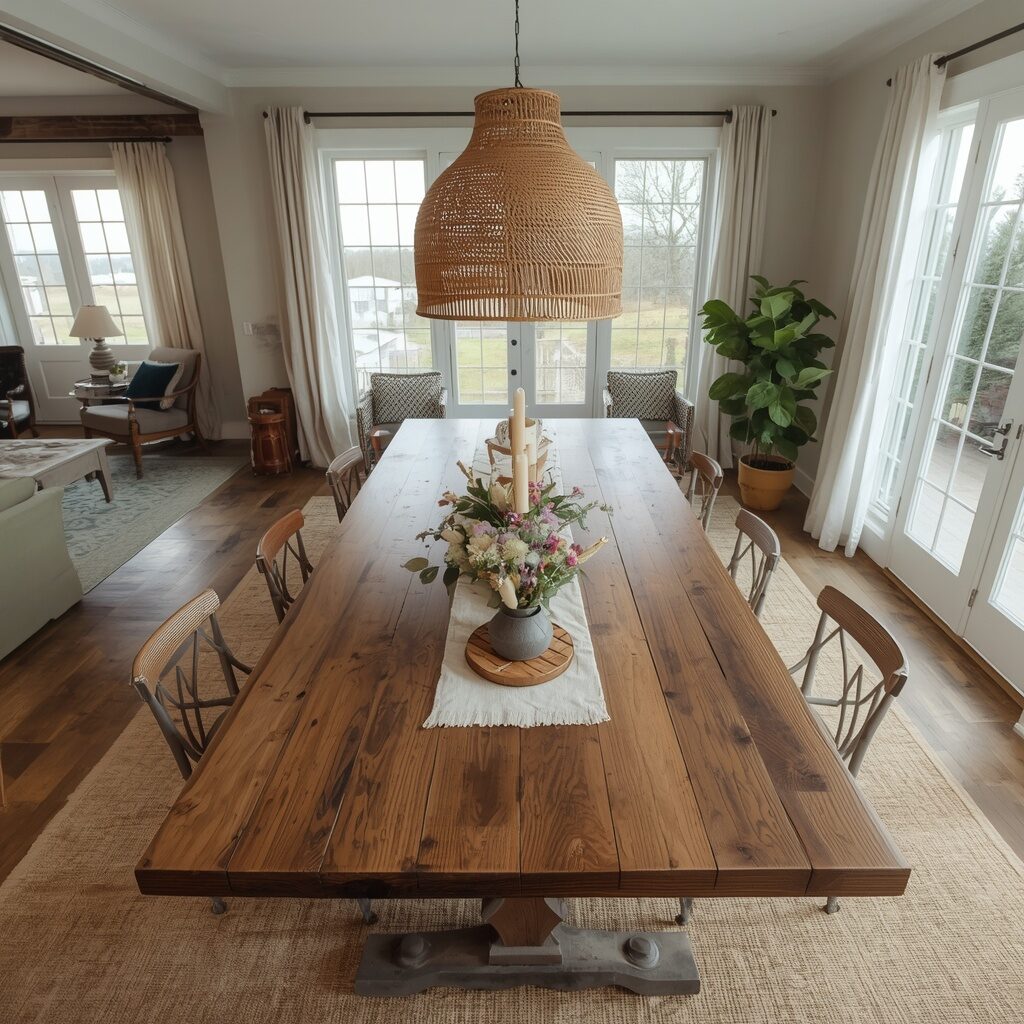
There is a profound difference between furniture that is merely old and furniture that carries the weight of history within its grain. Reclaimed wood furniture falls firmly into the latter category, offering a depth of character and storytelling that new materials simply cannot replicate. Every dent, nail hole, and weathered patch on a reclaimed piece speaks to a previous life, perhaps as a barn beam, a factory floor, or a century-old fence. This inherent history brings an authenticity to farmhouse design that feels genuine rather than manufactured. Reclaimed wood dining tables are particularly stunning, serving as the gathering place where families come together over meals and memories. The natural variations in color and texture mean that no two pieces are ever alike, ensuring your furniture is truly one-of-a-kind. Beyond its beauty, choosing reclaimed wood is an environmentally conscious decision that reduces demand for new lumber and keeps beautiful old materials out of landfills.
Incorporating reclaimed wood furniture into your farmhouse design requires a thoughtful approach to balance and proportion. A massive reclaimed wood dining table can anchor an open-concept dining area, while smaller pieces like console tables, coffee tables, or floating shelves add touches of rustic warmth throughout the home. The key is to let the wood be the star, pair it with simple, clean-lined upholstery in neutral linens or cottons rather than competing patterns. Metal accents, whether in the form of iron table legs, brass hardware, or steel light fixtures, create a beautiful contrast with the organic warmth of aged wood. Do not be afraid of imperfections, the knots, cracks, and uneven surfaces are exactly what make reclaimed wood so special. When properly sealed and maintained, reclaimed furniture is incredibly durable and will only grow more beautiful with age. This is furniture that does not just fill a space, it transforms it into something meaningful and deeply personal.
8. Cozy Window Seat Nooks
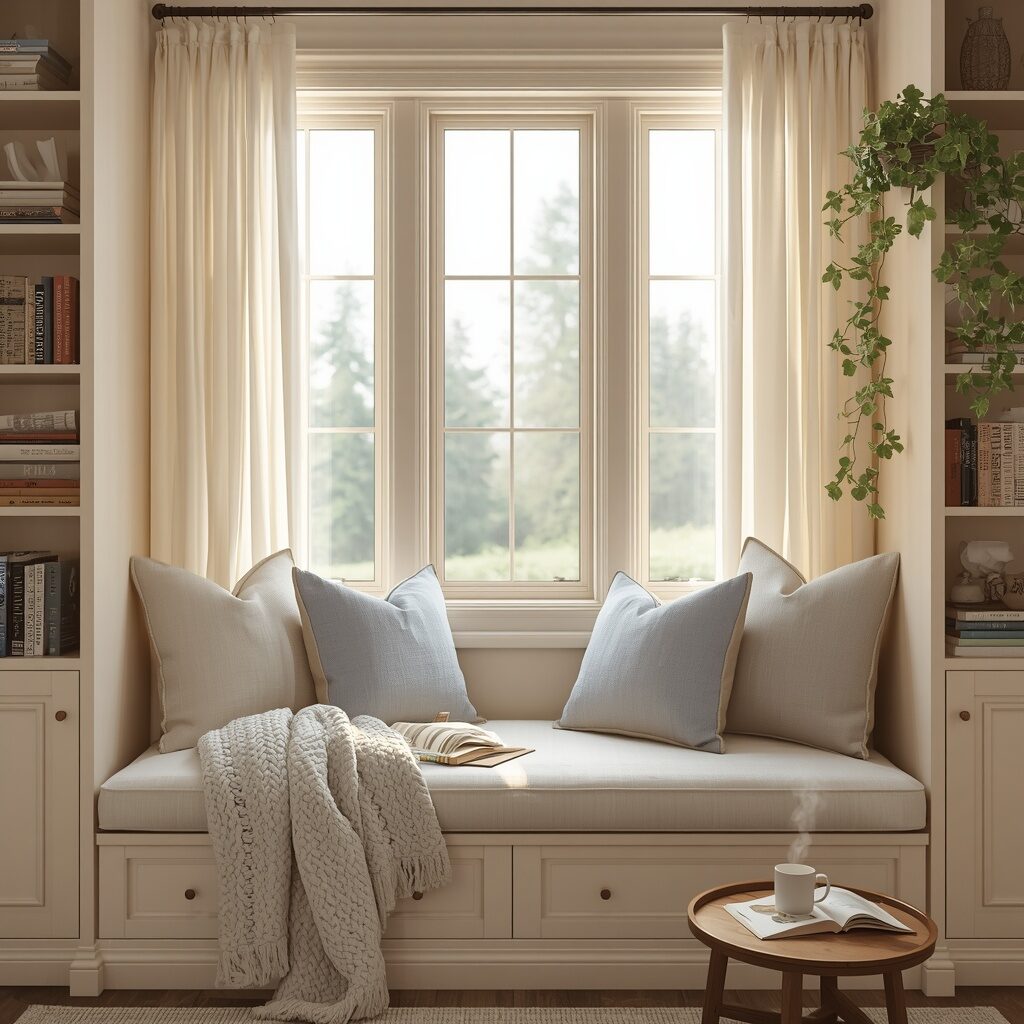
There is something almost magical about a window seat nook, a small, dedicated space bathed in natural light where the world outside seems to pause just for you. In farmhouse design, these cozy alcoves represent the ultimate expression of comfort and intentionality, creating a private sanctuary within the larger home. A well-designed window seat takes advantage of every inch of space, often built into an existing bay window or beneath a particularly picturesque set of panes. The base typically includes hidden storage for blankets, books, or seasonal items, making it as practical as it is beautiful. Deep, plush cushions in soft linens or velvets invite you to sink in and stay awhile, while an array of pillows in varying textures adds layers of visual interest and comfort. This is the kind of space that makes you want to curl up with a novel on a rainy afternoon or sip coffee while watching the sunrise.
Designing the perfect farmhouse window seat nook starts with understanding the light and views available in your home. South-facing windows provide the most consistent sunlight, making them ideal for reading nooks, while east-facing windows capture the gentle glow of morning light. The built-in structure should feel substantial and permanent, with thick wooden trim and molding that matches the architectural style of your home. Consider adding bookshelves or cabinets on either side of the seat to frame the nook and provide storage for your favorite reads. For the cushions, choose durable, high-quality fabrics in soft, neutral tones that can withstand daily use while maintaining their beauty. A small side table or wall-mounted shelf provides the perfect spot for a cup of tea or reading glasses. Whether your nook overlooks a blooming garden, a snowy landscape, or a bustling street, it becomes a cherished retreat that embodies the very best of farmhouse living.
9. Open Kitchen Shelving
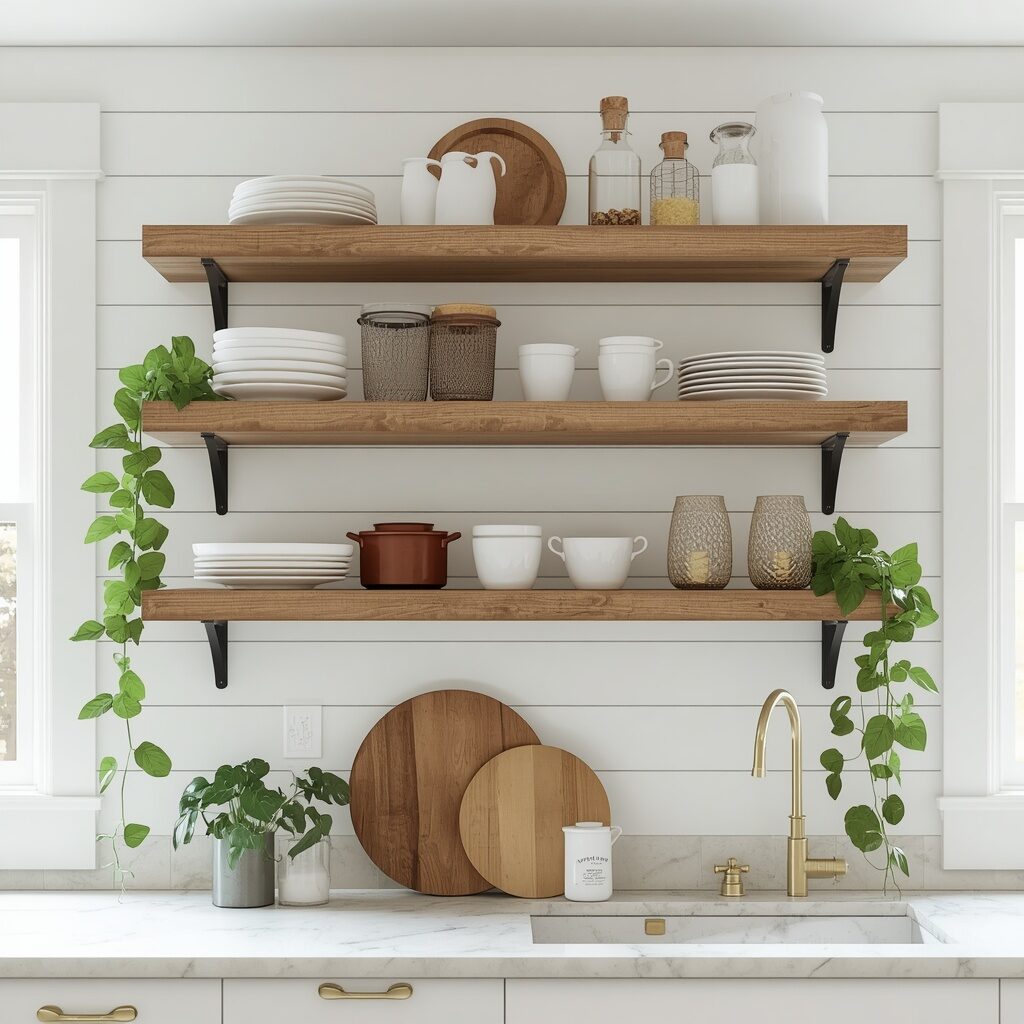
If there is one design idea that has the power to completely transform how your kitchen looks and feels, it is open shelving. Removing upper cabinets in favor of floating shelves creates an immediate sense of airiness and openness that makes even smaller kitchens feel expansive and inviting. In farmhouse design, open shelving serves a dual purpose, it is both practical storage and a curated display opportunity. Your everyday dishes, glassware, and cookware become part of the decor, adding color, texture, and personality to the room. There is something deeply satisfying about seeing your beautiful white plates stacked neatly, your vintage copper pots hanging from hooks, and your collection of mason jars filled with pasta and grains. It brings a sense of honesty and simplicity to the kitchen that feels quintessentially farmhouse.
The secret to making open shelving look intentional rather than messy lies in thoughtful styling and editing. Start with high-quality shelves made from thick reclaimed wood or stained planks that can support the weight of dishes while adding warmth. Stick to a cohesive color palette for the items you display, white dishes, clear glass, and natural wood accessories create a clean, unified look. Leave some breathing room between items rather than cramming every shelf full, negative space is just as important as the objects themselves. Incorporate a few decorative elements like small potted herbs, vintage books, or a framed print to break up the utilitarian feel. Keep everyday essentials within easy reach on lower shelves, and reserve higher shelves for special pieces or items used less frequently. With open shelving, your kitchen becomes a living, evolving display that reflects your personal style while maintaining that effortless farmhouse charm.
✨ Keep scrolling, the next ideas get even better!
10. Vintage Area Rugs
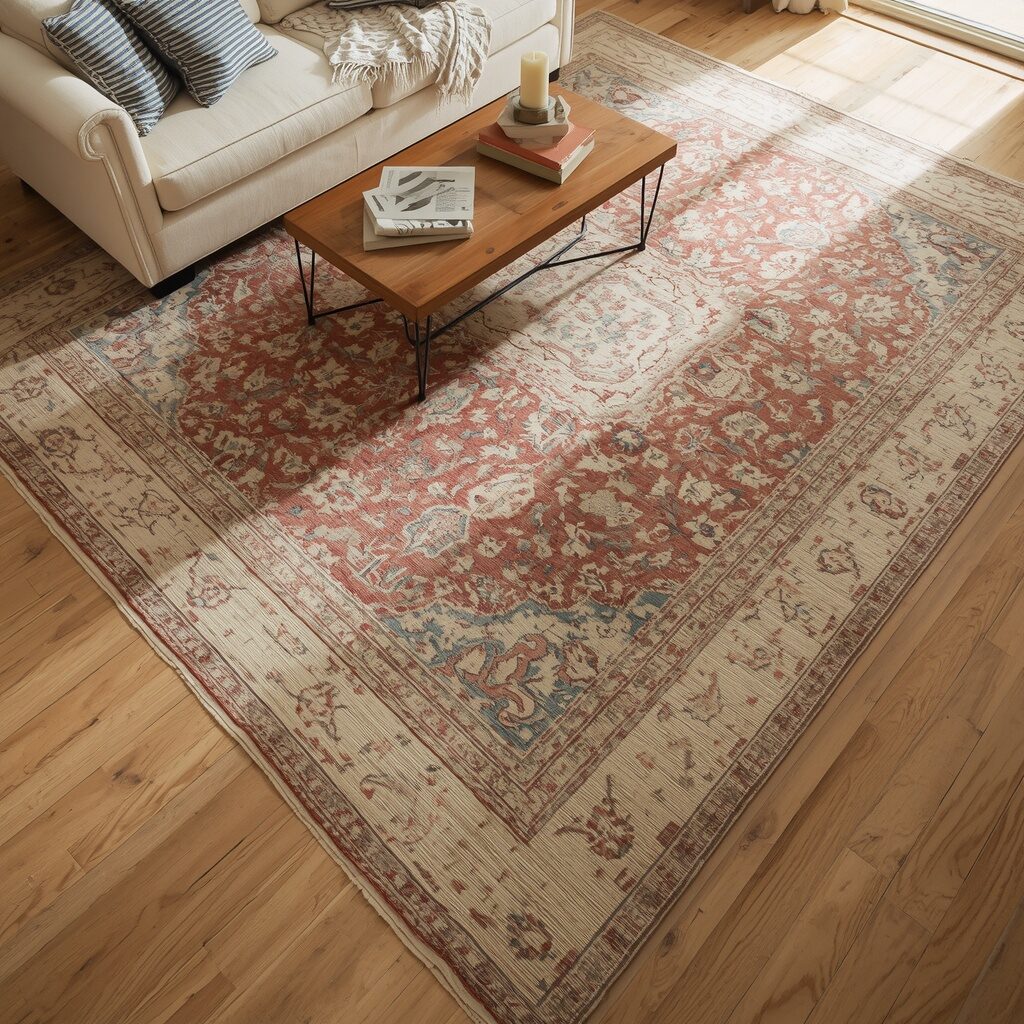
A beautiful vintage area rug is like the anchor of a farmhouse room, grounding all the other elements and adding layers of color, pattern, and history underfoot. Unlike brand-new rugs that can sometimes feel too perfect or sterile, vintage rugs carry the soft patina of age, with faded colors and worn patterns that tell stories of decades past. Persian, Turkish, and Oriental rugs are particularly stunning in farmhouse spaces because their intricate designs contrast beautifully with the simplicity of rustic furniture and neutral walls. The key is to choose a rug that has been gently worn rather than threadbare, one that still has plenty of life left but bears the beautiful marks of time. These rugs add instant warmth to wood floors, define seating areas in open-concept spaces, and introduce colors that can inspire the rest of your decor palette.
Finding the perfect vintage rug for your farmhouse is part treasure hunt and part design decision. Look for rugs with warm, muted tones like faded reds, soft blues, warm creams, and dusty roses that complement rather than compete with your existing furniture. Do not be afraid of slight imperfections, a small repair or uneven fading adds character and authenticity. In the living room, choose a rug large enough that at least the front legs of your sofa and chairs rest on it, creating a cohesive seating area. In the dining room, the rug should extend at least two feet beyond the table on all sides so chairs remain on the rug even when pulled out. Layering a smaller vintage rug over a larger natural fiber rug like jute or sisal is another gorgeous farmhouse technique that adds texture and dimension. A well-chosen vintage rug does not just cover your floor, it elevates your entire space with a sense of timelessness and collected beauty.
11. Wrought Iron Bed Frames
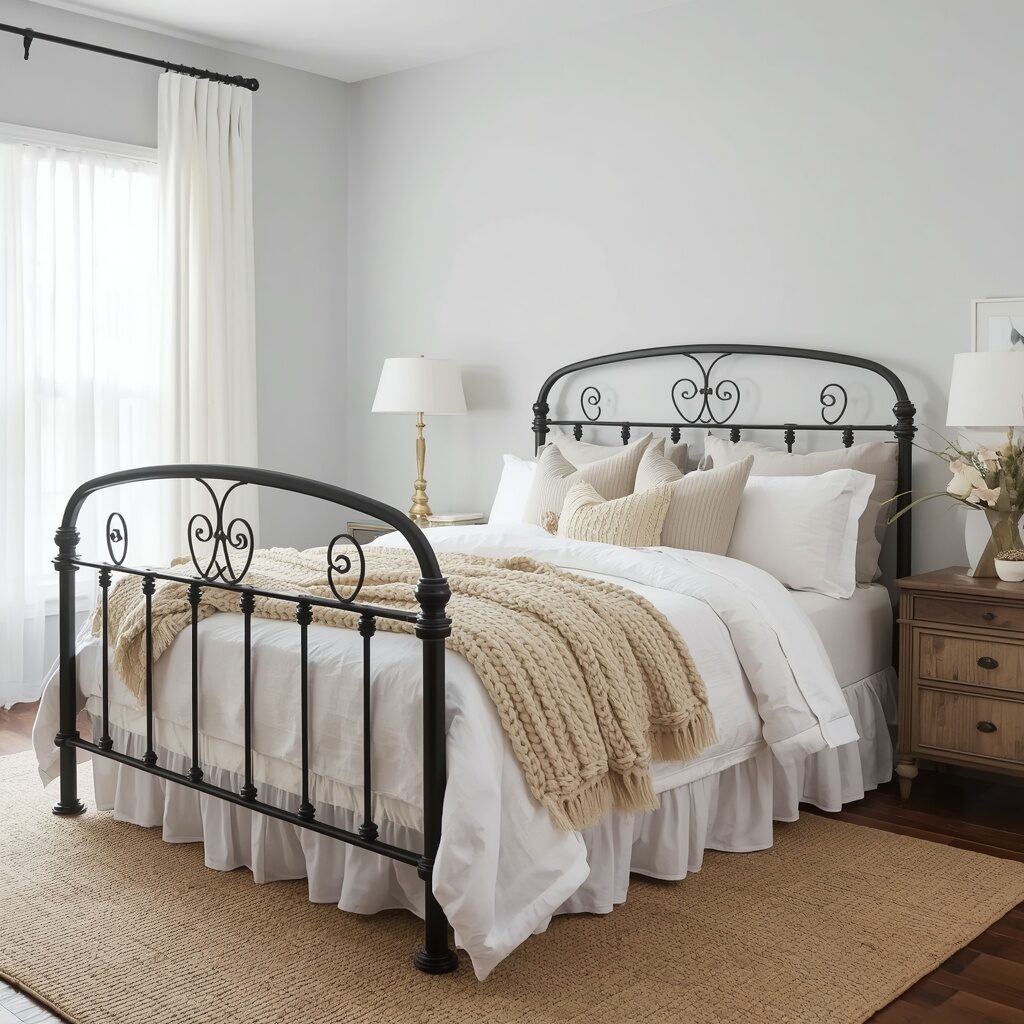
There is an undeniable romance to a wrought iron bed frame that makes it the perfect centerpiece for a farmhouse bedroom. The delicate scrollwork, curved lines, and dark metal finish create a striking contrast against the soft, airy elements typically found in farmhouse design. Unlike bulky upholstered headboards or heavy wooden frames, wrought iron beds have an open, airy quality that makes the room feel larger and more elegant. The intricate metalwork catches light and casts beautiful shadows, adding visual interest even when the bed is simply made with white linens. These beds have a timeless quality that bridges generations, feeling equally at home in a historic farmhouse or a newly built suburban home. The black or dark bronze finish grounds the room while providing a sophisticated anchor for layering textiles and accessories.
Choosing a wrought iron bed frame for your farmhouse bedroom opens up endless styling possibilities. For a classic country look, dress the bed in crisp white cotton sheets, a lightweight quilt in soft blue or sage, and plenty of ruffled pillows. For a more modern farmhouse approach, layer neutral linens with a chunky knit throw in oatmeal or charcoal, and add a few geometric or abstract pillows for contrast. The metal frame pairs beautifully with warm wood nightstands, whether they are painted vintage pieces or raw reclaimed wood. Consider flanking the bed with matching brass or iron sconces to free up nightstand space and add symmetry. A soft, worn vintage rug underfoot completes the look, adding warmth and texture to balance the coolness of the metal. Whether you prefer ornate Victorian-inspired designs or simpler, more streamlined frames, a wrought iron bed brings an element of old-world romance that makes every night feel like a retreat.
12. Butcher Block Countertops
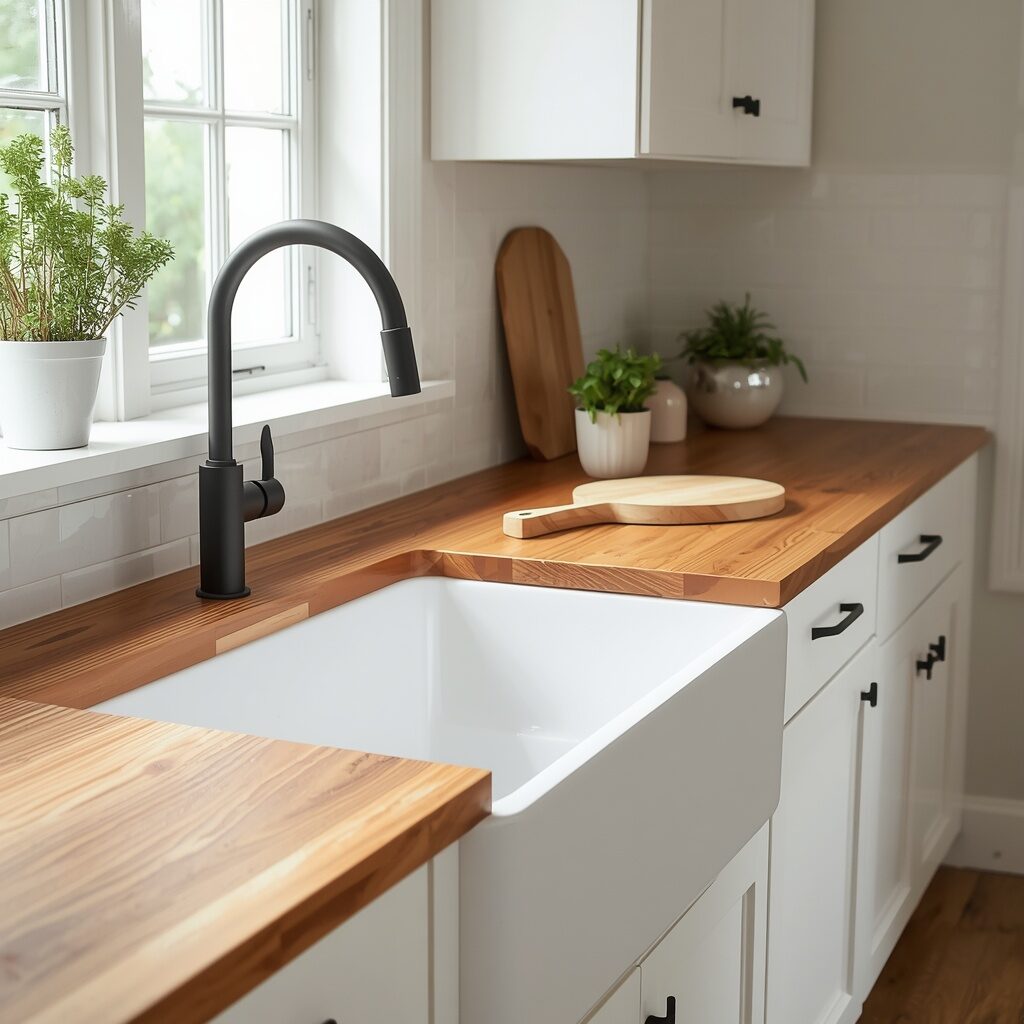
Butcher block countertops are the unsung heroes of farmhouse kitchen design, offering a warmth and workability that stone surfaces simply cannot match. Made from strips of hardwood like maple, oak, walnut, or cherry bonded together, these countertops bring organic beauty and practical functionality to the heart of your home. Unlike cold, unforgiving stone, wood feels warm and inviting to the touch, making food prep a more pleasant experience. The natural grain patterns and color variations create visual interest that evolves over time as the wood develops a rich patina from daily use. Small knife marks, oil stains, and gentle wear are not flaws but rather badges of honor that tell the story of countless meals prepared and shared. This living, breathing surface embodies the farmhouse philosophy of beauty in utility, where everyday objects are meant to be used and loved.
Maintaining butcher block countertops is simpler than many people assume, and the care routine becomes part of the charm. Regular oiling with food-safe mineral oil or beeswax keeps the wood hydrated and prevents cracking or warping. Spills should be wiped promptly, and cutting directly on the surface is actually encouraged as it helps the wood develop character, though many homeowners prefer to use cutting boards for major prep work. Butcher block pairs beautifully with white or cream-painted cabinets for a classic farmhouse look, or with dark navy or forest green cabinets for a moodier, more modern approach. The key is to choose a wood species and finish that complements your overall palette. Maple offers a light, clean look, walnut brings dramatic depth, and oak provides a middle-ground warmth. Whether you use butcher block for the entire kitchen or just the island, it brings an undeniable sense of handcrafted quality and farmhouse authenticity.
13. Galvanized Metal Accents
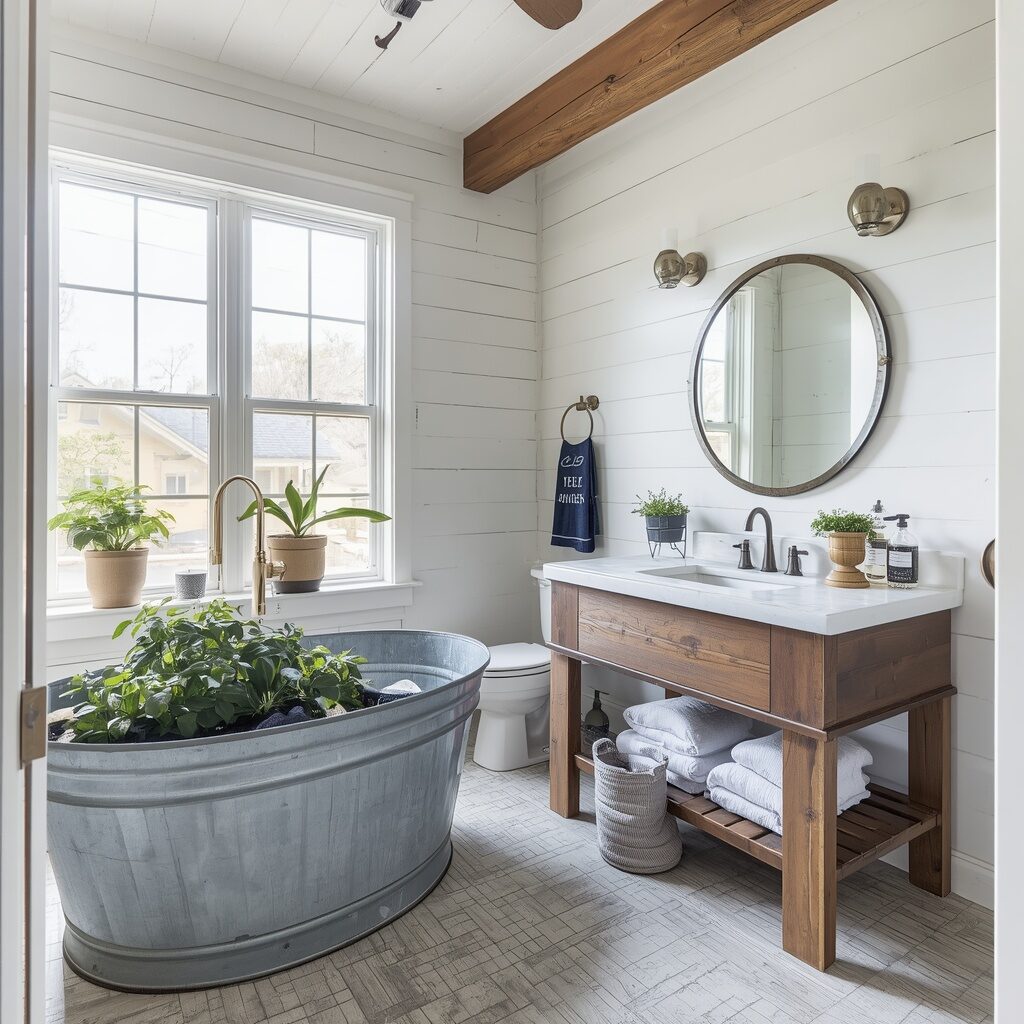
Galvanized metal might seem like an unlikely hero in farmhouse design, but this humble material brings an industrial edge that prevents rustic spaces from feeling too soft or precious. The silvery-gray finish of galvanized steel, with its subtle spangled pattern and weathered patina, adds a layer of visual texture that contrasts beautifully with warm wood, soft linens, and creamy paint colors. Originally used for water troughs, buckets, and roofing on farms, galvanized metal carries authentic agricultural heritage that roots your design in genuine farmhouse history. Today, it appears in everything from oversized pendant lights and wall planters to bathroom vanities and decorative accessories. The cool, slightly rough quality of metal provides the perfect counterbalance to the warmth of other farmhouse materials, creating a dynamic tension that makes rooms feel layered and interesting.
Incorporating galvanized metal into your farmhouse design is all about strategic placement and moderation. A single large statement piece, like a galvanized metal chandelier over a dining table or a vintage trough converted into a bathroom sink, can define the entire room’s character. Smaller accents like metal buckets filled with flowers, trays for corralling kitchen utensils, or wall-mounted planters add touches of industrial charm without overwhelming the space. In bathrooms, galvanized metal mirrors, light fixtures, and accessory trays bring a utilitarian beauty that feels both fresh and nostalgic. The key is to pair metal with plenty of warm, organic elements to keep the space from feeling cold or sterile. Wood, linen, cotton, and greenery are the perfect companions for galvanized accents. When balanced correctly, this material adds a rugged, authentic dimension to farmhouse design that feels grounded and genuinely rural.
14. Floral and Botanical Prints
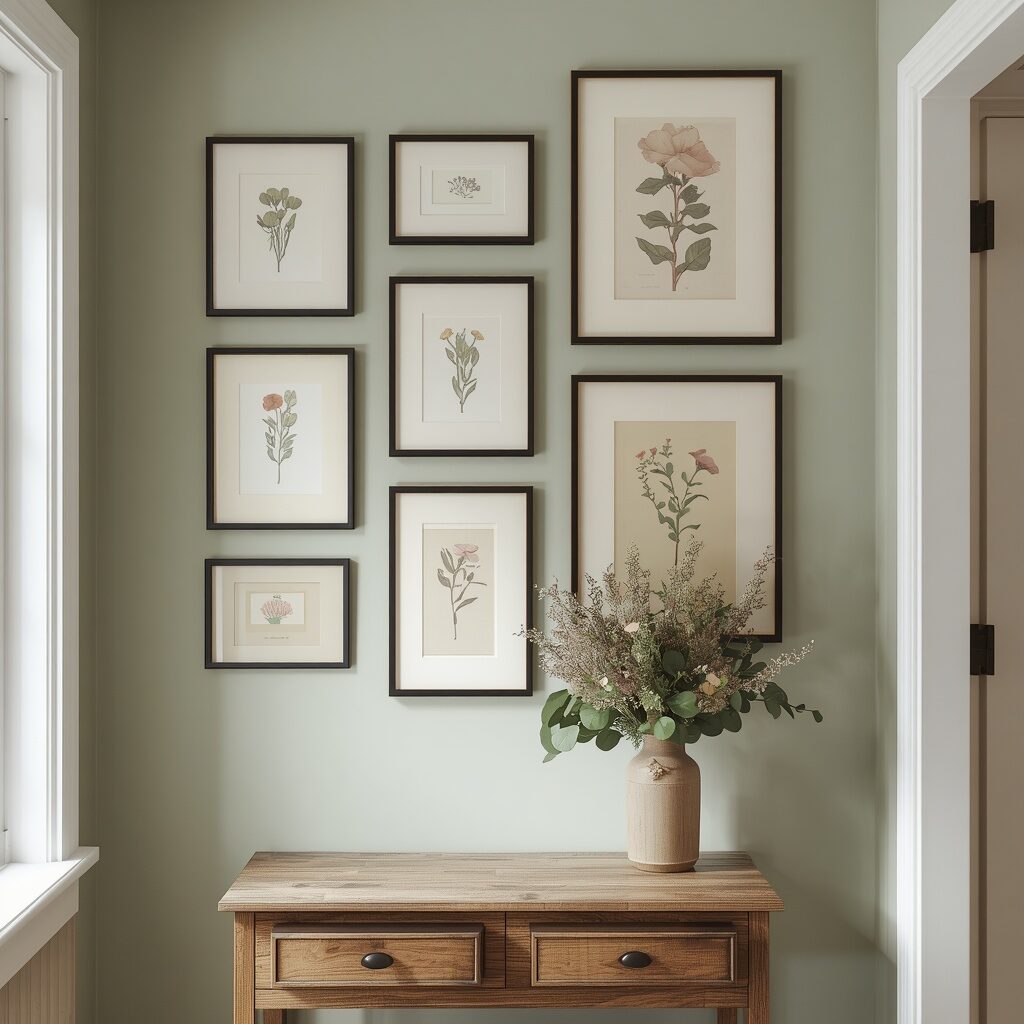
Farmhouse design has always maintained a deep connection to the natural world, and floral and botanical prints are one of the most beautiful ways to celebrate that relationship indoors. These artworks bring the colors, forms, and delicate details of plants and flowers onto your walls, creating a sense of freshness and life that complements the organic materials found throughout farmhouse spaces. Vintage botanical illustrations, with their scientific precision and faded, time-worn colors, are particularly stunning in farmhouse interiors. They evoke the feeling of an old apothecary or naturalist’s study, adding intellectual charm alongside visual beauty. Whether displayed as a single large statement piece or arranged in a gallery wall of smaller prints, botanical artwork softens the rustic edges of farmhouse design and introduces a refined, feminine touch.
Curating a collection of floral and botanical prints for your farmhouse is an opportunity to express your personal connection to nature. Look for vintage prints of local wildflowers, herbs, or plants that hold special meaning, lavender for a kitchen, roses for a bedroom, or ferns for a bathroom. The frames you choose matter almost as much as the prints themselves, thin black metal frames, weathered wood frames, or simple gold-leafed borders each create a different mood. For a cohesive gallery wall, stick to a consistent color palette within the prints, all soft greens and creams, or muted pinks and blues. Alternatively, embrace an eclectic mix for a more collected-over-time feel. Hang prints at eye level in groupings that feel organic rather than rigidly symmetrical. Whether you source original antique prints, high-quality reproductions, or even frame pressed flowers from your own garden, botanical artwork brings a breath of fresh air and timeless elegance to every farmhouse room.
✨ Keep scrolling, the next ideas get even better!
15. Whitewashed Brick Fireplaces
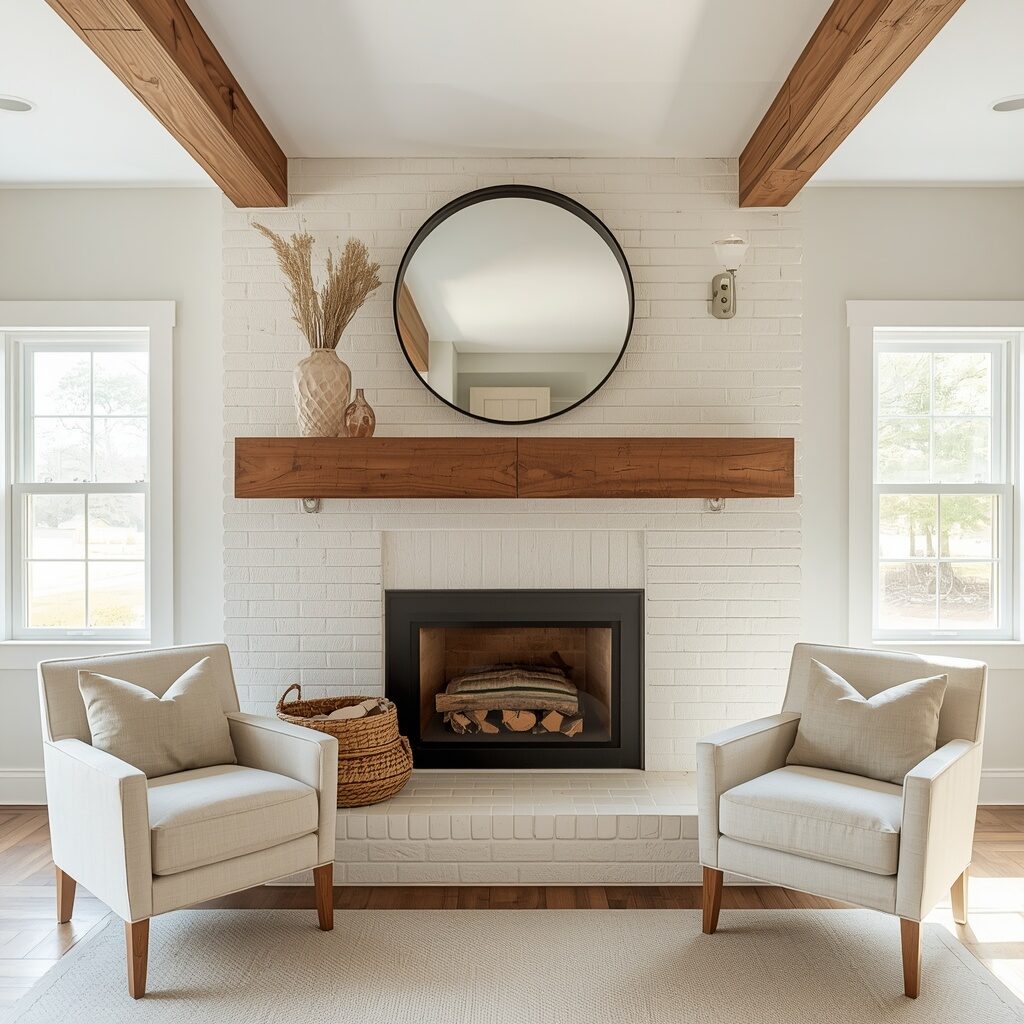
A fireplace is already the natural heart of any home, but a whitewashed brick fireplace takes that concept to an entirely new level of farmhouse beauty. The technique of whitewashing, applying a thin, watery layer of white paint over brick, allows the texture and variation of the masonry to show through while softening the overall appearance. The result is a surface that feels aged, organic, and effortlessly elegant rather than harsh or industrial. Unlike fully painted brick, which can sometimes look flat or artificial, whitewashed brick maintains the depth and character of the original material while brightening the entire room. The slightly uneven coverage creates subtle shadows and highlights that change throughout the day as light moves across the surface. This treatment works equally well on historic fireplaces with century-old patina and on newer brick that needs a bit of visual softening.
The mantel you choose for your whitewashed fireplace is just as important as the brick itself. A thick, reclaimed wood beam mantel brings rustic weight and warmth that contrasts beautifully with the light, airy brick. For a more refined look, a painted wood mantel in soft gray or cream creates a seamless, sophisticated transition. The decor you place on and around the fireplace should enhance rather than compete with the architectural feature. A large round mirror or vintage landscape painting above the mantel draws the eye upward, while simple arrangements of candles, greenery, and ceramic objects keep the styling fresh and uncluttered. Consider flanking the fireplace with built-in bookshelves or cabinets to frame the entire wall as a cohesive design statement. Whether your fireplace is wood-burning, gas, or purely decorative, a whitewashed brick surround creates a stunning focal point that embodies the very essence of farmhouse comfort and style.
16. Linen and Cotton Textiles
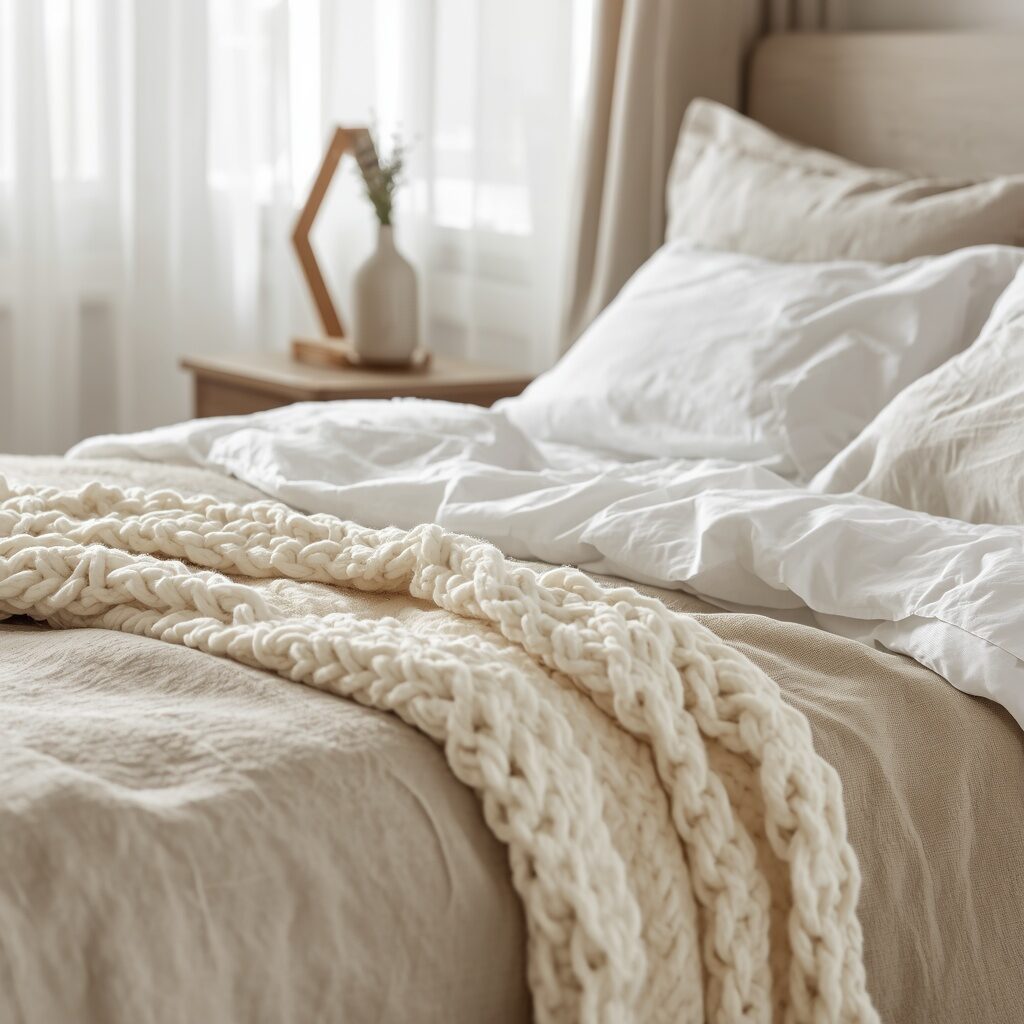
Textiles are the secret weapon of farmhouse design, and nothing captures the essence of this style quite like natural linen and cotton fabrics. These materials bring an immediate sense of softness, breathability, and lived-in comfort that synthetic fabrics simply cannot replicate. Linen, in particular, has a magical quality where it looks better slightly rumpled than perfectly pressed, embracing the relaxed, unpretentious philosophy of farmhouse living. The natural fibers allow air to circulate, keeping you cool in summer and cozy in winter, while the subtle texture adds visual interest to even the simplest color palette. Cotton brings similar benefits with a slightly crisper hand, making it ideal for quilts, throw pillows, and curtains. Together, these fabrics create a layered, inviting environment that encourages you to kick off your shoes and stay awhile.
Incorporating linen and cotton textiles throughout your farmhouse is one of the easiest ways to elevate the entire aesthetic. Start with the bedroom, where linen sheets in soft white, cream, or pale gray create a cloud-like sleeping experience. Add a cotton quilt or coverlet for lightweight warmth, and pile on throw pillows in varying textures and muted patterns. In the living room, linen slipcovers on sofas and chairs protect your furniture while adding casual elegance, and cotton throw blankets in seasonal colors keep the space feeling fresh. For windows, sheer linen curtains filter harsh sunlight into a soft, golden glow while maintaining privacy. Do not forget the dining room, where linen napkins and a simple cotton table runner transform everyday meals into special occasions. The beauty of these natural textiles is that they improve with age, growing softer and more beautiful with every wash. They are an investment in both comfort and style that pays dividends in cozy, farmhouse charm.
17. Vintage Ladders as Decor
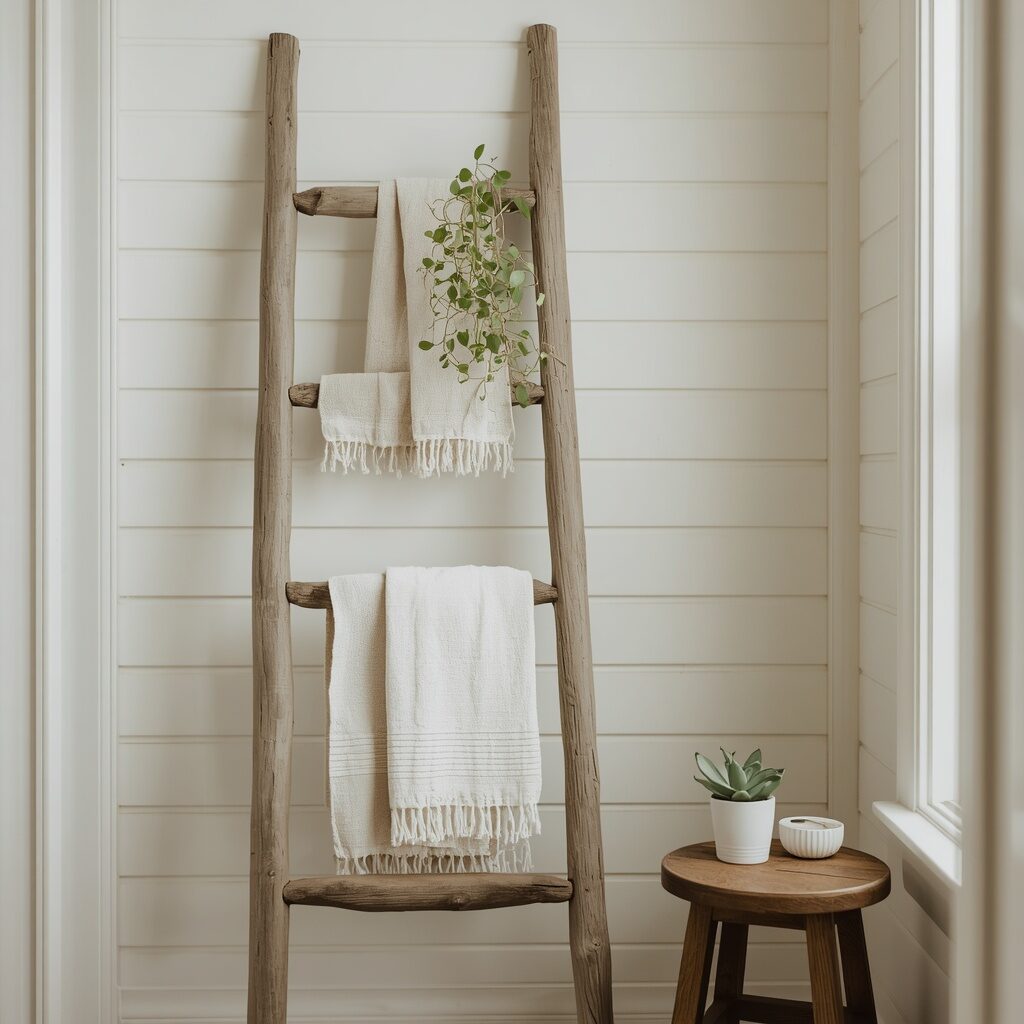
Sometimes the most charming farmhouse decor comes from repurposing everyday objects in unexpected ways, and vintage ladders are the perfect example of this creative philosophy. An old wooden ladder, with its worn rungs and weathered patina, brings instant vertical interest and rustic character to any room. Leaning against a wall in the bathroom, it becomes a stylish towel rack that saves space while adding visual height. In the bedroom, a ladder draped with soft throws and quilts adds texture and warmth to an empty corner. In the living room, it can display woven baskets, magazines, or even string lights for a cozy evening ambiance. The beauty of using a vintage ladder as decor lies in its imperfection, the scratches, paint splatters, and worn edges are exactly what make it special and authentic.
Finding the right vintage ladder for your space is part of the fun. Look for old wooden step ladders, orchard ladders, or even painter’s ladders at flea markets, estate sales, or antique shops. The wood should feel solid and sturdy even if the surface is worn. Avoid ladders that have been treated with chemicals or have loose rungs that could be unsafe. Once you have your ladder, consider whether you want to leave it in its natural weathered state or give it a light sanding and coat of clear sealant to prevent splinters. In bathrooms, a ladder works beautifully beside a freestanding tub or next to the vanity. In bedrooms, place it near the closet or at the foot of the bed. You can even hang small wire baskets from the rungs to create additional storage for plants, toiletries, or accessories. A vintage ladder is proof that farmhouse design does not have to be complicated or expensive to be absolutely stunning.
18. Fresh Herb Gardens
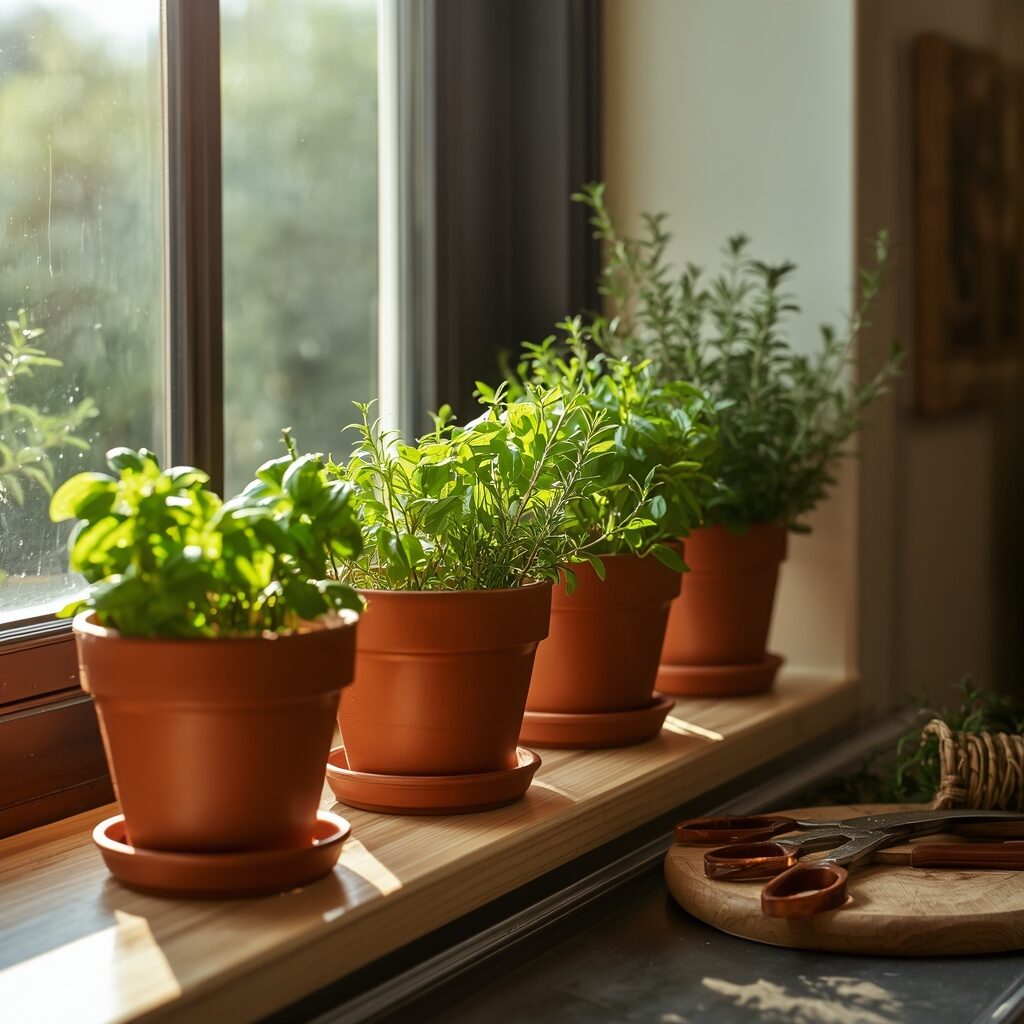
There is something deeply satisfying about snipping fresh basil for your pasta or plucking a sprig of rosemary for roasted chicken from plants you grew yourself. Fresh herb gardens bring a living, breathing element to farmhouse kitchens that connects your cooking to the natural world in the most immediate way possible. A simple row of terracotta pots on a sunny windowsill transforms an ordinary kitchen into a space that smells amazing and looks effortlessly beautiful. The vibrant greens of basil, parsley, thyme, and mint contrast gorgeously with the warm, neutral tones typical of farmhouse design, adding pops of color that change with the seasons. Beyond their visual appeal, herb gardens serve a practical purpose, providing you with fresh, organic flavorings just steps from your cutting board.
Creating a farmhouse-style herb garden is wonderfully simple and rewarding. Start by choosing a sunny windowsill, most herbs need at least six hours of direct light daily. Terracotta pots are the classic farmhouse choice because their warm, earthy color complements wood countertops and white cabinets beautifully. Label each pot with vintage-style markers, small chalkboard tags, or handwritten labels tied with twine. Group pots of varying sizes together for visual interest, placing taller herbs like rosemary and sage behind shorter ones like thyme and oregano. If counter space is limited, consider a wall-mounted planter system or hanging pots near the window. Water your herbs regularly but avoid overwatering, and pinch back growth to encourage bushier plants. In addition to kitchen windowsills, herbs thrive in farmhouse sunrooms, porches, and outdoor kitchen gardens. Whether you are an experienced gardener or a complete beginner, a fresh herb garden brings vitality, fragrance, and a sense of nurturing to your farmhouse home that is absolutely priceless.
19. Woven Baskets for Storage
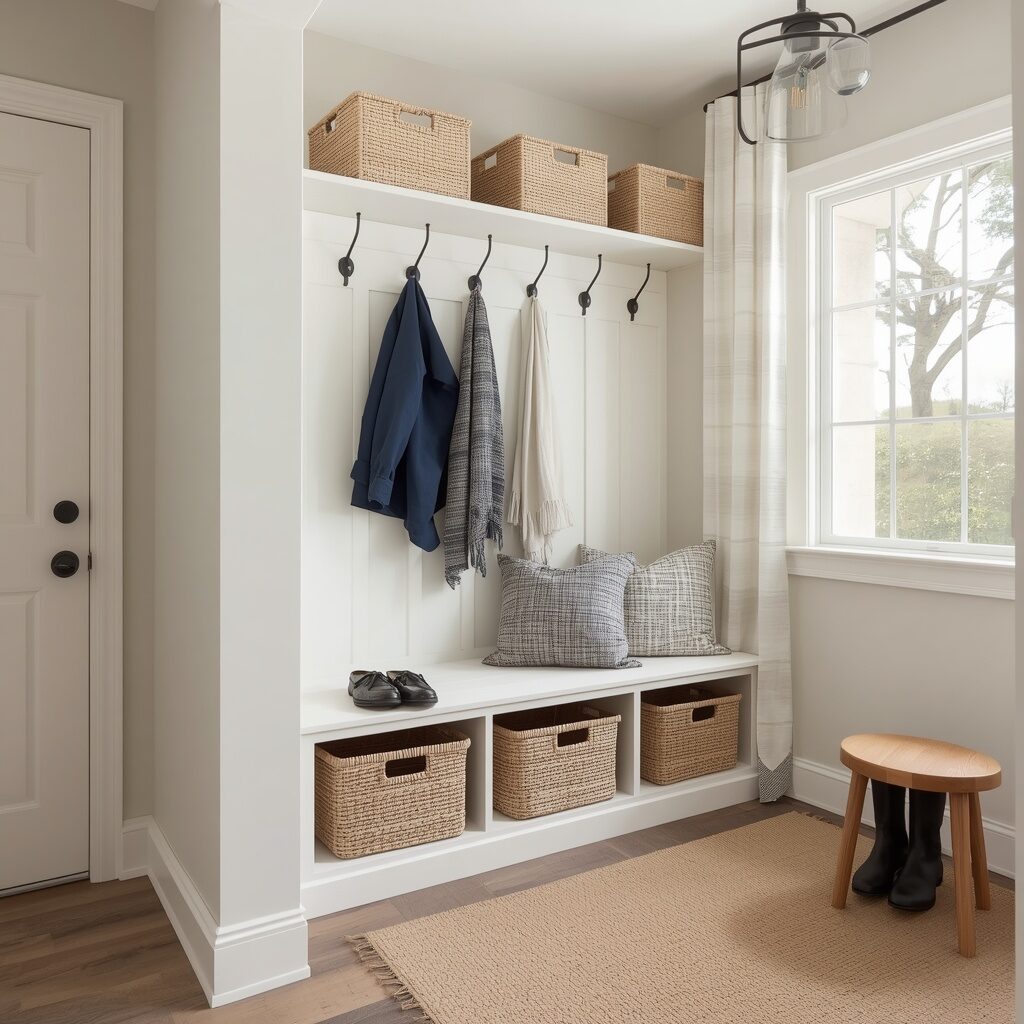
In the world of farmhouse design, storage is not just about hiding clutter, it is about doing so beautifully. Woven baskets are the ultimate multitaskers, providing practical organization while adding natural texture, warmth, and visual interest to every room. Made from materials like seagrass, rattan, wicker, and water hyacinth, these baskets bring an organic, handcrafted quality that synthetic storage containers simply cannot match. Their neutral tones complement virtually any color palette, while their varied weaves and textures add depth and dimension to shelves, closets, and open storage areas. From corralling throw blankets in the living room to organizing toys in the playroom, woven baskets prove that functional items can also be stunning decor pieces.
The key to using woven baskets effectively in farmhouse design is to embrace variety while maintaining cohesion. Mix different sizes, shapes, and weave patterns within the same material family to create a collected, curated look. In the living room, a pair of large round baskets beside the sofa hold extra pillows and blankets within easy reach. In the bathroom, smaller baskets on open shelves organize toiletries, hand towels, and toilet paper rolls. In the bedroom, a row of matching baskets on a closet shelf keeps accessories and out-of-season clothing neatly contained. Entryways benefit enormously from basket storage, with cubbies or benches featuring built-in compartments for shoes, mittens, and mail. For a more rustic look, seek out vintage or antique baskets with worn handles and faded patina. For a cleaner aesthetic, choose new baskets with tight, uniform weaves in consistent natural tones. However you use them, woven baskets bring an effortless sense of order and organic beauty that is essential to farmhouse living.
✨ Keep scrolling, the next ideas get even better!
20. Farmhouse Front Porches
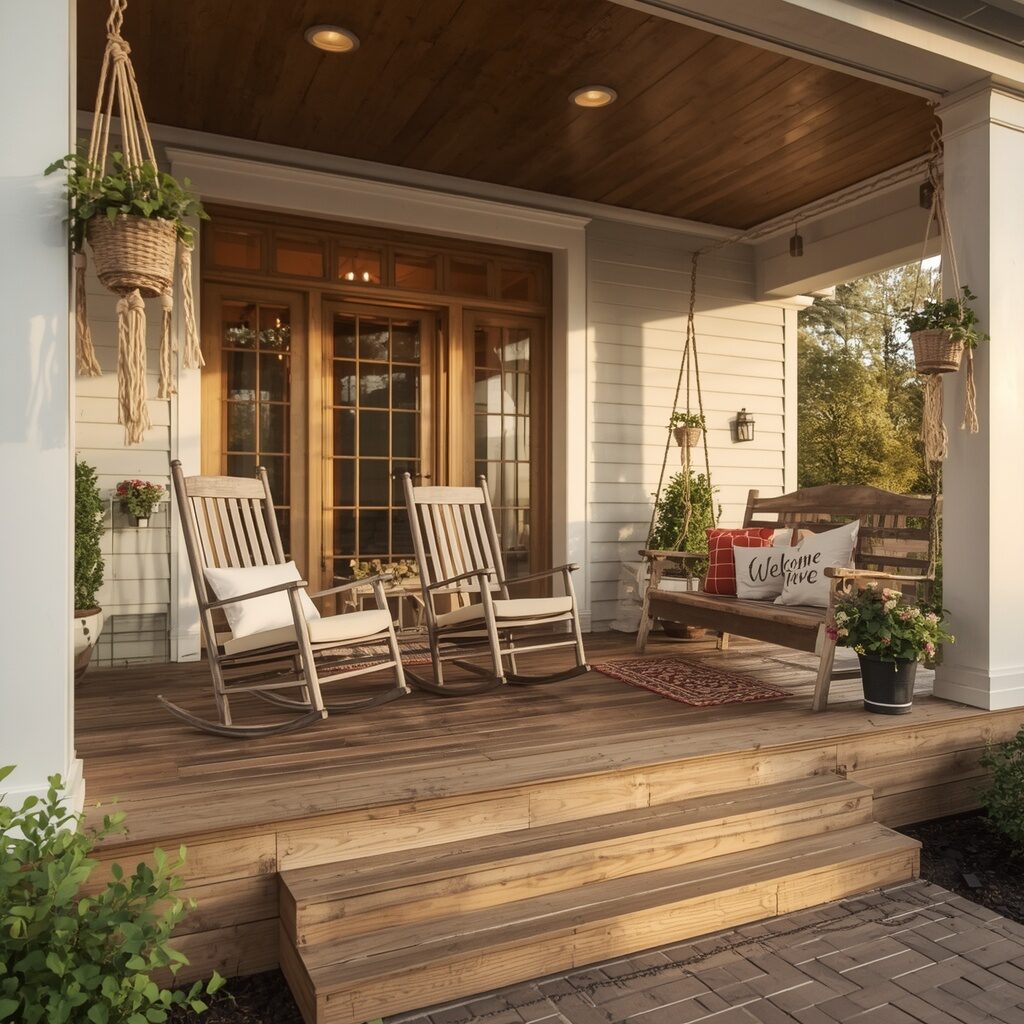
The front porch is the handshake of your home, the first impression that greets guests and the place where you sip coffee while the world wakes up. In farmhouse design, the front porch is not just an architectural feature, it is an essential living space that embodies the spirit of hospitality and relaxed outdoor living. A true farmhouse porch is generous in scale, with wide steps, deep overhangs, and room enough for rocking chairs, a swing, and plenty of potted plants. It serves as a transitional space between the public world and your private sanctuary, offering a place to pause, breathe, and enjoy the simple pleasures of fresh air and neighborhood views. Whether your home is a historic country farmhouse or a suburban ranch with porch potential, investing in this outdoor room pays dividends in curb appeal and daily enjoyment.
Designing a farmhouse front porch that feels both welcoming and stylish starts with comfortable seating. A pair of classic wooden rocking chairs with soft cushions invites leisurely conversation, while a porch swing provides the perfect spot for afternoon naps or evening stargazing. Add a small wooden side table between chairs for drinks and books. Layer in textiles with outdoor-safe throw pillows and blankets in classic patterns like buffalo check, stripes, or florals. Plants are essential, hanging ferns, potted geraniums, and trailing ivy soften the architecture and bring life to the space. A large welcome mat, a vintage-style lantern by the door, and perhaps a wooden sign with your family name or a warm greeting complete the look. Consider the lighting as well, string lights overhead create magic after dark, while wall-mounted sconces provide practical illumination. Your farmhouse porch should feel like an extension of your interior, a cozy outdoor room that beckons you to slow down and savor the moment.
21. Distressed Wood Flooring
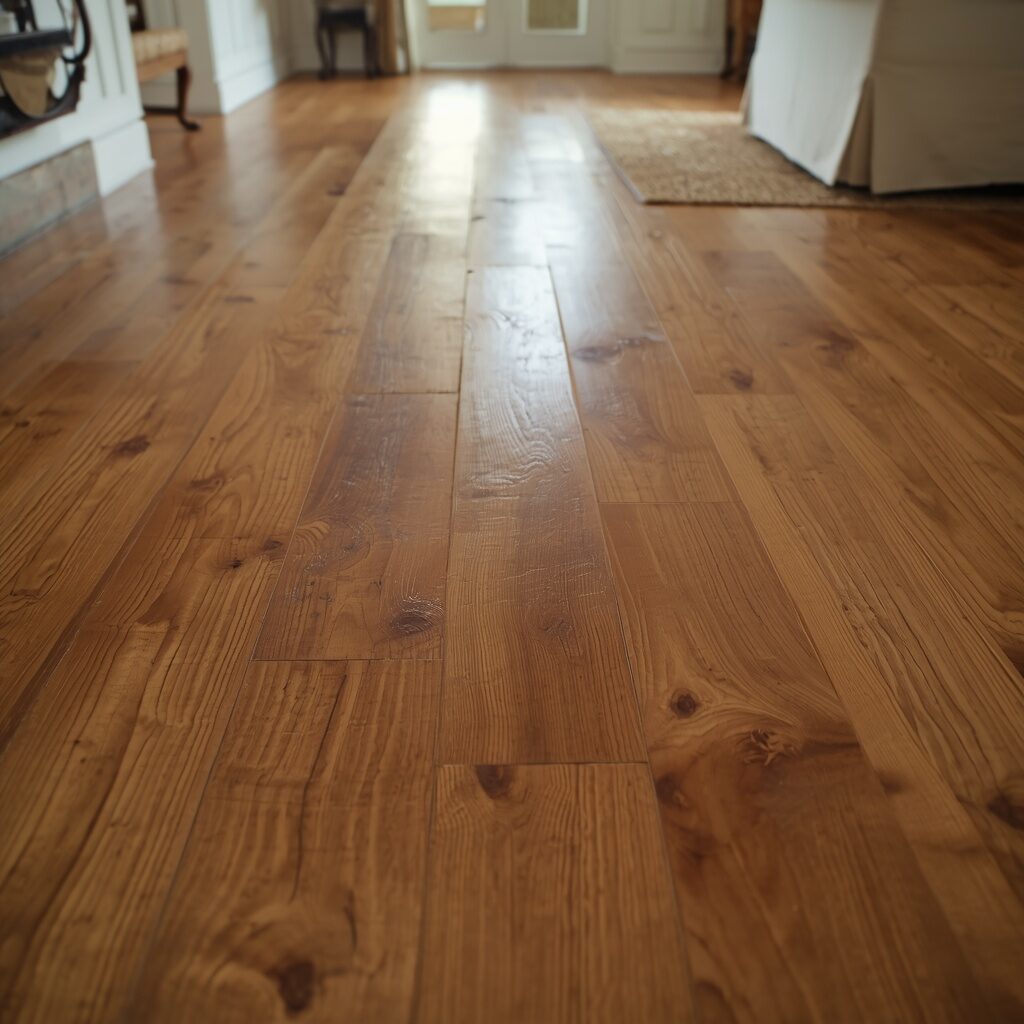
Flooring is quite literally the foundation of your home’s design, and in farmhouse interiors, distressed wood floors set the stage for everything else. Unlike perfectly smooth, factory-finished hardwood, distressed wood flooring celebrates imperfection. Saw marks, nail holes, knots, and uneven coloration are not flaws but rather the very features that give these floors their soul. Wide planks, typically six inches or broader, enhance the rustic, expansive feeling of farmhouse spaces, making rooms feel larger and more connected to the outdoors. The natural variations in tone from plank to plank create a dynamic, living surface that changes appearance throughout the day as light shifts and shadows move. Whether you choose authentic reclaimed barn wood or new wood that has been hand-scraped and wire-brushed to simulate age, distressed flooring brings an immediate sense of history and permanence.
Selecting the right distressed wood flooring involves considering both aesthetics and practical lifestyle needs. Oak is the most popular choice for farmhouse floors because it is durable, affordable, and takes stain beautifully, ranging from light, natural finishes to deep, rich browns. Pine offers a softer, more rustic look with visible knots and grain patterns, though it is more susceptible to dents and scratches. Hickory and maple provide harder, more durable options with interesting grain variations. The finish you choose matters significantly, oil-based finishes penetrate the wood and enhance its natural color, while water-based finishes provide a clearer, more modern look. Matte and satin sheens are preferable to high-gloss in farmhouse design because they look more natural and hide dust and scratches better. When installing distressed floors, consider random plank widths and varied lengths to enhance the authentic, hand-laid appearance. Radiant heat systems work beautifully beneath wood floors, adding an extra layer of cozy comfort. Distressed wood flooring is an investment that pays off daily, providing a beautiful, durable surface that only grows more charming with time.
22. Antique Mirrors
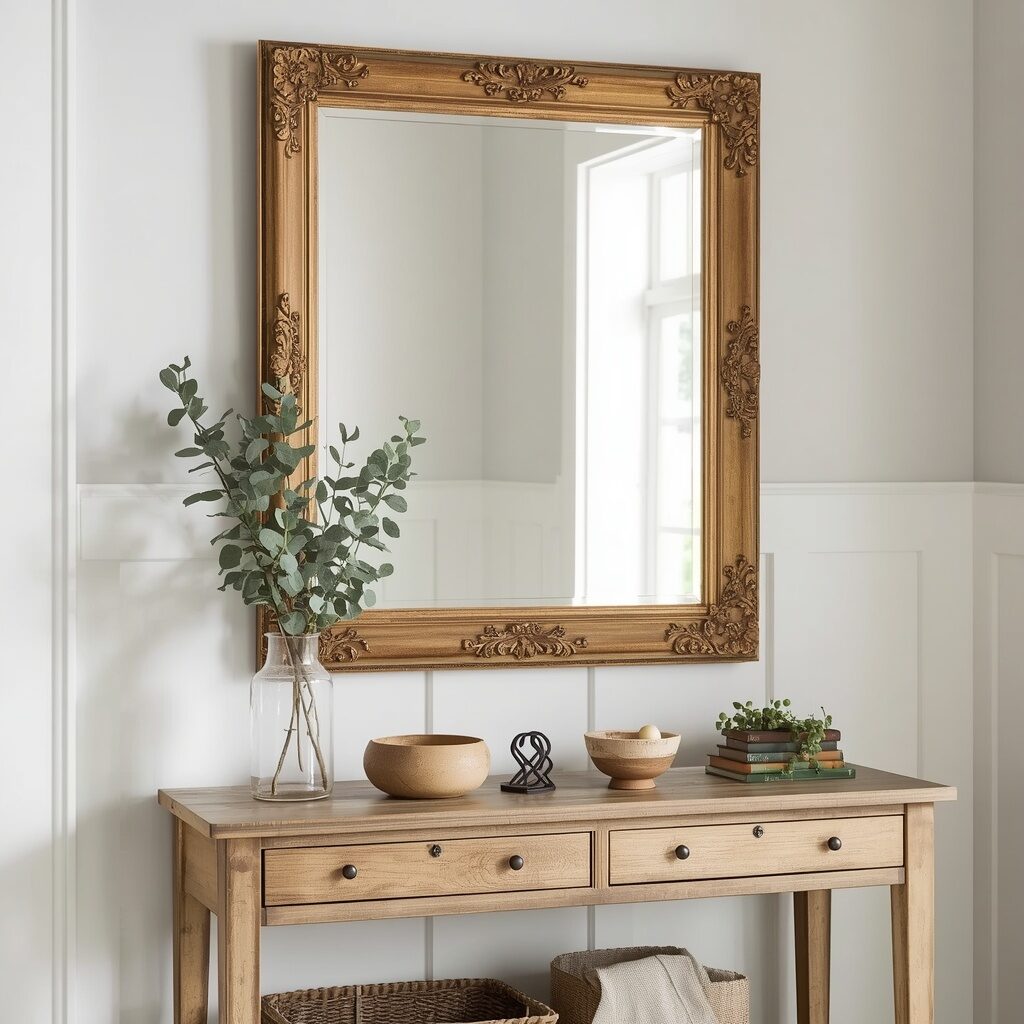
Mirrors are one of the most powerful tools in interior design, and antique mirrors bring a special kind of magic to farmhouse spaces. Unlike modern mirrors with their perfectly clear, flawless reflections, antique mirrors have a softer, more ethereal quality. The silvering behind the glass often shows gentle foxing, spots, and streaks that create a dreamy, timeworn effect. Ornate frames in weathered gold, carved wood, or distressed white add sculptural beauty and historical significance. When hung strategically, antique mirrors bounce natural light around a room, making spaces feel larger, brighter, and more open. They also create beautiful focal points that draw the eye and anchor furniture arrangements. In farmhouse design, where natural materials and soft colors dominate, an antique mirror introduces a touch of refined elegance that elevates the entire aesthetic.
Finding and styling antique mirrors for your farmhouse is an adventure in itself. Flea markets, estate sales, antique shops, and even online marketplaces are treasure troves of beautiful old mirrors at various price points. Look for frames with interesting details, carved flowers, scrolling vines, or geometric patterns that speak to you. Do not worry about minor damage to the silvering, that patina is part of the charm. In entryways, a large ornate mirror above a console table creates a stunning first impression while providing a last-minute check before heading out the door. In living rooms, a mirror above the fireplace reflects candlelight and creates evening ambiance. In bedrooms, a tall mirror leaning against the wall adds drama and functionality. For a collected look, group several smaller antique mirrors together in a gallery wall arrangement. The key is to hang mirrors where they will reflect something beautiful, a window view, a chandelier, or a vase of flowers rather than a blank wall or cluttered corner. An antique mirror is more than a functional object, it is a piece of art that brings light, history, and timeless beauty to your farmhouse home.
23. Copper and Brass Fixtures
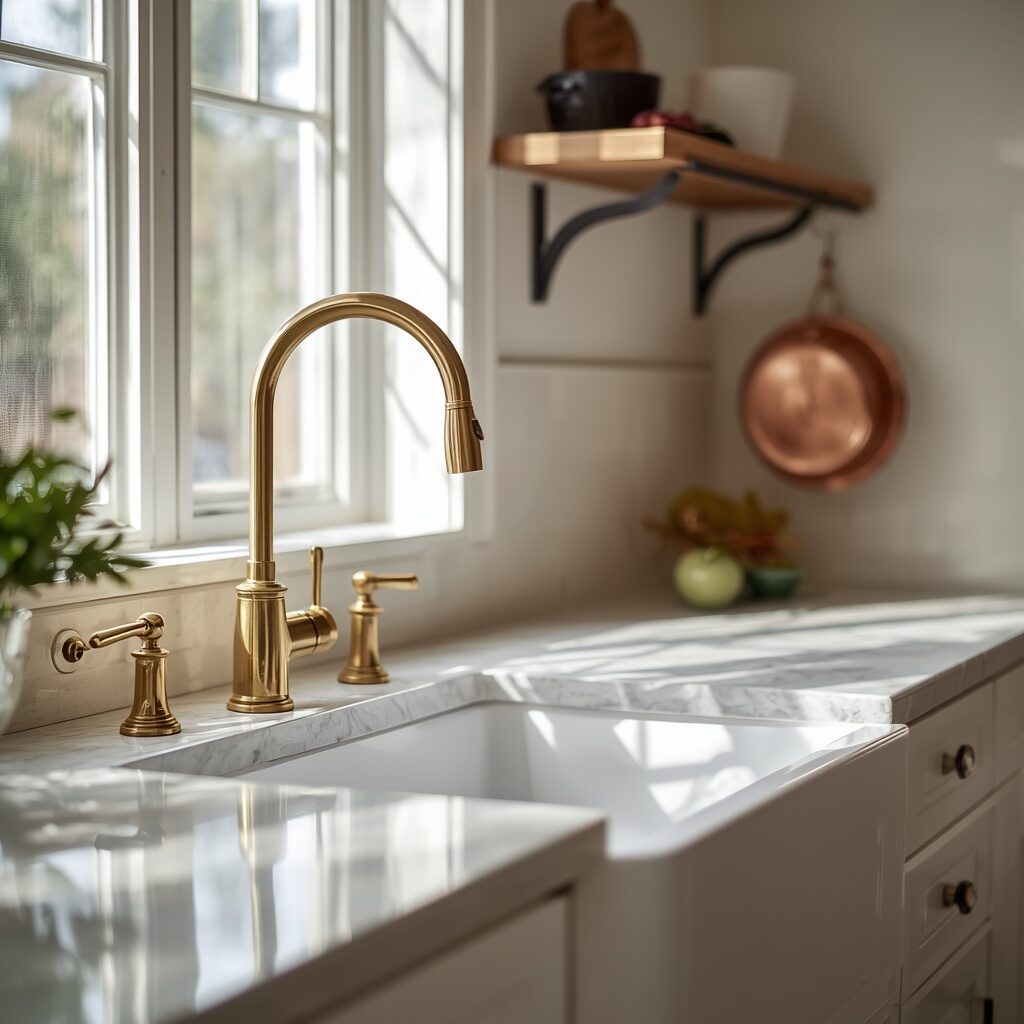
Metallic finishes in farmhouse design have shifted dramatically away from the cool, industrial look of chrome and stainless steel toward the warm, inviting glow of copper and brass. These living metals bring a richness and depth that instantly elevates any space from simple to sophisticated. Unlacquered brass, in particular, develops a gorgeous patina over time, shifting from bright gold to deeper, more complex tones that tell the story of daily use. Copper offers similar beauty with its distinctive reddish warmth that pairs stunningly with the neutral palettes typical of farmhouse interiors. Whether used for kitchen faucets, cabinet hardware, light fixtures, or decorative accessories, these warm metals add a layer of vintage luxury that feels both timeless and totally current.
Incorporating copper and brass into your farmhouse design is about creating moments of warmth and refinement throughout your home. In the kitchen, a brass bridge faucet over the farmhouse sink becomes an instant focal point, while matching brass cabinet pulls tie the look together. Copper pots and pans hung on a wall rack or displayed on open shelving add functional beauty and color. In bathrooms, brass sconces flanking the mirror and a brass towel bar bring spa-like elegance. Light fixtures are another excellent opportunity, brass pendant lights over the island or a copper chandelier in the dining room cast a warm, flattering glow. The key to keeping these metals from feeling overwhelming is to choose one dominant metal and use it consistently throughout a room, rather than mixing too many finishes. Allow unlacquered brass and copper to develop their natural patina rather than polishing them to a shine, the aged, lived-in look is exactly what makes them perfect for farmhouse design. These warm metals prove that farmhouse style can be both rustic and undeniably luxurious.
24. Layered Bedding
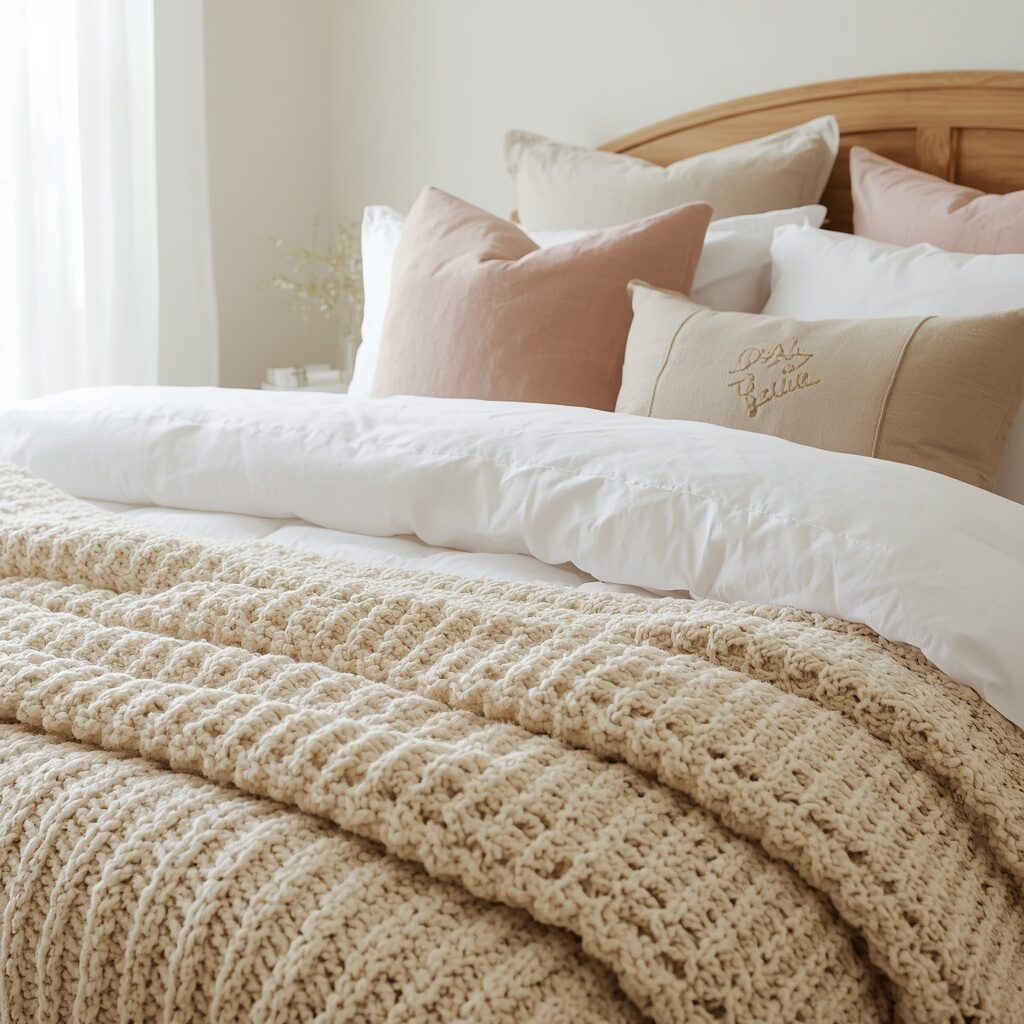
There is an art to making a bed that looks irresistibly inviting, and in farmhouse bedrooms, layered bedding is that art taken to its most beautiful extreme. A well-layered bed is not just about aesthetics, though it certainly delivers on that front, it is about creating a sleep environment that feels indulgent, comfortable, and deeply personal. The foundation starts with high-quality sheets in soft cotton or linen, preferably in crisp white or gentle cream. From there, layers build in texture and warmth, a lightweight quilt or coverlet for structure, a fluffy duvet or comforter for coziness, and a throw blanket at the foot for visual weight and extra warmth. The pillow arrangement is where personality shines through, a mix of sleeping pillows, Euro shams, and decorative accent pillows in varying fabrics and patterns creates depth and interest.
Achieving the perfect layered farmhouse bed is simpler than it looks and comes down to mixing textures within a cohesive color palette. Start with your base layers in neutral tones, white, cream, oatmeal, or soft gray. Then add a quilt or coverlet in a subtle pattern like ticking stripe, soft plaid, or delicate floral. Your duvet should be in a solid, complementary shade, perhaps a warmer tone like blush, sage, or terracotta for contrast. The throw blanket at the foot of the bed introduces another texture, chunky knit, faux fur, or woven cotton each bring a different feeling. For pillows, begin with two or four standard sleeping pillows in white shams, add two Euro shams in a textured linen or patterned fabric, and finish with one or two smaller decorative pillows in velvet, embroidery, or a contrasting print. The result should look abundant and inviting but not messy, like a bed you cannot wait to climb into at the end of the day. Layered bedding transforms your bedroom from a functional space into a daily luxury.
✨ Keep scrolling, the next ideas get even better!
25. Farmhouse Dining Tables
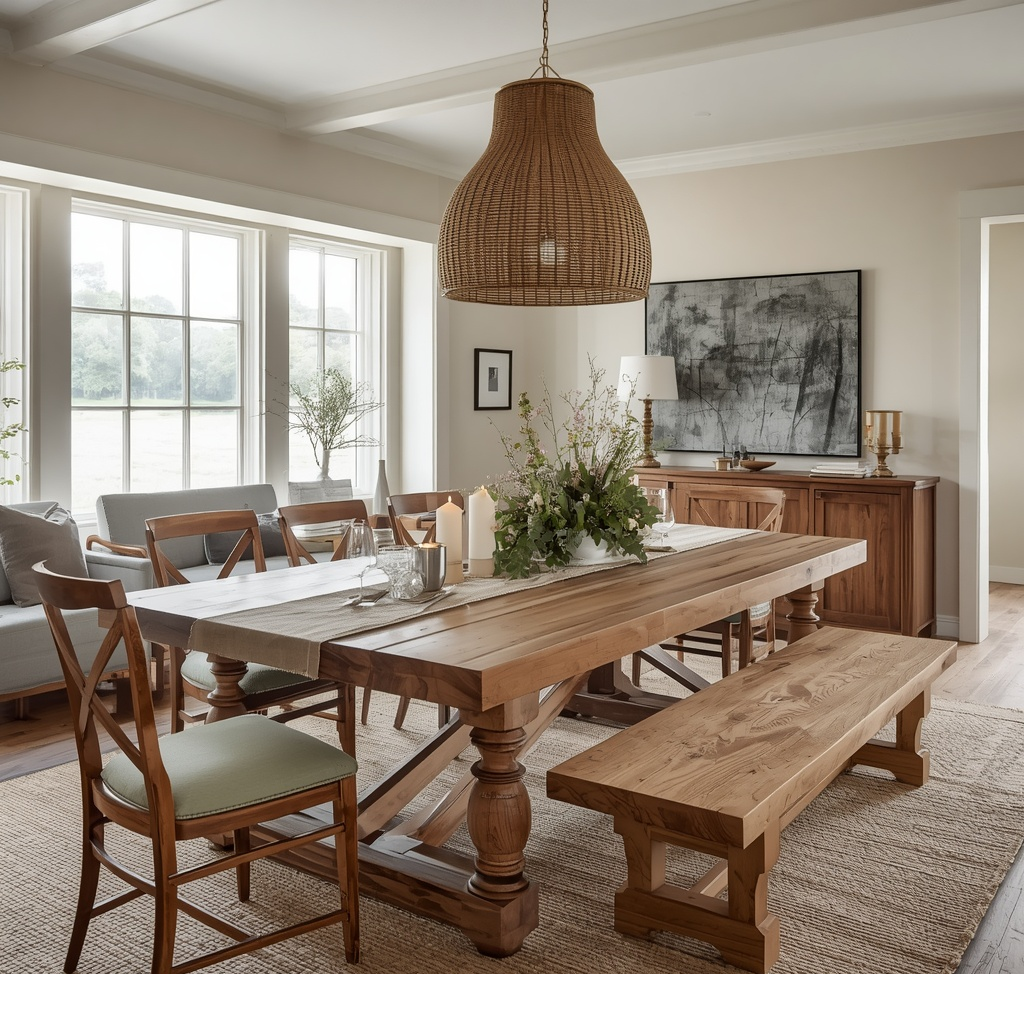
The dining table is arguably the most important piece of furniture in a farmhouse home, serving as the stage for daily meals, holiday feasts, homework sessions, and late-night conversations over wine. A true farmhouse dining table is substantial, sturdy, and unapologetically large, designed to accommodate extended family and unexpected guests with equal grace. These tables are typically crafted from thick, solid wood, oak, pine, maple, or walnut, with features like turned legs, trestle bases, or live edges that showcase the natural beauty of the material. The surface is meant to be used and loved, developing scratches, water rings, and patina that become part of the table’s story. Unlike formal dining furniture that feels too precious to touch, a farmhouse table invites you to prop your elbows, spread out board games, and pass dishes family-style without worry.
Choosing the right farmhouse dining table depends on your space, lifestyle, and aesthetic preferences. For large, open-concept dining areas, a massive rectangular table that seats ten or twelve becomes a stunning architectural feature. In smaller spaces, a round pedestal table creates intimacy while maximizing seating capacity. Extendable tables offer flexibility for everyday use and entertaining. The chairs you pair with your table are just as important, a mix of wooden chairs and a bench on one side creates a relaxed, eclectic look. For contrast, consider upholstered head chairs in linen or leather. The table’s finish should complement your overall palette, natural wood for warmth, painted white or gray for a fresher feel, or black for dramatic modern farmhouse style. Dress your table simply with a linen runner, candles, and seasonal centerpieces. However you style it, your farmhouse dining table becomes the heart of your home, a place where nourishment happens in every sense of the word.
26. Sliding Barn Door Cabinets
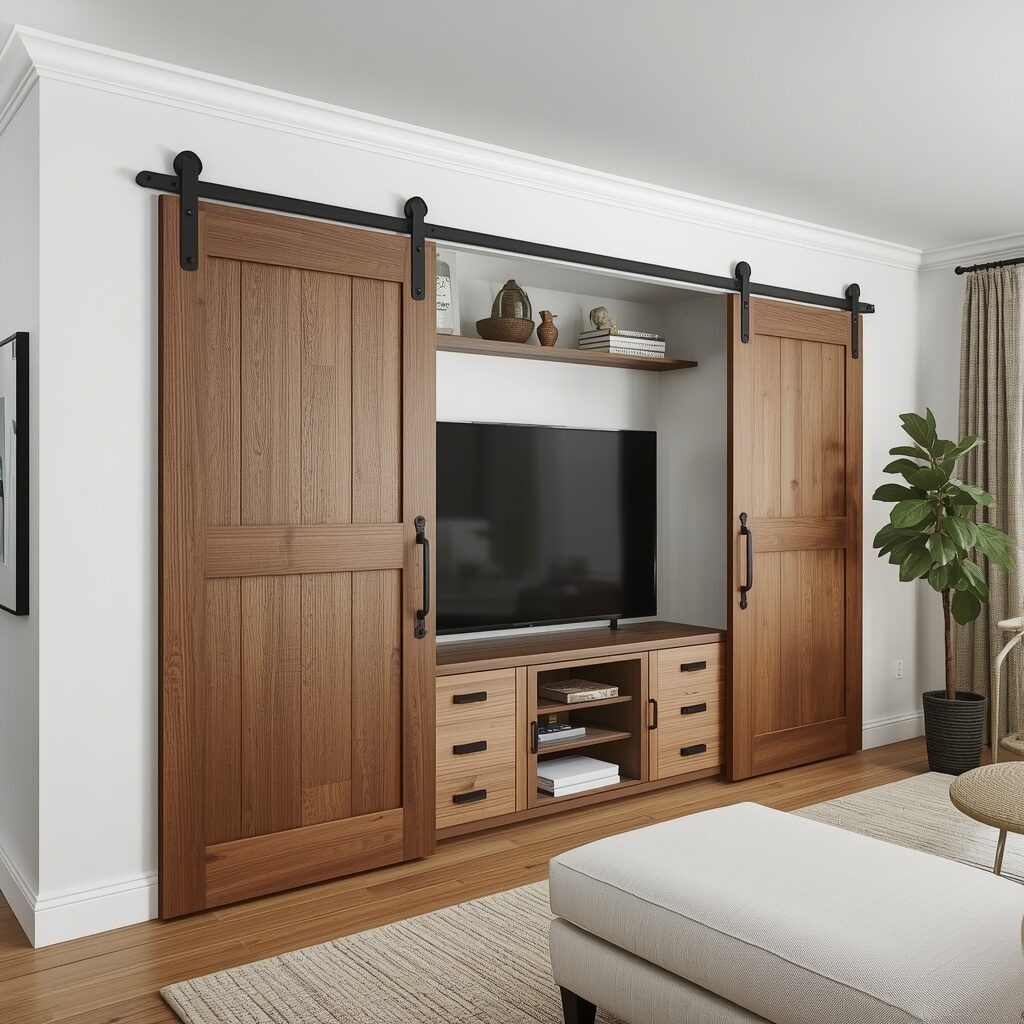
Barn doors are not just for room dividers anymore. Sliding barn door cabinets are one of the most clever and stylish ways to incorporate farmhouse charm into your storage solutions. These cabinets feature the same sliding mechanism and rustic hardware as traditional barn doors but on a smaller scale, making them perfect for concealing televisions, bookshelves, bar areas, or even pantry items. The sliding doors save space by eliminating the need for clearance that swinging doors require, making them ideal for tight areas. When closed, they present a clean, cohesive facade of beautiful wood and industrial hardware. When opened, they reveal organized storage that keeps clutter out of sight. This combination of beauty and practicality is exactly what farmhouse design does best.
Barn door cabinets work beautifully in virtually every room of the house. In the living room, a large built-in unit with sliding doors conceals the television and media components when not in use, creating a more refined, library-like atmosphere. In the kitchen, pantry cabinets with barn doors add rustic charm while keeping food storage accessible. In bedrooms, wardrobe cabinets with sliding doors save space and add character. The design options are endless, choose reclaimed wood for authentic rustic appeal, painted wood for a cleaner look, or even mirrored panels for a surprising twist. The track hardware comes in various finishes to match your other fixtures. For a cohesive look, repeat the barn door motif in multiple rooms. The key is ensuring the cabinet itself is well-built and the doors slide smoothly, quality hardware makes all the difference. Sliding barn door cabinets prove that farmhouse design can be both incredibly stylish and brilliantly functional.
27. Vintage Clocks and Timepieces
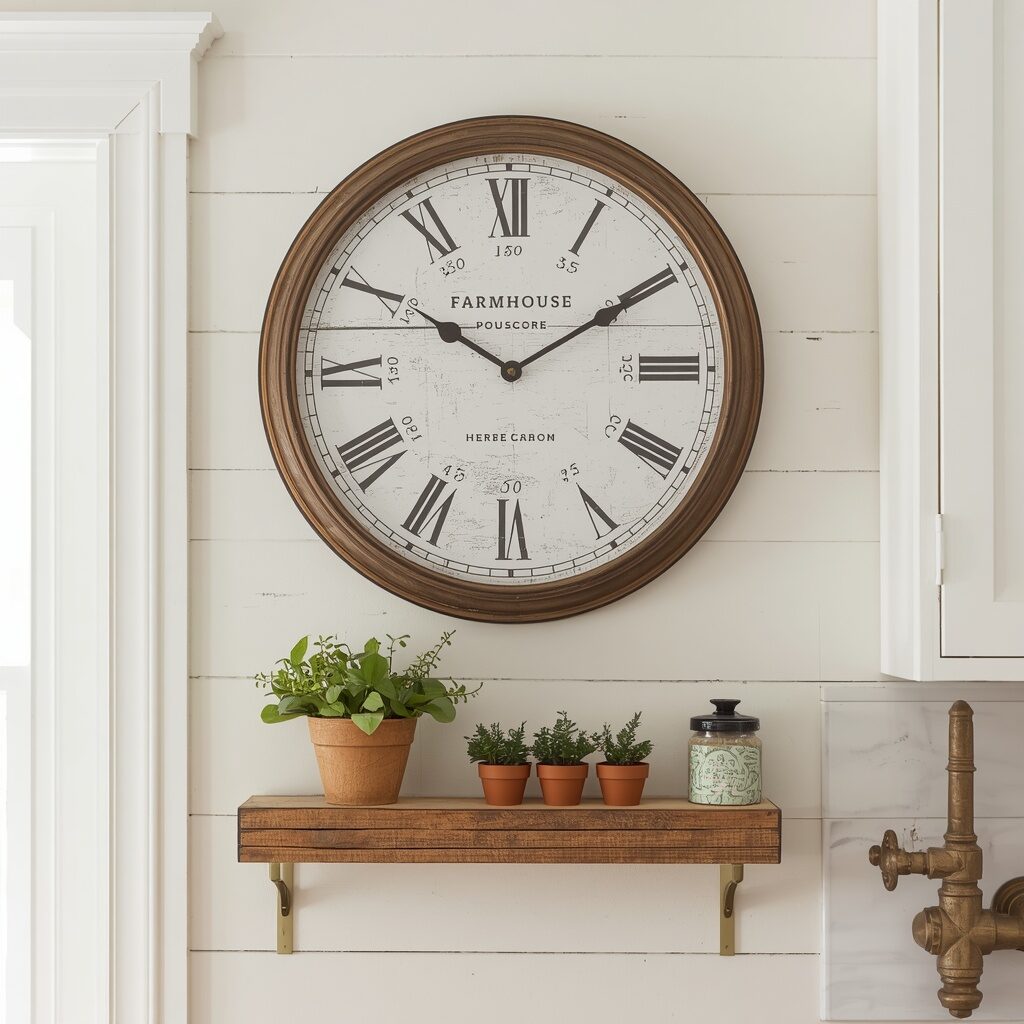
In our digital age, where time is displayed on every phone and microwave, there is something wonderfully nostalgic about a large, beautiful clock hanging on the wall. Vintage clocks and timepieces bring a sense of history and permanence to farmhouse interiors that few other accessories can match. Whether it is an authentic antique pocket watch display, a repurposed schoolhouse clock, or a large wall clock with Roman numerals and a weathered face, these pieces serve as both functional timekeepers and sculptural art. The scale of a large wall clock makes it a natural focal point, drawing the eye and anchoring furniture arrangements beneath it. The aged materials, tarnished metal, faded paint, and worn wood, fit seamlessly into the farmhouse aesthetic of beauty in imperfection.
Styling vintage clocks in your farmhouse home is an opportunity to play with scale and placement. A massive clock with a distressed wood frame above the fireplace replaces traditional artwork with something unexpected and interactive. In the kitchen, a clock above the doorway or on a prominent wall helps keep meal timing on track while adding decorative interest. Groupings of smaller clocks in varying styles and sizes create charming gallery walls in hallways or staircases. Mantel clocks on fireplace ledges or side tables add height and vintage charm. When shopping for vintage clocks, look for pieces with interesting faces, unusual numerals, or beautiful patina on the metal or wood. Battery-operated quartz movements can be added to antique clock cases that no longer function, giving you the look of history with modern convenience. A vintage clock is more than a way to tell time, it is a reminder to slow down and appreciate the moments that make up your life.
28. Neutral Color Palettes with Pops of Color
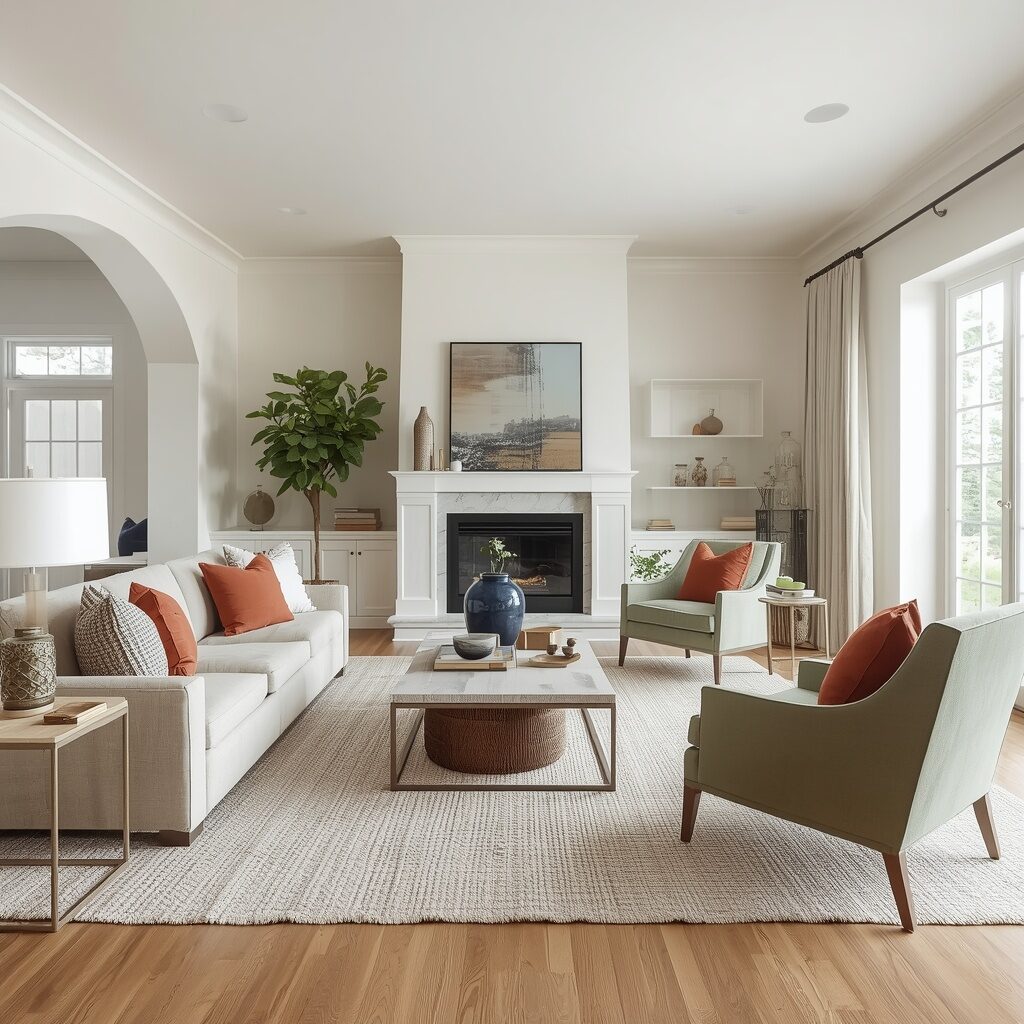
The most successful farmhouse interiors often start with a foundation of soft, neutral colors, creamy whites, warm grays, gentle taupes, and natural wood tones, and then introduce carefully chosen pops of color that bring energy and personality to the space. This approach creates a timeless backdrop that will not feel dated in a few years while allowing you to express your individual style through color. The neutral base provides visual rest, letting the eye move easily around the room without becoming overwhelmed. Then, strategic injections of color, through pillows, artwork, rugs, or a single painted piece of furniture, create focal points and emotional resonance. This balance between calm and vibrancy is what keeps farmhouse design feeling fresh rather than flat.
Choosing the right colors to pop against your neutral farmhouse foundation depends on the mood you want to create. For a warm, autumnal feeling, introduce rust, terracotta, mustard yellow, and deep burgundy through textiles and accessories. For a cooler, more serene atmosphere, dusty blue, sage green, and soft lavender work beautifully. For modern farmhouse edge, black accents and touches of deep navy add sophistication. The key is to use color intentionally rather than randomly. Choose one or two accent colors and repeat them throughout the room in varying doses, a large rug in rust, smaller pillows in the same tone, and a ceramic vase that picks up the color creates cohesion. Seasonal color changes are easy with this approach, swap out pillows and throws in spring for pastels, in summer for bright whites and blues, in fall for warm earth tones, and in winter for deep greens and reds. A neutral base with pops of color gives you the flexibility to evolve your space while maintaining that essential farmhouse warmth.
29. Handmade Pottery and Ceramics
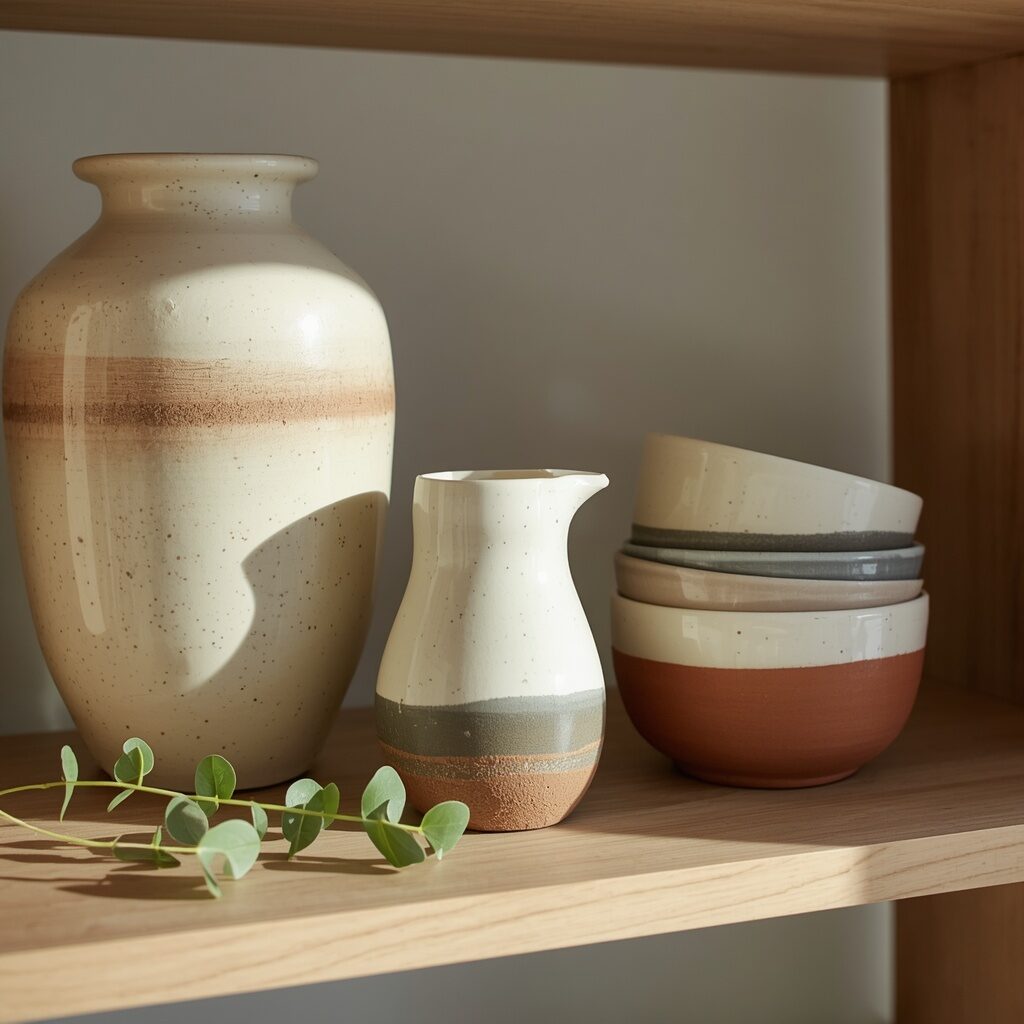
In a world of mass-produced goods, handmade pottery and ceramics stand out as treasures that bring genuine artistry and soul to farmhouse interiors. Each piece carries the mark of its maker, slight variations in shape, glaze, and texture that make it utterly unique. A large stoneware vase with a drippy, imperfect glaze becomes a sculptural object even when empty. A set of hand-thrown bowls in earthy tones elevates everyday meals into special occasions. These artisanal pieces connect your home to the long tradition of craft and making that is at the very heart of farmhouse philosophy. They celebrate the beauty of the human hand and the slight imperfections that make objects feel alive and authentic.
Collecting and displaying handmade pottery is one of the most personal aspects of farmhouse decorating. Start by visiting local pottery studios, craft fairs, and artisan markets to find pieces that speak to you. Look for makers whose aesthetic aligns with your own, whether that is minimalist and modern or rustic and organic. Display your collection on open shelves where the pieces can be both seen and used, a large vase holding fresh flowers, bowls stacked artfully, and pitchers used for water or as vases. Group pieces in odd numbers and vary the heights for visual interest. Earthy tones like cream, terracotta, sage, and soft gray complement farmhouse palettes beautifully, but do not be afraid of a single bold piece in cobalt blue or charcoal black as a statement. Handmade ceramics age beautifully, developing hairline cracks and patina that only add to their charm. These pieces remind us that the best things in life are not perfect, they are made with care, used with love, and appreciated for their unique beauty.
30. Fresh Flowers and Greenery
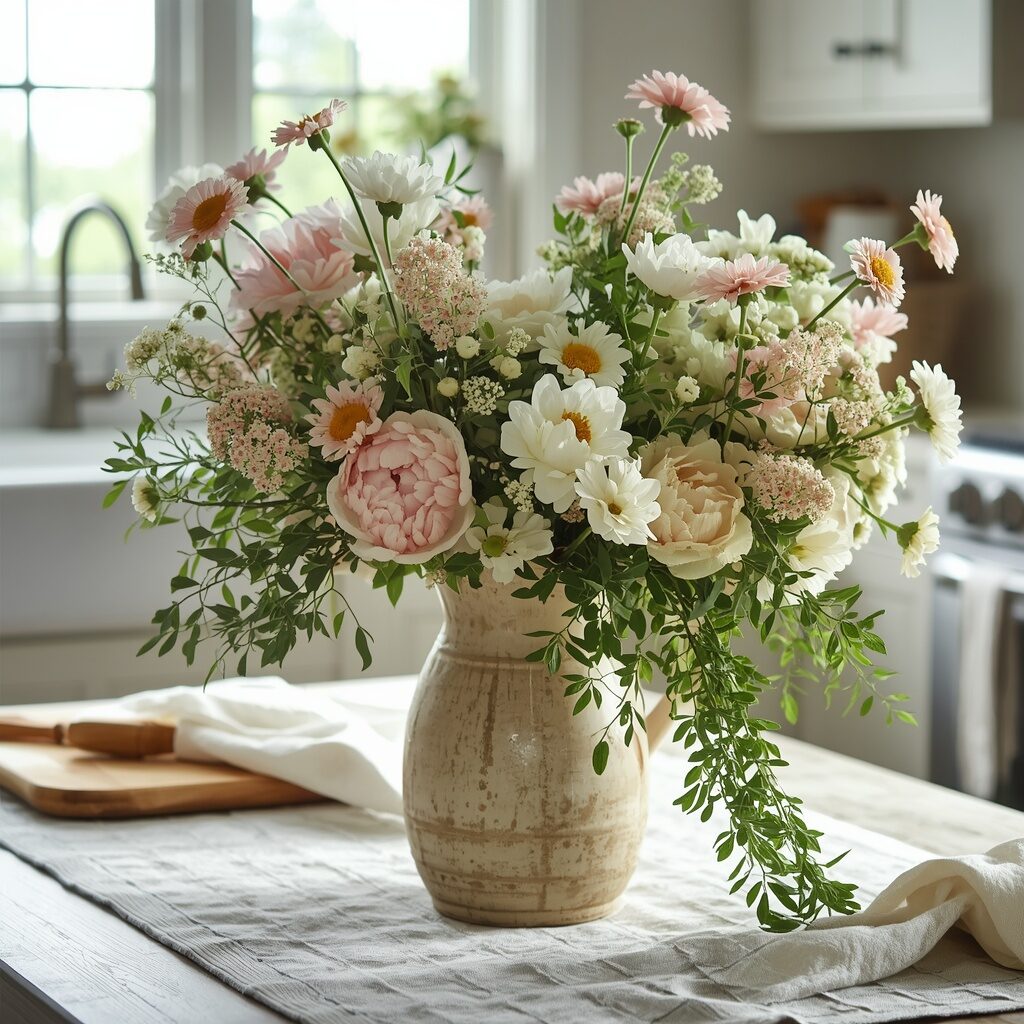
No farmhouse home is complete without the presence of fresh flowers and greenery. These living elements bring a vitality and beauty that no artificial substitute can match. A simple mason jar of wildflowers on a windowsill, a trailing pothos plant on a shelf, or a large statement arrangement on the dining table instantly elevates the entire room. Fresh flowers introduce color, fragrance, and a sense of the season, while greenery adds texture, life, and a connection to the natural world. In farmhouse design, where natural materials and organic forms reign supreme, plants and flowers feel like essential companions rather than optional accessories. They soften hard edges, fill empty corners, and create moments of beauty that change from week to week.
Incorporating fresh flowers and greenery into your farmhouse does not require a florist’s budget or expertise. A walk through your garden or a nearby meadow can yield beautiful arrangements of wildflowers, grasses, and branches. Grocery store bouquets can be broken apart and rearranged into multiple smaller vases placed throughout the house. For greenery, low-maintenance plants like pothos, snake plants, fiddle leaf figs, and succulents thrive in most indoor conditions and require minimal care. Display flowers in unexpected vessels, vintage pitchers, old tin cans, wooden boxes, or ceramic jugs, rather than traditional vases for more farmhouse charm. Change your arrangements with the seasons, tulips and daffodils in spring, sunflowers and zinnias in summer, dahlias and mums in fall, and evergreen branches and holly in winter. Even a single stem in a small bud vase on a bedside table brings a moment of natural beauty to your daily routine. Fresh flowers and greenery remind us to appreciate the fleeting, beautiful moments of life, and they bring that appreciation into our homes every single day.
Related posts: 30 Fall Porch Decorating Ideas That Make Your Front Entry Feel Cozy & Welcoming
Conclusion
Farmhouse design is so much more than a decorating trend. It is a way of living that celebrates comfort, authenticity, and the beauty of imperfection. Every idea we have explored together, from the grandeur of exposed ceiling beams to the simple joy of fresh flowers on a windowsill, is an invitation to create a home that feels genuinely yours. The best farmhouse spaces are not copied from a catalog. They are built slowly, layer by layer, with pieces that hold meaning and memories. A reclaimed wood table where your family gathers for Sunday dinner, a cozy window seat where you read your favorite book on rainy afternoons, a kitchen island where flour dusts the counter as you bake with your children, these are the moments that farmhouse design is truly about.
As you begin to bring these ideas into your own home, remember that perfection is not the goal. The most beautiful farmhouse spaces feel collected over time, with a mix of old and new, rough and refined, simple and special. Start with one idea that made your heart skip a beat. Maybe it was the romantic wrought iron bed frame or the practical beauty of open kitchen shelving. Build from there, adding layers of texture, warmth, and personality as you go. Your home should tell your story, and farmhouse design gives you the perfect canvas to do exactly that. So pour yourself another cup of coffee, open up that Pinterest board, and start planning your dream space. The farmhouse life is waiting for you, and it is even more beautiful than you imagined.